Dems plan to introduce state Medicare for All bill
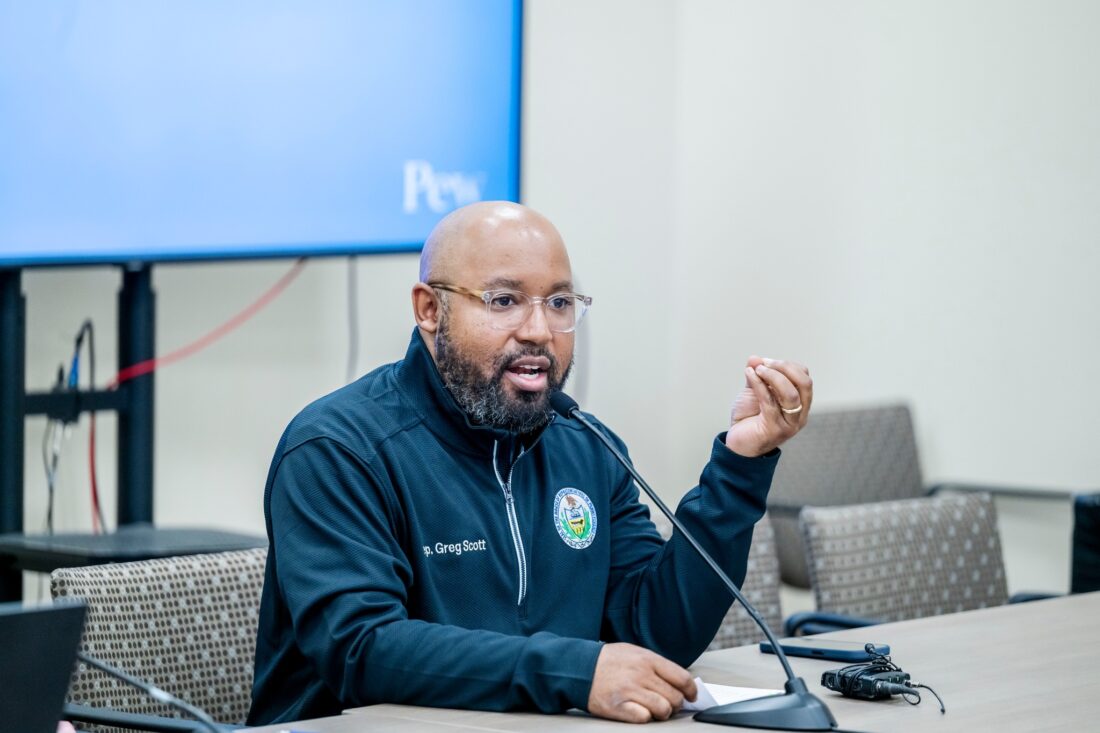
Rep. Greg Scott, D-Mongtomery, is pictured during a roundtable discussion in November.
The fight over healthcare is coming to the state Legislature.
A co-sponsorship memorandum filed by state Reps. Greg Scott, D-Montgomery, and Linsday Powell, D-Allegheny, would create a Medicare for All program in the commonwealth. Medicare for All is a proposed healthcare system for the United States where instead of people getting health insurance from an insurance company, often provided through their workplace, everyone in America would be on a program provided through the federal government.
Scott and Powell say the loss of federal Affordable Care Act tax credits and rising health care insurance premiums require state action.
“Without health insurance, some families are one medical emergency away from financial ruin,” Scott said. “The Affordable Care Act made health insurance more affordable to more families nationwide, but moves at the federal level have now made it impossible for many to take advantage of ACA plans. We can’t let Pennsylvanians lose their access to reliable health insurance or their access to necessary medical care, all because leaders at the federal level don’t believe in it. As state legislators, our responsibility is the well-being of our residents – and this bill would establish a system that ensures every PA resident has health insurance they can rely on.”
According to the Associated Press, as of mid-January, fewer Americans are signing up for Affordable Care Act health insurance plans this year, new federal data shows, as expiring subsidies and other factors push health expenses too high for many to manage. Nationally, around 800,000 fewer people have selected plans compared to a similar time last year, marking a 3.5% drop in total enrollment so far. That includes a decrease in both new consumers signing up for ACA plans and existing enrollees re-upping them.
The declining enrollment comes as Congress has been locked in a partisan battle over what to do about the subsidies that expired at the start of the new year. For months, Democrats have fought for a straight extension of the tax credits, while Republicans have insisted larger reforms are a better way to root out fraud and abuse and keep costs down overall.
The loss of enhanced subsidies means annual premium costs will more than double for the average ACA enrollee who had them, according to the health care research nonprofit KFF. But extending the subsidies would also be expensive for the country. Ahead of last week’s House vote, the nonpartisan Congressional Budget Office estimated that extending the subsidies for three years would increase the nation’s deficit by about $80.6 billion over the decade.
“Across Pennsylvania, skyrocketing costs of living are making access to health care increasingly inaccessible for far too many families,” Powell said. “Whether it’s routine dental care, essential reproductive services, or lifesaving surgery, no one should ever be forced to choose between caring for their health and keeping the lights on at home. Health care is a fundamental right, not a luxury; our systems must reflect that reality. I am proud to join Representative Scott in co-sponsoring this legislation to stand up for working families and take meaningful steps toward lowering the soaring cost of health care across the commonwealth.”
Scott and Powell’s proposed bill would create a program similar to the “Medicare for All” programs proposed at the federal level and aim to get every resident insured. Analysis of Medicare for All proposals show that while there would be savings for health care users, government costs increase in order to provide coverage.
It’s not the only proposal Democrats in the General Assembly have floated in recent months.
House Rep. Ben Waxman, D-Philadelphia, introduced House Bill 1863 to establish a public option health insurance program. It authorizes the Insurance Department to oversee a public option plan, with comprehensive coverage including dental, vision, and spouse or domestic partner benefits. Insurers participating in the program will be required to lower premiums by 15% within the first few years, delivering real relief for working families. Provider reimbursements will be fair but capped, keeping costs in check while maintaining access. Scott is among the co-sponsors of the legislation, which has yet to move from the House Insurance Committee after it was referred there in September.
“We are at a time when the world feels more and more unstable,” Waxman wrote in his co-sponsorship memorandum. “If we expect people to navigate climate disasters and economic shocks, we must provide a baseline they can rely on. Just as public transit guarantees mobility and public schools guarantee education, a public health insurance option would guarantee that no Pennsylvanian is left without care when they need it most. It is about ensuring people are not trapped by insecurity, but free to live their lives with stability and dignity. My legislation will create that baseline.”
Local News
Warren County man joins Northern Pennsylvania Regional College board
Bail halved for man charged in fatal accident
Bail was cut in half Wednesday for a Warren man accused of killing a man in a traffic accident on Monday. Bail ...
Hospice receives December contributions
Hospice of Warren County received contributions during the month of December 2025. They include contributions in ...

Starting Blocks mark a new chapter for generations of Warren swimmers

Dems plan to introduce state Medicare for All bill