
Ban on neonic insecticides being proposed
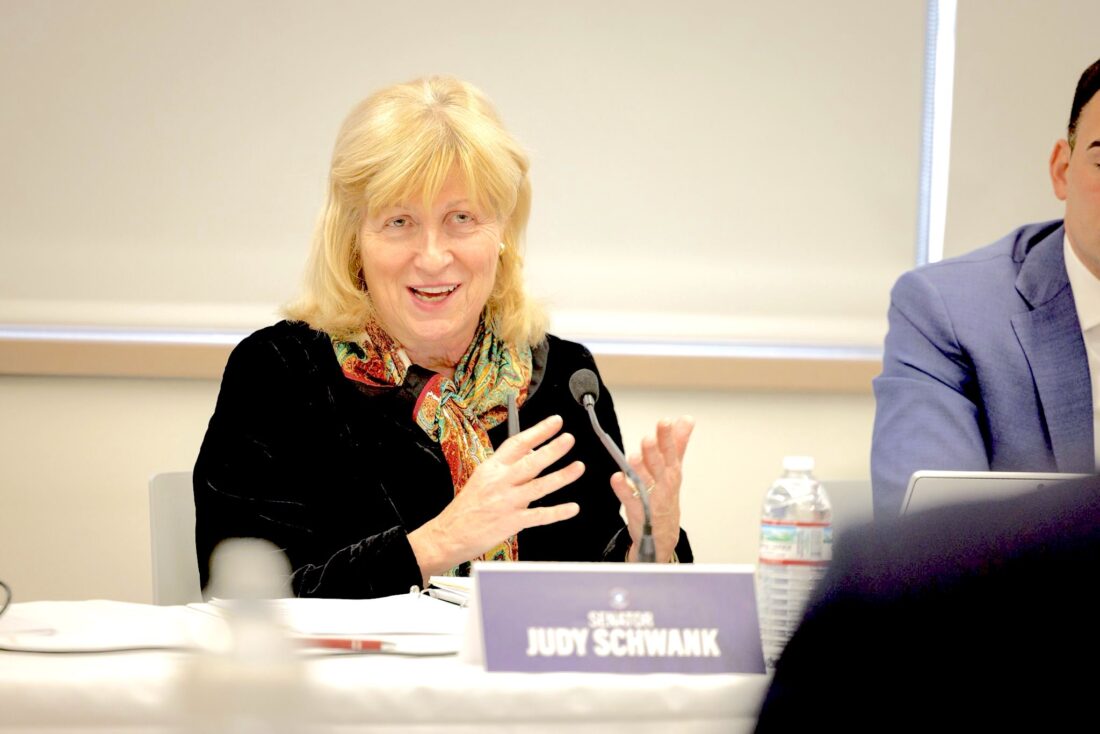
Sen. Judith Schwank, D-Reading, is pictured during a hearing in December. Schwank is proposing to ban the use of synthetic insecticides in Pennsylvania, following the lead of New York and Vermont.
By JOHN WHITTAKER
jwhittaker@post-journal.com
A state lawmaker wants Pennsylvania to join New York and Vermont in banning the use of some synthetic insecticides.
Sen. Judith Schwank, D-Reading, is circulating a co-sponsorship memorandum for legislation she is drafting that would ban what are known as neonicotinoid insecticides, a type of pesticide that is derived from nicotine. Their use increased dramatically in the mid-2000s, according to researchers are Penn State University, largely on corn and soybean seeds treated with the pesticides
In January 2020, EPA released proposed interim decisions for several of the neonic pesticides used on crops, turf, ornamental plants, pets for flea treatment and other residential and commercial uses. The DEC reclassified the use of neonicotinoids effective Jan. 1, 2023, so they are no longer available over the counter. But the DEC is allowing them to be used in targeted instances by qualified professional applicators and are only available for sale to certified applicators.
See BAN / A3
BAN
“Research has found that neonics are substantially harmful to our pollinators, soil insects, and integrated pest management systems,” Schwank wrote in her co-sponsorship memorandum. “According to the UN Food and Agriculture Organization (FAO), three quarters of the world’s most productive food crops depend upon insects and other animals for pollination. This is why I will soon introduce legislation, mirroring that of New York and Vermont, to ban neonic seed treatments for field crops.”
New York’s ban on neonic pesticides was opposed vigorously by Republicans in the New York Assembly and Senate, including lawmakers representing neighboring Chautauqua County. Assemblyman Andrew Goodell, R-Jamestown who is now retired from the Assembly and practicing law in Jamestown, was among the 49 Assembly members to vote against the bill and said the state should listen to both the EPA and the DEC, either of which could have banned the use of treated seeds at any time without additional legislative approval.
“So, as has been discussed, this bill was introduced five years ago in 2018 and since then the U.S. EPA has come out with guidelines and restrictions,” Goodell said on the Assembly floor “That occurred in 2020. The bill sponsor didn’t identify any particularized concerns over the restriction’s shortfalls. Just a few months ago our own DEC came out with their own guidelines and restrictions and, as the sponsor noted, the DEC absolutely has the authority to ban this. So we have new restrictions that have come into play by the experts at the EPA and the scientists at the DEC and they’re relatively recent, yet we are being asked as legislators with no scientific expertise on our own to override the DEC and the EPA and to ignore the restrictions even though every one of us in this chamber would acknowledge that we don’t know the results of what’s going to happen. And every one of us would acknowledge that these administrative agencies have the power to act based on their scientific expertise.”
The New York bill was driven by the belief that the treated seeds are harming pollinator populations, including bees and butterflies. While Gov. Kathy Hochul signed the legislation, she did broker a compromise with farmers, adding a waiver system and delaying full implementation to 2029 for easier compliance.
Most states with neonic insecticide bans only ban non-agricultural use, including California, Colorado, Maine, Maryland, Massachusetts, Minnesota, Nevada, New Jersey and Rhode Island. Only New York, whose ban starts in 2029, and Vermont have total bans on the substances. It won’t be known until she files a draft of the legislation if Schwank will seek to ban neonic insecticides for non-farm use or ban their use entirely.
“By banning neonic seed treatments for field crops, we will not only strengthen protections for beneficial insects, but we will also realign ourselves with the agricultural best practices of integrated pest management,” Schwank wrote.
Local News
DA: ‘It is our goal that Mr. Burham die in prison’
Kinzua Area Discovery Center partners with Bean Bank Enterprises
Pizza shop owner asks for loan to reopen
Leah Simanowski, a representative of NY Style Deli and Pizza, requested a $180,000 loan to complete renovations and ...
Hegseth insists the Iran conflict is ‘not endless’ while warning more casualties are likely

What to know about the attacks on Iran
Shapiro issues statement on Iran attacks
Gov. Josh Shapiro offered his thoughts on the attack by the United States and Israel on Iran in a statement ...