
State’s handling of game lands, motorcycle helmet bill caught attention this year
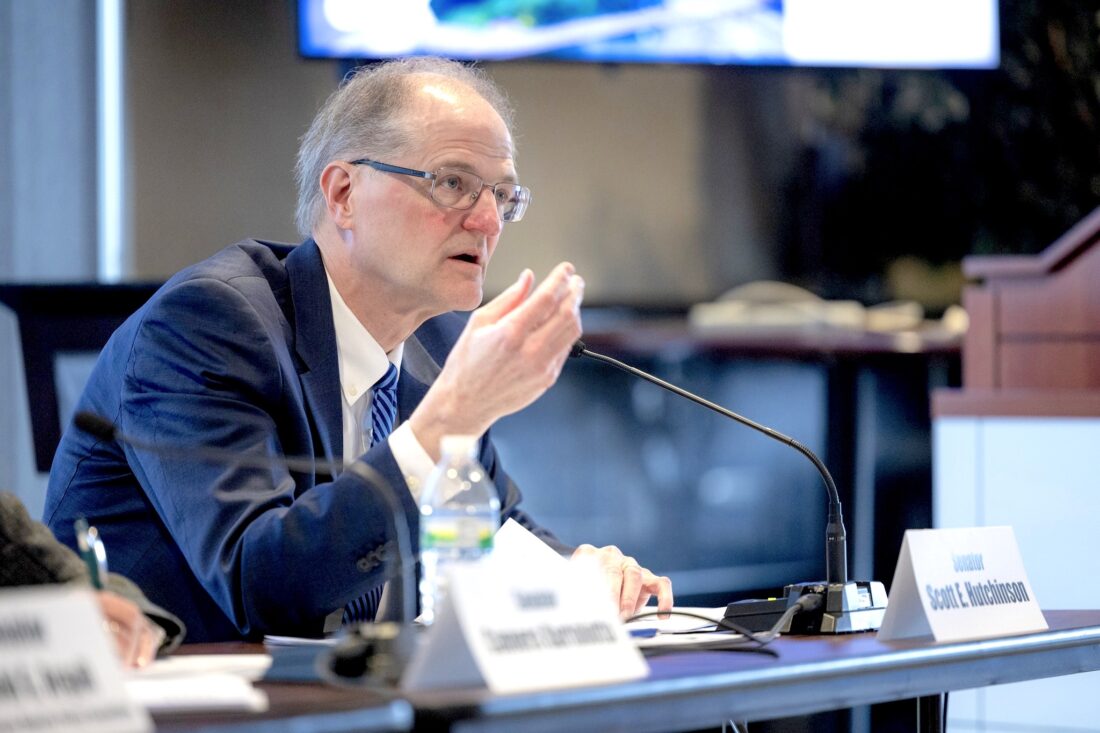
State Sen. Scott Hutchinson, R-Oil City, speaks during a Senate Majority Policy Committee meeting earlier this year.
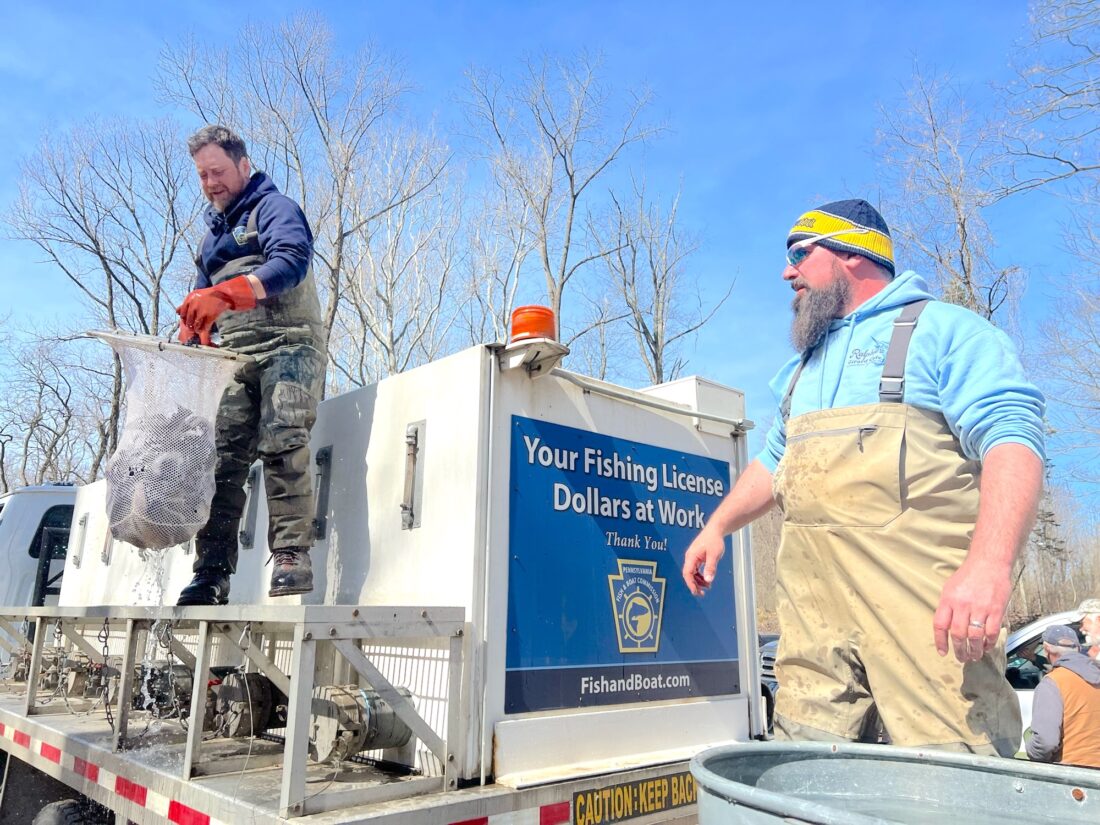
Sen. Dan Laughlin, R-Erie, is pictured helping stock trout in Girard earlier this month.
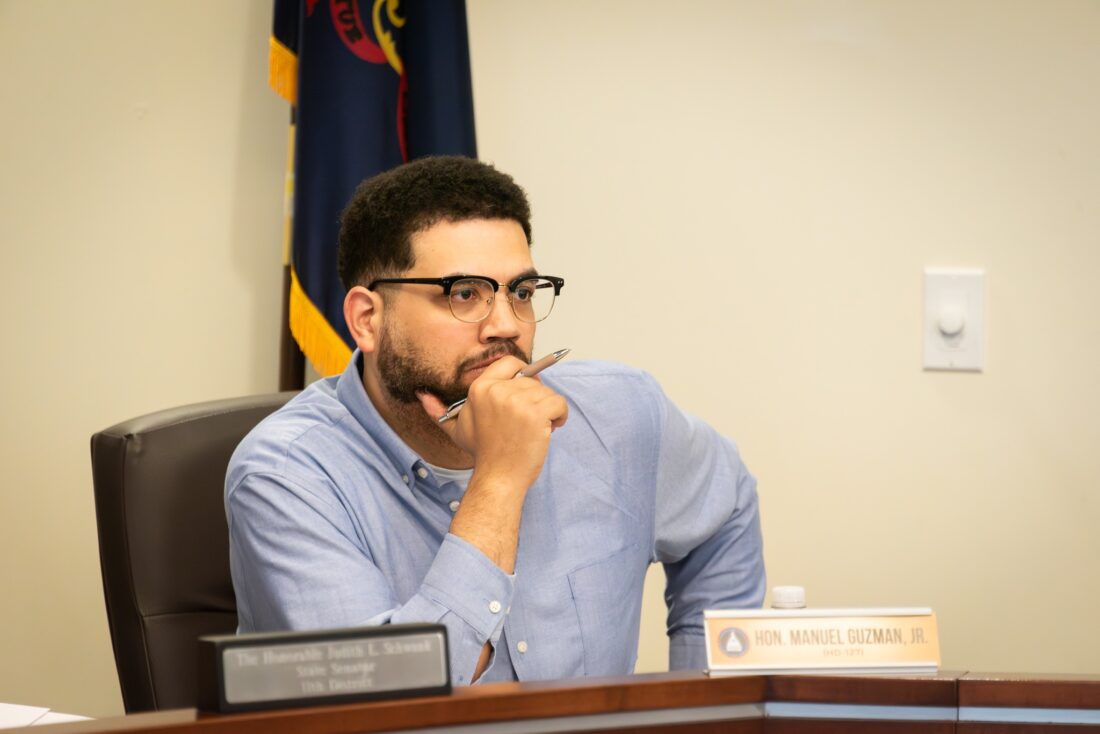
A state lawmaker is planState Rep Manuel Guzman, D-Reading, is pictured during a public hearing in Reading earlier this year.
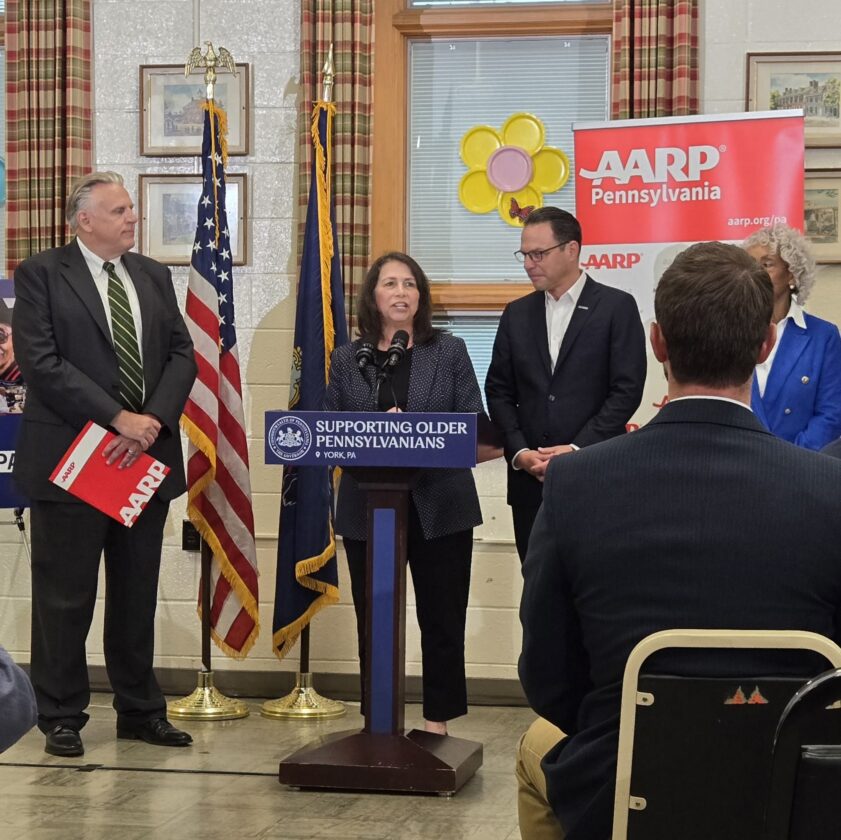
A Homecare Association official speaks during a June news conference as Gov. Josh Shapiro looks on.
State Sen. Scott Hutchinson, R-Oil City, speaks during a Senate Majority Policy Committee meeting earlier this year.
Sen. Dan Laughlin, R-Erie, is pictured helping stock trout in Girard earlier this month.
A state lawmaker is planState Rep Manuel Guzman, D-Reading, is pictured during a public hearing in Reading earlier this year.
A Homecare Association official speaks during a June news conference as Gov. Josh Shapiro looks on.
Trending
Whether they're for the expansion of protected land for hunting and fishing or whether they're concerned about the tax implications that come with removing land from the tax rolls, it's clear Warren County residents care about the expansion of state game lands
They also seem to care about what's happening in the state Capitol in Harrisburg and how those discussions may affect the way life is lived here. As the Times Observer staff reviewed the year's most-read stories, stories focused on the state Legislature popped up regularly. Two of the most-read stories focused on land acquisitions, while the most-read story centered on a lawmaker's attempt to expand Pennsylvania's motorcycle helmet law.
HELMET LAW EXPANDION
County residents took notice when state Rep. Manuel Guzman, D-Reading, began circulating a co-sponsorship memorandum for legislation he is drafting that would require all motorcycle operators and passengers - regardless of age or riding experience - to wear protective headgear.
"Motorcycle crashes remain a significant source of preventable death and injury in the commonwealth," Guzman wrote in his co-sponsorship memorandum. "Traumatic brain injuries, in particular, are among the leading causes of fatality and long-term disability among unhelmeted riders. While Pennsylvania law currently mandates helmet use for riders under 21 or those without at least two years of experience or a safety course, data continues to show that partial helmet laws do not provide sufficient protection to the riding public."
Pennsylvania law requires that any person who operates or rides a motorcycle (including an autocycle) must wear protective headgear unless the rider is over 21 years of age or older and has either two years of riding experience or has completed a motorcycle safety course approved by PennDOT or the Motorcycle Safety Foundation. In addition, the operator or an occupant of a three-wheeled motorcycle or autocycle equipped with an enclosed cab is exempt from wearing a helmet.
To comply with the Pennsylvania Motorcycle Helmet Law, motorcycle helmets must meet the standards approved by the United States Department of Transportation indicated by the "DOT" sticker on the helmet. The helmet must be labeled with the name or identification of the maker, precise model designation, size and the month and year the helmet was made.
The "DOT" sticker can be centered on the back of the outer shell of the helmet. Only the "DOT" sticker is required on the outside of the helmet. The remaining information must be legibly labeled so it can be read without removing padding or any other permanent part of the helmet.
Motorcyclists also are required to wear protective eye wear.
Guzman's proposal would continue to exempt three-wheeled motorcycles and autocycles from helmet regulations.
As of 2025, 19 states and the District of Columbia have enacted universal helmet laws, requiring all riders and passengers to wear helmets-regardless of age or experience - including California, New York, Maryland, Oregon and North Carolina.
"Motorcycle helmets save lives," Guzman wrote. "It's time for Pennsylvania to join the group of states that prioritize the safety of all riders equally."
Guzman's bill was formally introduced in the House in August and referred to the House Transportation Committee. It has not moved since.
HOME CARE INDUSTRY LOBBIES FOR HELP
Another story that generated interest this year was a Center Square report on the financial difficulties of the state's home care industry. In Pennsylvania, home care can cost families and the state less than half of what it costs to stay in a nursing facility or hospital setting, yet it's an industry, advocates say, that has been abandoned.
The Center Square spoke to Pennsylvania Homecare Association President Mia Haney to get a better understanding of the legislative landscape impacting the home care industry. At the center of the crisis, Haney says, are the state's reimbursement rates. Dollars paid through Medicaid trigger federal fund matching and cover the cost of home care services. Currently, Pennsylvania's rate is just $20.63, lower than each neighboring state.
Once the rate is paid, employers take out money for operational costs, taxes, unemployment, workers' compensation, and insurance, leaving workers with very little take-home pay. Set against similar roles in nursing homes and hospitals and similar pay in retail and service jobs, it has become a challenge to recruit staff.
"We are all vying for the same candidates," said Haney. "Home care used to be really attractive because you have flexibility of schedule. You can pick and choose your hours. You can pick and choose your cases, but technology has really made that viable for many, many competing industries now."
The result is that currently 112,000 shifts get missed per month. Those shifts could mean a missed bath, missed meal, or a missed moment of connection with the outside world.
"That's 112,000 plus times a customer, a client, a senior, an individual with disabilities is sitting there, waiting for someone to show up, and no one's coming," said Haney. "Frankly, that's just unacceptable, and Pennsylvania needs to do better."
Haney says that home care is preventative care. Workers who spend time with patients are able to notice changes in condition and liaise with doctors and other members of a care team. By doing this, costly emergency room visits and hospital admissions can be avoided. Home care is currently classified as an optional Medicaid benefit while nursing facilities are a dedicated benefit. Haney says that it reflects the state's "institutional bias" emerging from an "antiquated perspective."
Haney pointed to West Virginia, which recently raised their reimbursement rate from about $19 per hour to over $25 per hour.
"This is a funding priority," said Haney. "It saves money in the long run, and if we don't do it, we'll end up spending money on another line item in the budget, and we'll spend a lot more on that line item."
LIMITS ON GAME WARDENS ON PRIVATE PROPERTY
Changes could be coming to the way the state Game Commission accesses private land.
The state Supreme Court has heard a case from two private hunting clubs that are challenging the commission's ability to enter private property without a warrant to enforce state gaming laws. While the clubs wait for a decision from the court, a state lawmaker from Erie is drafting legislation that would enshrine limits on game wardens in state law.
Under current law, Pennsylvania Game Commission personnel have authority to enter private property and conduct surveillance without a warrant or probable cause even if landowners have clearly posted notices against trespassing. Enforcement power, according to Sen.. Dan Laughlin, R-Erie, is more powerful for the Game Commission than for law enforcement agencies.
"A recent court case involving the PGC's installation of motion-activated surveillance cameras on private hunting club properties without a warrant or probable cause highlights the need for reform," Laughlin wrote in his co-sponsorship memorandum. "My legislation will limit the PGC's unfettered statutory authority from entering private property without any independent probable cause that a crime has occurred, when a landowner has provided reasonable notice against trespass."
The course case Laughlin refers to is Punxsutawney Hunting Club Inc. and Pitch Pine Hunting Club Inc. v. Pennsylvania Game Commission and Mark Gritzer, in his official capacity as an officer of the Pennsylvania Game Commission. An appellate court dismissed the hunting clubs' lawsuit against the Game Commission in May 2023. The clubs appealed to the state Supreme Court, which heard oral arguments earlier this month but has not yet handed down a decision. The appeal didn't take a stance on the issues raised by the two hunting clubs because the clubs were directly challenging a 2007 state Supreme Court decision in Russo v. Commonwealth in which the state Supreme Court held that the state Game Commission could enter open fields in order to enforce state hunting regulations even if the land is posted with no trespassing signs.
The open fields doctrine upheld in the Russo decision involves a rule dating back to 1924 that allows government officials to search private property, not homes, without a warrant. The Supreme Court in 1924 held that the open fields doctrine isn't covered under the Fourth Amendment involving unreasonable searches. That is the rule the Game Commission uses when game wardens go onto private property to enforce game laws like bag limits, hunting out of season and improper use of baits aren't being violated. It's been upheld both at the state Supreme Court level and by the U.S. Supreme Court in related decisions.
"The hunting clubs filed the present action to challenge the constitutionality of the entry statutes as violative of Section 8, which forbids warrantless searches of 'possessions,' Judge Michael Wojcik wrote in the appellate court decision. "The hunting clubs argue that private land is a 'possession' within the purview of constitutional protection. However, the hunting clubs recognize that the Pennsylvania Supreme Court previously rejected similar constitutional claims in Russo. The hunting clubs further recognize that this Court is bound by, and may not overturn, this binding precedent."
Times Observer readers are interested in the concept – but legislation has yet to be formally introduced in the state Senate.
HUTCHINSON PROPOSES BILL TO BOOST CPA RANKS
The region's state senator was the driving force behind legislation to boost the number of certified public accountants in the state. Readers took note, judging from the analytics at timesobserver.com.
Sen. Scott Hutchinson, R-Oil City, and Sen. Nick Pisciottano, D-Monroeville, introduced Senate Bill 719, a proposal the lawmakers have been working on with the Pennsylvania Institute of Certified Public Accountants (PICPA) and the Pennsylvania Society of Tax and Accounting Professionals (PSTAP). The bill will modernize the licensure process in Pennsylvania, which Hutchinson and Pisciottano say will address the evolving needs of the accounting profession.
Senate Bill 719 passed unanimously in the House of Representatives on June 26 following a unanimous vote in the Senate and was signed by Governor Shapiro on June 30.
"This legislation represents a critical step forward for Pennsylvania's workforce and economy," said Senator Hutchinson. "With fewer individuals entering the accounting profession and a significant portion of CPAs nearing retirement age, our state was in urgent need of reform. I'm proud that Act 27 will help reverse that trend by modernizing licensure requirements while maintaining the integrity and rigor of the profession."
Jennifer Cryder, CEO of the Pennsylvania Institute of Certified Public Accountants (PICPA), recently told the Philadelphia Business Journal that the accounting profession in Pennsylvania has more CPAs retiring and leaving the profession than it does new CPAs entering the state. That leads to a shortage of CPAs to work with businesses and individuals on tax planning, audits, risk management and strategic advice.
Additionally, between 2020 and 2022, the number of bachelor's degrees awarded in accounting declined by 7.8%. These concerning trends highlight the urgent need for action to address workforce challenges and ensure the long-term vitality of the profession."
"These updates will reduce barriers to entry for aspiring CPAs, align Pennsylvania's licensure framework with workforce realities, and promote greater mobility for accounting professionals across state lines," Hutchinson and Pisciottano wrote.
CHARLIE KIRK DAY PROPOSED
Legislation that struck a nerve with Times Observer readers was introduced in the state House of Representatives shortly after the assassination of Charlie Kirk. Sponsored by Rep. Russ Diamond, House Bill 1929 would establish Charlie Kirk Day as an official state holiday on the first Monday of August each year.
Kirk, the CEO and co-founder of the conservative youth organization Turning Point USA, was a top podcaster, culture warrior and ally of President Donald Trump who was killed Sept. 10 by an assassin in Utah. Rep. Russ Diamond, R-Jonestown, introduced a co-sponsorship memorandum for a bill he is drafting to honor Kirk every year. West Virginia legislators are considering similar legislation in October each year on Kirk's birthday.
"Honoring Charlie Kirk's life and work would continue Pennsylvania's long history as the nation's foremost guarantor of free speech - a legacy dating back to our commonwealth's 1776 Constitution, in which we were the first state in the world to enshrine the freedom of speech in a constitution.," Diamond wrote in his co-sponsorship memorandum. "By establishing Charlie Kirk Day on the first Monday of each August, the month when college and university students traditionally return to campus, we can honor his legacy and continue his work to celebrate, encourage, and teach peaceful and civil political discourse to all Americans."
It's unclear if Diamond's legislation stands much chance of becoming law given that Democrats control the state House and Gov. Josh Shapiro's criticism of President Donald Trump over the weekend. While Shapiro last week ordered United States and Commonwealth flags on all state facilities, public buildings, and grounds across the Commonwealth of Pennsylvania to fly at half-staff as a mark of respect for Kirk's memory of Charlie Kirk through Sept. 14. Not all Democrats agreed with Shapiro's decision. Sen. Anthony Williams, D-Philadelphia, was critical last week of Shapiro's decision to lower flags to half-mast, which followed a federal order by President Donald Trump. Shapiro, meanwhile, was critical of Trump's statement condemning political violence because it didn't list recent attacks on Democratic lawmakers - including Shapiro.
Diamond's bill has yet to move out of the Tourism, Recreation & Economic Development Committee.