
Dems want rainy day funds to fill SNAP Gap
Trending
Democrats in the state Legislature plan to introduce legislation to use a portion of the state's Rainy Day Fund to help families affected by the loss of SNAP benefits.
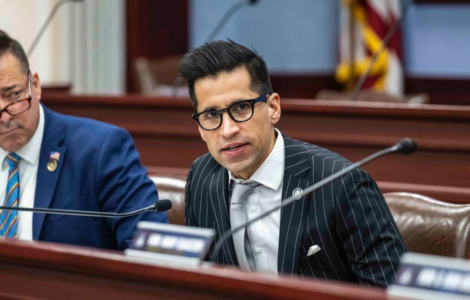
Rep. Tarik Khan, D-Philadelphia, and Senators Art Haywood, D-Philadelphia, and Jay Costa, D-Allegheny, are introducing legislation in both the House and Senate. Under the plan, Pennsylvania would allocate $50 million to support local food banks across all 67 counties, provide $10 million to Meals on Wheels to deliver meals to older adults and individuals with disabilities and add resources to the Pennsylvania Department of Agriculture to coordinate and oversee the program statewide.
"As a nurse practitioner, I've seen how hunger hurts people's health -- especially children and older adults," Khan said. "Kids can't learn or grow when they're hungry, and older adults shouldn't have to skip meals to afford medicine. Hunger harms the body and robs people of their dignity. No one in Pennsylvania should have to feel unsafe or ashamed because they can't afford to eat."
The Supplemental Nutrition Assistance Program helps about one in eight Americans buy groceries. Most SNAP participants are families with children, more than 1 in 3 include older adults or someone with a disability, and close to 2 in 5 are households where someone is employed. Most have incomes below the poverty line, about $32,000 for a family of four, according to the Center on Budget and Policy Priorities. The USDA says nearly 16 million children received SNAP benefits in 2023.
On Tuesday, Gov. Josh Shapiro joined a coalition of 25 states and the District of Columbia in suing the Trump Administration for unlawfully suspending SNAP. The lawsuit argues that while normal appropriations for SNAP have lapsed because Republicans in Washington -- who control both Congress and the White House -- failed to pass a federal budget, alternative funds do exist and must be used to fund the program. In Pennsylvania last year, approximately 714,000 children and 697,000 seniors relied on SNAP every month.
"For the first time since the program began in 1964, SNAP payments have been halted across the country because the Trump Administration has decided to use critical food assistance as a political bargaining chip," said Governor Shapiro. "That is unacceptable, especially when the USDA has billions of dollars in Congressionally-appropriated contingency funding on hand to fund SNAP and ensure millions of people don't go hungry. Republicans in Washington need to come to the table and reopen the federal government -- but in the meantime, I'm taking legal action to demand that the Trump Administration continue SNAP payments that nearly two million Pennsylvanians rely on to feed themselves and their families."
Earlier this month, the USDA directed the Pennsylvania Department of Human Services and other states to pause November SNAP benefits due to the federal shutdown. Pennsylvania complied, and alerted the public to the pause in benefits on Oct. 20, citing a lack of federal funding. Then, last week, the USDA formally suspended November benefits.
Shapiro said the lawsuit focuses on the USDA's contingency plan for SNAP, which the 25 states say acknowledged the existence of nearly $6 billion in "multi-year contingency funds that can be used for State Administrative Expenses to ensure that the state can also continue operations during a Federal Government shutdown." That contingency plan has since been deleted, with the USDA conceding Friday in a memo it won't follow its own contingency plan to feed 42 million Americans who receive monthly payments.
According to the Associated Press, the Special Supplemental Nutrition Program for Women, Infants and Children helps more than 6 million low-income mothers, young children and expectant parents purchase nutritious staples such as fruits and vegetables, low-fat milk and infant formula.
"Our charitable food system, particularly in rural areas, is on the brink of collapse without funding from the state or federal government," said Rep. Emily Kinkead, D-Bellevue. "With SNAP payments not coming on Nov. 1, people are being directed to their local food banks -- but where will they go if those organizations close? If we do not act, Pennsylvanians will suffer irreparable harm. We can continue to debate our budget, but we have to stop playing politics with real people's lives. Let us help people today and get back to the negotiating table tonight."