
‘Internally inconsistent’: Council hears feedback on draft short-term rental regulations
Trending
A public hearing was held regarding the city's new zoning ordinance.
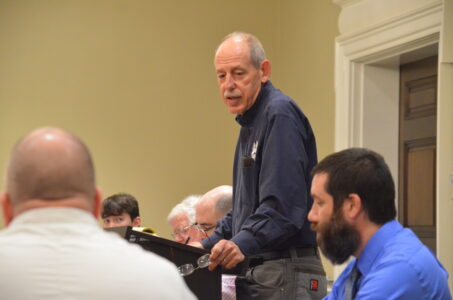
Only one individual, Arthur Stewart, addressed council.
And he argued that regulations regarding short-term rentals like Airbnb and VRBO are "internally inconsistent" with the rest of the ordinance.
Stewart said that the "nature of our community" -- declines in employment, student population, etc. -- is part of his opposition.
"Why would we as a city impose conditions that would be restrictive … to the few things we can do to enhance our economy? Short-term rentals. The future is here now with it."
The city's draft zoning ordinance includes six specific requirements for short-term rentals.
First, a short-term rental "shall not have any outside appearance indicating a change of use from the surrounding residential uses."
Further, "the property owner must designate a local property representative for the purpose of" responding to complaints. "The name, address, email address and telephone contact number of the property owner and the local property representative shall be kept on file at the city and posted at the property."
The draft ordinance also limits the purpose for a short-term rental to prohibit "a purpose other than or not incidental to its use for overnight lodging.
"This restriction includes using the rental for a wedding, banquet, reception, bachelor or bachelorette party, concert, fundraiser, sponsored event, or any similar group activity."
Additional requirements include owners providing the city with a certificate of insurance "documenting that the dwelling is insured as a short-term or vacation rental; smoke detectors located as required and one off-street parking space located on site.
Short-term rentals are permitted in all zoning districts except industrial and single-family residential R1; though any current short-term rentals in those areas will be grandfathered in.
Stewart then highlighted the concern of tracking down what people will use short-term rentals for.
"(It) doesn't work like that," he said. "How am I going to do that with my potential customers?"
Stewart then attacked the "logical inconsistencies" of the regulations, pointing out that there are multiple places people can stay in the city but "it's only on short-term rentals that you want to impose on these things except for a new condition on bed and breakfasts."
He said contact information for an owner isn't required when one rents a house longer than 30 days or for a boarding house.
"I understand the public trust," he said. "I understand when charged with a duty, you get a vision and you want to do what you can to protect a neighborhood."
He said, though, that it’s possible to get "tunnel vision," locking on what potential benefits without considering potential harm.
"Do we have a problem with short term rentals and bed and breakfasts?" he asked. "We're in a community that cannot afford to turn away business opportunities.
"You have created something that is internally inconsistent with your ordinance," he added, calling on council to enact regulations in a "welcoming" format.
"Council is in receive mode," Mayor David Wortman said at the outset of the hearing.
Council will exit that mode at a work session specifically to discuss the zoning ordinance that is scheduled for April 1 at 6 p.m.