
Doctor publishes book that looks back on career in Warren
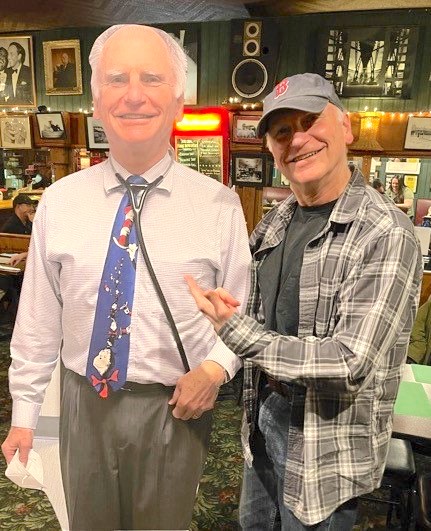
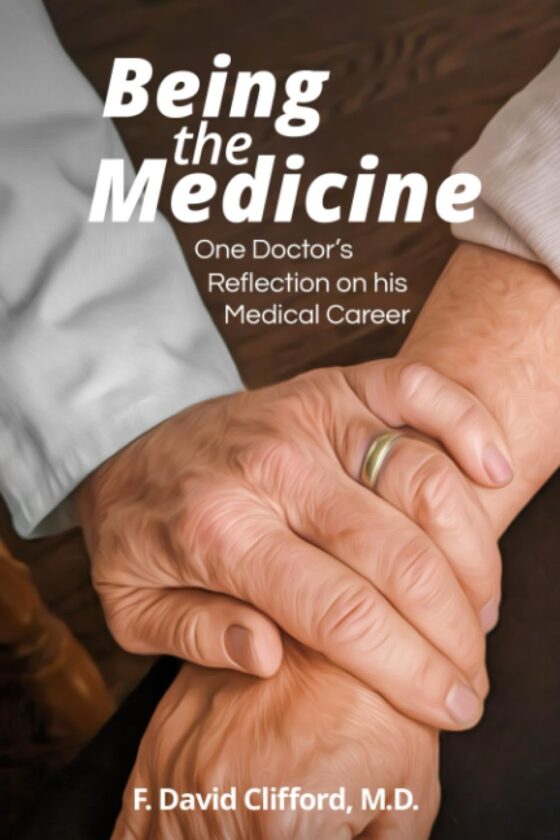
Photo provided to the Times Observer Dr. David Clifford has published a book on his extensive medical career, much of which was spent in Warren. He’s shown here, with a cardboard cutout of himself that he was given when he retired two years
Photo provided to the Times Observer Dr. David Clifford has published a book on his extensive medical career, much of which was spent in Warren. He’s shown here, with a cardboard cutout of himself that he was given when he retired two years
Trending
Dr. David Clifford spent the lion's share of his career practicing as a family doctor in Warren.
The Philadelphia-native had never been to Warren before the opportunity to join a family practice presented itself after med school in the mid-1980s.
But a career was born that would span four decades.
And he's published a book capturing some of his thoughts on those decades of service.
It's entitled "Being the Medicine: One Doctor's Reflection on his Medical Career" and it's available on Amazon.
"The audience is two-fold," Clifford told the Times Observer – both his friends and family so they can get a sense for what he did and health care workers more broadly.
"To me, the ideals of providing medicine is why I went into it," he said. "I wanted to put it down – reflections, actually gratitude, thankfulness. I wanted to put it down in some organized words."
Clifford grew up outside of Philadelphia, where he also attended med school and residency. "Family medicine gave me the most opportunity to connect with people," he said.
After he finished residency, he needed a job. That's when he found out that three family doctors in Warren were looking for a fourth.
"(It) just really clicked with the guys and really the rest is history," Clifford, who moved back to the Philadelphia area after he retired two years ago, said. "Having grown up here, I fell in love with rural America and northwest Pennsylvania."
After several years in Warren and some short-term mission trips, Clifford accepted a position with Wycliffe Bible Translators practicing tropical medicine where he worked between 1993 and 2000.
He then returned to the practice in Warren where he worked until he retired. "In essence, we were a mom-and-pop store," Clifford said of Family Medicine. "(We were) not part of any mega organization. We just did our own thing. To me it was delightful. We determined how we were going to practice medicine.
"We put out our own brand and it did well."
It was toward the end of his career that he got a sense he wanted to write about his experience. He had written a smaller narrative about the people he worked with at Family Medicine just to give to his coworkers.
"That was light and fun," he said. "I knew I wanted to write something more serious. That's where this thing came out."
For a doctor who chose his field specifically to interact with people, it shouldn't come as a surprise that the industrialization of medicine was one of the most substantial changes he saw.
"It's the medical industrial complex where it's just become a mega-business," he said. "(You) got bean counters that are directing the focus.
"That coupled with all of the government regulations, insurance regulations, it's just onerous for a provider that has to wade through all that extra work when all you want to do is help the patient in the room.
"To me, the most important thing in the room is the person."
A challenge specific to rural medicine that he outlined is attracting and keeping providers. "You want a good provider. You want competent providers. You have to pay for them," he said. "You want competent providers who maybe can get a higher salary in the city than out in Warren County. There has to be something else that attracts them.
"And there is," he added. "I grew up in the city. We appreciated Warren County but not everybody does that."
Not being able to recruit people that are going to stay more than a couple years will result in getting "people who are lower on the competency scale. You're going to get the bottom of the barrel. Those people are going to be transient.
"That's pretty scary and that's what should be keeping people up at night."
But it's not all doom and gloom. Clifford spoke glowingly about the "amazing camaraderie of co-professionals which was tremendous. You don't see that in big cities."
If you have a patient that needs in somewhere else, there is often a relationship to draw on to make that happen.
"It was almost like a family," he said. "The people that benefited were the patients. That's priceless to me. (You) can continue to have that. That's what I saw up there."