
Region II school board candidates state their case
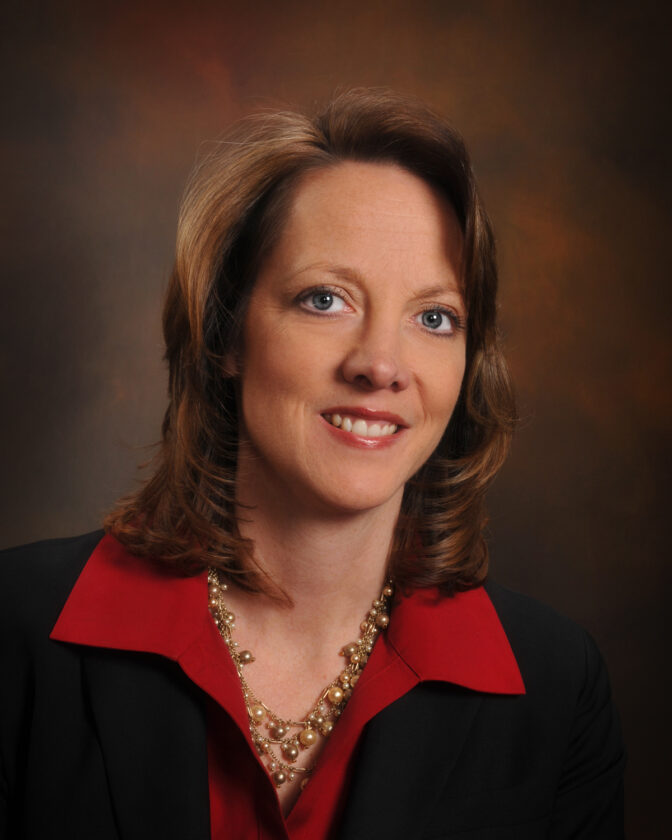
Donna Zariczny
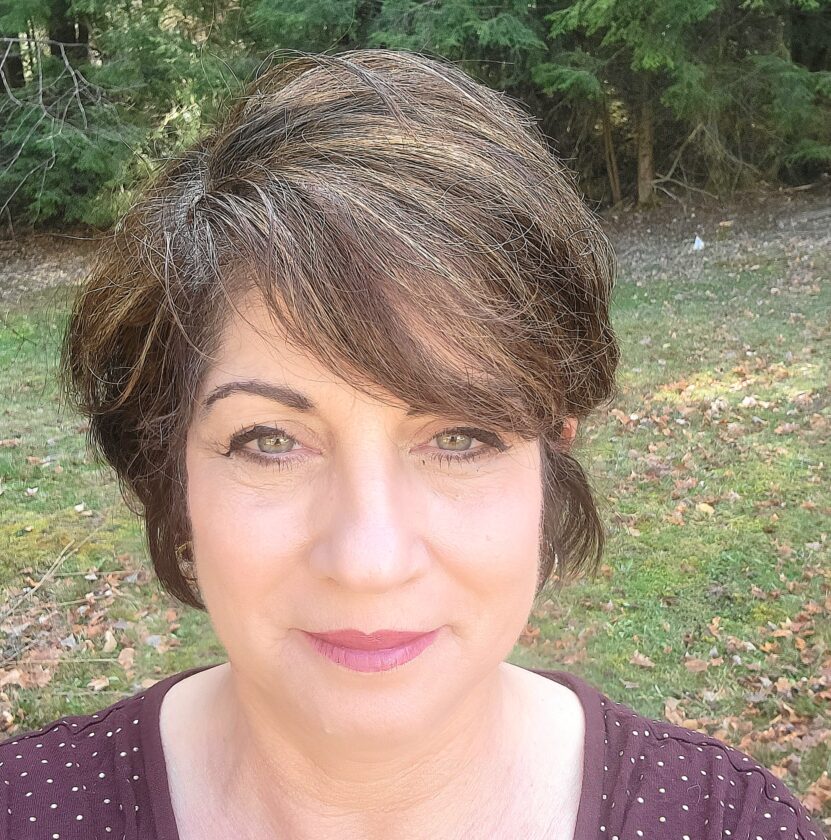
Tammi Holden
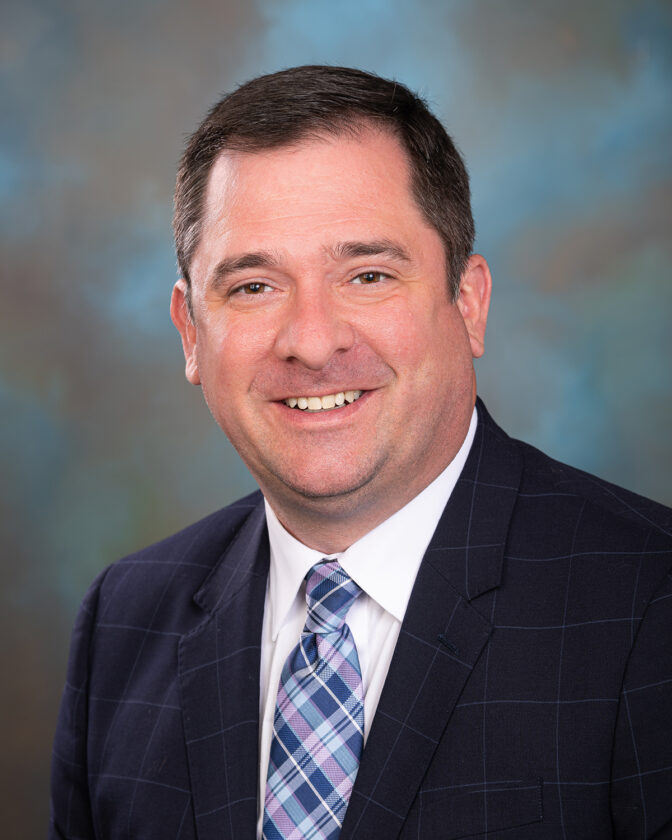
Joe Colosimo

Savanna Cochran
Donna Zariczny
Tammi Holden
Joe Colosimo
Savanna Cochran
Trending
When polls open Tuesday, there will be 10 candidates on ballots and one announced write-in campaign for six open seats on the Warren County School District board of directors.
Warren County is broken into three separate Regions with respect to the school board.
There are five candidates for seats in Region II, four candidates in Region III, and two, including the write-in campaign, in Region I.
Today's story will feature the five Region II candidates - incumbents Joe Colosimo and Donna Zariczny, and challengers Savanna Cochran, Tammi Holden, and Stephanie Snell -- vying for three open seats. Each candidate was asked the same list of questions - with topics including the budget, reconfiguration and small schools, and transparency and openness. Candidates were also asked for issues outside of reconfiguration that are of importance to them. Each candidate's full answers will be posted at www.timesobserver.com.
Q: The district's budget has ballooned over the last decade from the $65 million range to the $95 million range. This is in spite of continued, sustained declines in the number of students it serves. What actions would you propose to address that stark increase?
Some candidates mentioned economic conditions and inflation as significant causes of the budget increases. Others pointed to increasing mandates and millions in new revenues.
Savanna Cochran: "I would definitely want to take actions to ensure there are not funds being allocated to non-essential purposes, but that the budget increase is benefiting the students in every way possible."
Stephanie Snell: "I would like more information as to exactly what is being stored at these storage buildings," she said referring to former Pleasant and Sugar Grove school buildings that have taken on other uses for the district. "Is there an inventory list and are these items being used before more ordering is taking place? Also I question when making purchases, are prices being checked from multiple vendors to ensure the lowest price is being received? Have we tried to negotiate with vendors for lower prices?"
Tammi Holden: "Some out-of-the-box thinking is required to look past the constant state of continued increases," Holden said. "The district's monetary and staffing resources should focus on the budgetary goals, and strive for continually improving results. Instead of always starting with the last year's budget, start with the process by determining what you need to accomplish. Assess HR inefficiencies, explore the possibility of cost sharing, eliminate the need for separate storage facilities by providing storage in the existing school buildings, lease property for cell towers in the area, utilize an inter-district loan program - for example, instead of buying each school their own lawn equipment, buy two and share between schools when needed, cost share IT support costs, staff, and infrastructure with nearby districts, and a public survey of virtual students asking why they felt the need to leave the brick and mortar schools for virtual learning and evaluate those responses to determine where we need help within the buildings. This may put more students back into the classroom."
Donna Zariczny: "Over the last decade we have seen an increase in funded and unfunded mandates from the state and federal government. Our special education needs throughout the district increase year after year as do charter costs and pension costs. With approximately 65 percent of the budget going to staff salaries and benefits, finding more efficient and effective ways to employ staff is crucial to supporting the education of our students. I think we have to look at ways to operate in a more efficient manner, from the delivery of the curriculum, to utilities, transportation and the facilities that we educate the students in."
Joe Colosimo: "Annual inflation, excluding food and energy, averaged 2.63 percent over this date range. The WCSD budget increased, on average, about 3.56 percent and includes increases in food and energy costs not reflected. Not captured in grants or inflation is the impact of PSERS (retirement) contributions over the stated timeframe. These rose from $3.5 million in 2013 to $11.2 million in 2022 (320% increase). The board and administration have done a very good job managing district funds as can be supported by the annual audits conducted by Felix & Gloekler," he said. "We have no major findings over this timeframe. Prior to COVID, the board has engaged in a strenuous, detailed and public budget planning process. When administration asked for additions, they were required to provide a list of corresponding cuts to 'pay for' the additions."
Q: During recent discussions of high school reconfiguration options, Board Member Arthur Stewart asked a question that can be summarized like this "At what point is a school too small?" Projections show continued decline in the number of students. And, to date, the actual decline has far outpaced the projection.? Regardless of the current board's decision on reconfiguration, how small is too small?
Stephanie Snell: "When you are unable to have your basic classes with the set minimum of 12 then the school is probably too small. Many school districts around us operate with less kids than Sheffield and Youngsville and score significantly higher in the state. Oswayo Valley, for instance, has 89 students in grades 9 through 12 and rank 212 in the state for education."
Tammi Holden: "I have seen proof of small schools with a complete 9 through 12 population of 188 do very well on testing and graduation rate as well as college preparedness. Those other schools are able to provide sports, music, AP and CP classes and have a stellar school spirit and teacher retention. None of those districts is considering consolidation or school closings. For some reason only in the Warren County school district is this an issue," she said. "This is doing a great disservice to these small schools. They are not dysfunctional."
Donna Zariczny: "We have seen drastic population decline in our county over the time I have served on the board,. As our student population has declined, we have seen changes in many areas within our educational environment… it starts to affect our core curricular offerings based on student population within a building. With a nationwide teacher shortage, it is important that we retain as much staff as possible and provide a positive work environment.
Joe Colosimo: "We are actually below the population numbers provided in forecasts from the early 90s. If I am re-elected, I will propose a minimum school size, similar reasoning that we have in place with sports programs. I would draw on administration to provide guidance in terms of the accurate number of students that allows for great educational programming and at what point is that diminished or is it cost prohibitive to keep a school open."
Savanna Cochran: "Student population per class per school is not projected to decline much more than it was in the last 10 years. This data is unchanged from when they built the new Sheffield school almost 20 years ago. Considering (the current board's) goal is not to close the school but consolidate four grades means the building will remain open regardless. The question of 'how small is too small' is a moot point. Students are more successful academically when classroom numbers are lower. Prime example, parents pay to have their children attend private schools because of the smaller class sizes."
Q: Several candidates have raised concerns about openness and transparency. Are there failings in this area now? If there are, what proposals would you make to remedy the issues you see?
Tammi Holden: "While we all know that the board meetings are open to the public, not everyone in the district subscribes to the paper or has good internet access to Zoom into the meetings. This leaves a huge potential for communication gaps. I feel that often times the limitation of discussion during the board meetings has contributed ... and the constituency has every right to be mistrustful and concerned with the lack of transparency. The seated board members need to represent all of the students and communities within their region. Not just the one where they reside. My solution would be to form a Citizen's Advisory Committee. This would include a member of each attendance community and perhaps a willing staff volunteer. This committee would act as a liaison between the board and the community to keep both sides apprised of concerns and questions. The committee would have no authority but would serve as an informational pipeline between the board, the schools and the public."
Donna Zariczny: "I am a strong believer in open communication. The WCSD has many avenues of communication: the District website and social media, building level website and social media, call blasts, phone communications and paper communications. There are also many times when important issues are represented through newspaper, radio or television coverage. The WCSD Board of Directors meets regularly with monthly board meetings, monthly committee meetings and other special meetings or work sessions as the need arises. As an advent of COVID, we have organized our meetings to have virtual coverage for those not able to attend in person."
Joe Colosimo: "I have been on the board for seven plus years and have attended countless public meetings. As is typically the case, if we are not discussing sports or buildings, we have very poor public attendance. Much of the information, in today's environment, that is being labeled as lack of transparency and openness, has been discussed publicly for years. Take the master facility plan for instance… we started the current version in 2018, five years ago. There are no secret hand shakes or signs used by board members. I can say emphatically that administration, the board and the solicitor take Sunshine very seriously. As long as I have been a member of this board of education, I have witnessed, first hand, very apolitical actions. Members on polar opposites of the political spectrum have come together to serve all the children of the district."
Savanna Cochran: "There are definitely areas of communication, transparency, and clarity that show some room for improvement in the current environment. I believe there is a general confusion amongst the community in regards to this (reconfiguration) initiative. There have been questions of whether it is monetarily based, course improvement, etc. I think the school board and district have an obligation to provide more concise and open dialogue with the community. My goal as a member of the school board would be to answer questions openly and honestly while maintaining a respectful and understanding relationship with the community. Trust is a necessary factor to the relationship formed between the community and the people making decisions for their children. My ultimate goal is to form that bond."
Stephanie Snell: "I do feel there are issues with the openness and transparency. I feel that there should be an opportunity during the board meetings for open, civilized dialog between the attendees and the board. I would like also like to see easier accessibility to the board docs. I know the information you are looking for is there, it is just, 'Where is it buried?'"
Q: Reconfiguration is clearly the dominant issue in this election cycle. If you're elected to the board, please identify two specific issues – and corresponding solutions – that you would focus on that are NOT related to reconfiguration.
Donna Zariczny: "As I stated earlier, unfunded mandates affect the operation and budget of our district to a great degree. All too often, legislative changes at the state and federal level dictate the spending of our budget. It is important that we as a board advocate on behalf of the district with our legislators to let them know what we are doing well, but also communicate the challenges we are facing based on legislative actions. The teacher shortage is another specific issue that needs to be addressed. This is a nationwide issue, but we need to provide local means to bring residents back to our communities to educate our students. One of those ways is to grow our own. By implementing the early childhood program at our career center next year, we are allowing students to see the benefit they have on a child's life and offer them a drive to move in that direction long term."
Joe Colosimo: "The most important issue that impacts the WCSD is charter funding reform. Every school district has a different tuition rate than that of any other school district in the state. We actually pay a higher rate to cyber charters than we do our only brick and mortar charter school in Tidioute. The second issue is the current state of pension reform necessary to aid local school districts like the WCSD. Pennsylvania is 41 out of 50 in terms of the funding status of our state pension. We are only 56 percent funded. To put it another way, for every dollar we owe current and future pensioners, we only have 56 cents of it in the fund. The solutions can only be found in legislative action on the part of the state."
Savanna Cochran: "Two specific issues and solutions I would focus on are: low test scores combined with higher academic achievement and increased teacher retention. Meeting with teachers to discuss the evidence-based course work and methods to increase test scores and enrich the curriculum is vital. This requires open dialogue to discuss what is and is not working for our community and education system. Teachers are that direct link to our children's academic outcomes, i.e. improving test scores and providing higher academic achievement. A happy learning environment starts with happy educators. Retention of our teachers is pivotal to our future as a district in my opinion. Continuity in any environment is a direct relationship to improved outcomes. Focusing on our teachers is a way to help our children with stable learning environments."
Stephanie Snell: "The first issue I would address is bullying. There is too much bullying going on in all the schools in the district. I feel there needs to be swift and consistence consequences. There should be an absolute zero policy and harsher punishments even for first time occurrences. The second issue I would address is teacher acquisition and retention. A successful teacher starts with a happy environment. I think it's imperative that our teachers feel valued and secure in knowing that administration is on their side."
Holden said she would like to see "creative solutions to teacher recruitment and retention" and have a look at block scheduling "to reduce teacher and student scheduling conflict and stress."
Q: The current school board has set a timeline for making a decision on reconfiguration. As a result, the decision will be made, and presumably at least partly implemented, before you take office for the term you're seeking in this election. In short, the next board will have to live with this board's decision. What challenges do you foresee there, especially given that you will likely have to serve with people that disagreed with your position on this issue?
Joe Colosimo: "I joined the board on the heels of the previous master facility plan conversations. Decisions were made regarding that and the myriad of other items to come before the board. I respected their decisions and had a forward focus. I truly believe that all school board members that volunteer their time for school board positions have a passion for education and a desire to make things better for the children in our county. To say otherwise, is just flat out wrong. These community members will often have differing views and passions. To try to make retroactive changes does nothing beneficial for any of the stakeholders involved."
Savanna Cochran: "The point to having open dialogue and honest communication is because every child is not the same nor do they require the same support. Every viewpoint can offer a new perspective. Whether or not that leads to a differing in opinions or goals our main initiative is our community and our children. We need to maintain a respectful and open-minded board. We need to lead by example, hopefully sculpting the future academic system we can be proud of, because how we represent our community will reflect in our children's decisions and behaviors one day."
Tammi Holden: "I have decided to serve on the board to bring some new ideas to the table. I have engaged and volunteered for many years and I have worked with youth throughout this entire county. Our teachers along with our students and communities are our greatest assets. Regardless of the current board decision, our purpose is to help students fulfill their goals for their futures, whether it be a doctor, lawyer, electrician or oil field laborer. All of the students in our district deserve respect and education in order to become good citizens. It should focus on the individual students and not just the academic achievements, mandated test scores, classroom numbers or enrollment numbers. I am not in the habit of carrying grudges, but I will speak up for what I believe to be right and true for all of our students."
Stephanie Snell: "Some of the challenges I foresee will be the impact to the budget depending on the option chosen. If the reconfiguration of either Sheffield or Youngsville is the chosen option, I foresee a significant increase in PA Cyber or another alternative education choice, costing the district greatly. I also foresee the need for mental health services skyrocketing, again depending on the board's decision. Despite the difference of opinion, it is most important to focus on all students and their overall wellbeing."
Donna Zariczny: "I am a proponent of having some continuity of board members to follow through on initiatives being implemented across the district. Many issues do not get resolved in one year or even one term and having some continuity helps to achieve board goals and improve the educational environment for the students. We don't always agree as board members, and it is important to understand that a majority vote is the decision of the board and respect that decision and my fellow board members. As a board member we don't serve just one student, one community or even one region. We make decisions that affect the entire population of the Warren County School District."