
Airbnb regs debated by newly-minted task force
Trending
A task force was established by the Warren County Planning Commission to review a proposal for regulations for short-term rentals – Airbnbs and VRBOs, for example.
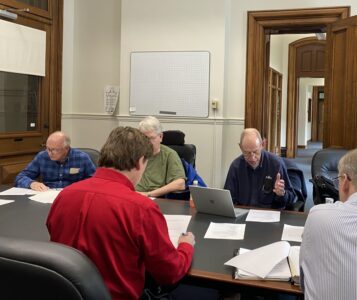
That group – made up of members of the public and members of the Commission – met for the first time on Tuesday.
And there's clearly much work to be done to find consensus, if that consensus can be found at all.
The proposed regulations were presented to the Commission for the first time last month and received blistering public criticism.
That criticism continued right off the bat in Tuesday's session.
Arthur Stewart suggested that the proposal was derived from a "limited authority" vested under the county and addressed issues of taxation and fire safety that "aren't traditionally regarded or legally regarded" as items to address in a zoning ordinance.
He pointed out that there are "similar facilities" in the existing zoning ordinance – ranging from personal care homes to bed and breakfasts – that have "no regulation of what rooms persons can sleep in" or safety signage requirements.
"Why are we singling out short-term rentals for such harsh and unusual treatment?" Stewart asked.
Commission member Jeff Zariczny pointed out that these regulations are a "first draft" and that it "needs a lot of work."
"The UCC (Uniform Construction Code)trumps a lot of these things," he added.
"This proposed regulation says no structure can be occupied for a short-term rental if not built to the UCC," Stewart responded, arguing that is a higher burden than most residential properties in the county, namely those grandfathered in prior to the imposition of the building code.
Stewart called that provision "incredibly inequitable."
Ed Sekerak noted that some of the regulations – indoor safety signage, for example – "would require someone to do an inspection."
He said the county "better have the ability to enforce it."
Sekerak acknowledged that the regulations will only cover the 13 municipalities covered by the county's zoning ordinance.
Those 13 include Clarendon, Sugar Grove and Tidioute boroughs as well as Columbus, Conewango, Eldred, Elk, Glade, Mead, Pine Grove, Pleasant and Southwest townships, per the zoning ordinance.
"It's still going to limit the right of the people that own those types of property," he argued. "It becomes a deterrent to people that come and visit the area (and might look to purchase property). Tourism is the only thing you've got to look forward to here."
Commission member Gary Wareham said he reviewed other attempts at regulation in this space and explained that one set of regulations outlined the number of people that could sleep in each bedroom.
The building code issue was one that kept coming up.
Zariczny said international code officials are debating whether regulations on short-term rentals should be developed in the code.
Stewart argued that if the building code should apply here that "logic would dictate you would also require every house that's occupied to live up to the building code." He said "very few" homes, only those constructed recently, would meet that standard.
Zariczny responded by noting that there is a difference between transient and permanent housing.
"Any change to a short-term rental is a change in occupancy which adds certain other requirements," he explained. "The bigger thing to me is… it's the 5,6,10… where they have a large structure and start subdividing it." creating density, fire and parking issues.
He added that the code requires anything after one- and two-family residences to have sprinklers.
"There's a reason why it's done," he said. "(I'm) not sure I'm advocating that but there's a reason why it's done."
He stressed that the goal of the task force is to "devise something new" and suggested that the option of implementing no regulations is "on the table."
"We disagree on the most fundamental and draconian (provision," Stewart said, citing the building code issue. "What you really want to do here, what you are really requiring, is that they also certify living up to the building code."
Deputy Planning Director Michael Lyon acknowledged that "some of the language and definitions" in his first proposal to the commission "need to be updated," specifically for legal, non-conforming structures that were grandfathered in.
"What that's meant to prevent," he said, is "someone buying an Amish shed and renting it out with no other permits."
Zariczny asked the task force members to propose edits to the original set of regulations. A second task force meeting would be scheduled following those proposals.
"Somehow we have to find a middle ground," he said. "There are reasons to have some regulation."