
Downtown building traces roots to 1870s
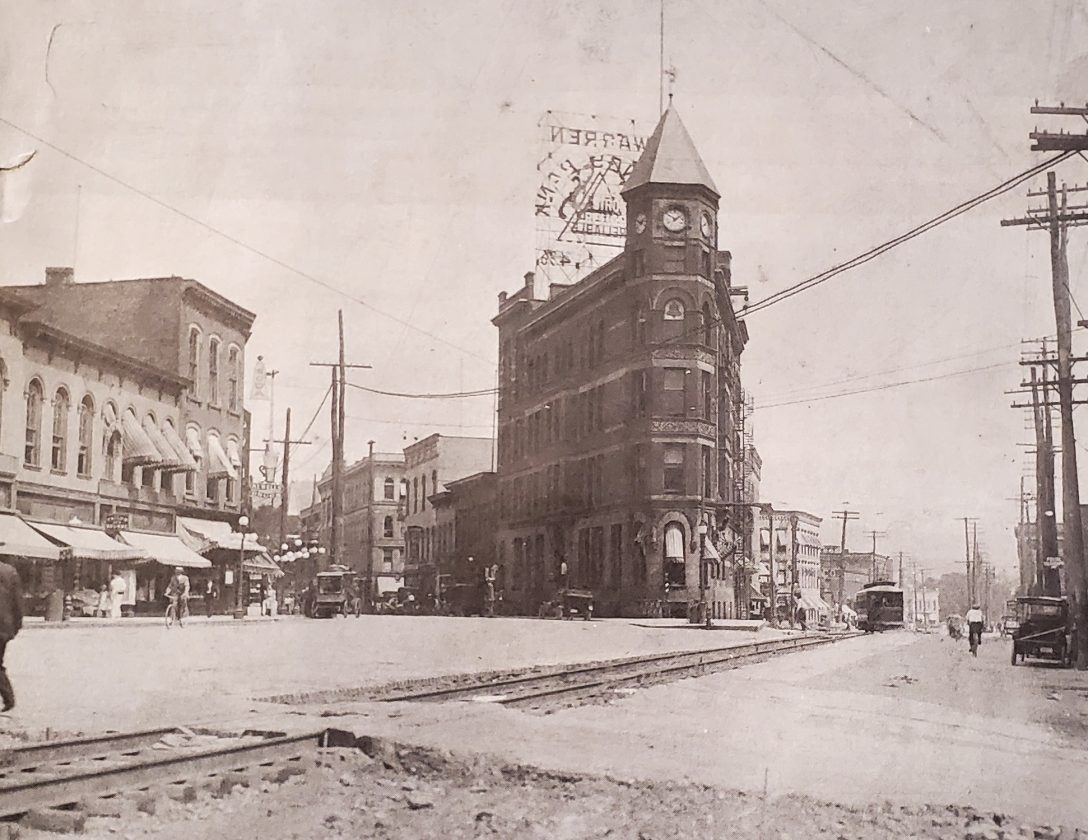
after fire destroyed the original Warren Savings Bank Building in 1889, the triangular structure seen here (in 1916) was built in 1891.
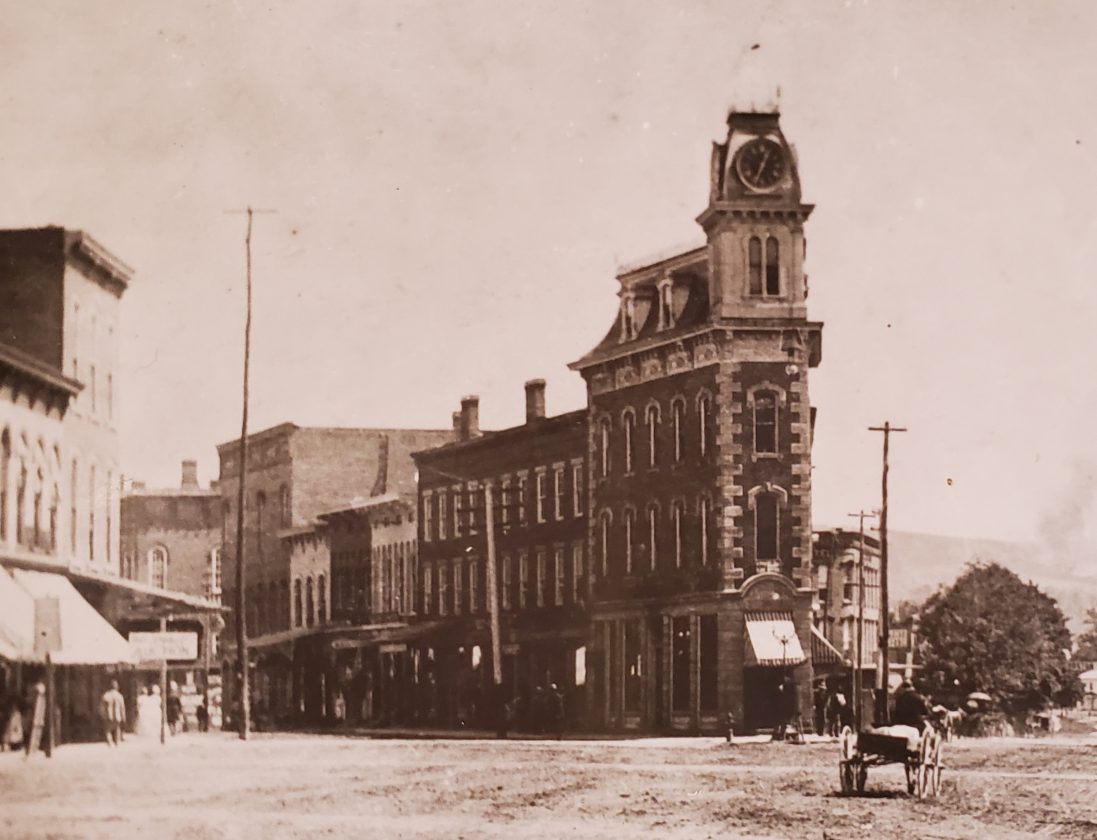
The Warren Savings Bank building, now the Key Bank Building, nicknamed the Flatiron Building, in its first form in 1885.
after fire destroyed the original Warren Savings Bank Building in 1889, the triangular structure seen here (in 1916) was built in 1891.
The Warren Savings Bank building, now the Key Bank Building, nicknamed the Flatiron Building, in its first form in 1885.
Trending
The intersection of Second Avenue and what is now Pennsylvania Avenue in downtown Warren has been the site of a striking landmark since the 1870s.
Today, the occupant is the Key Bank Building. The building is only colloquially known as Flatiron -- the name has never been a formal part of the record, according to Warren County Historical Society Executive Director Michelle Gray.
A triangular structure was first built there in 1876. But, the layout of the block was a triangle, so an occupant at the west end would have to adopt that shape. Before anyone took on the western part of the block, the eastern half was the site of one of Warren's first brick business blocks.
The late 1870s saw a rapid change from wood frame to brick structures in the downtown, according to Stepping Stones, courtesy of the Historical Society.
"Thanks to the efforts of John F. Davis and Lewis F. Watson, two prominent businessmen, there rose up in 1850 at the junction of Second and Water (now Pennsylvania Avenue) a handsome building that lived all too short a life," according to a report from the Warren Mail republished in Stepping Stones.
The newspaper was hoping to move into the building in 1851. Other occupants included A. Finger -- watches and fine jewelry, a meat market, a "Beer and Eating Saloon," and "up the rickety-looking stairway" a boot and shoe maker, according to the Historical Society.
That building was originally laid out to be 61.5 feet long on its eastern side and 29 feet long on its west and longer along Water Street (Pennsylvania Avenue) than on Second Avenue by 81 to 64 feet. The unique shape of the block was accentuated a few years later.
"In 1876, the Warren Savings Bank erected this building to the west of and attached to the Watson-Davis block, the shape of which can be clearly seen…" according to Stepping Stones. "Having lost its identity as the building on the point, it now stood framed by brick buildings throughout the triangle."
The bank, according to the New York Industrial Recorder of 1904, courtesy of the Historical Society, was a "sterling financial bulwark," ranking sixth among Pennsylvania banks and 22nd among state banks in the nation. "It is finely equipped, and possesses every convenience known to modern banking. Its vaults are massive and protected by every invention… The officers of this bank are gentlemen of the highest standing in Warren's financial circle."
Dimensions for the original Warren Savings Bank building were not listed, but from its abutment with the Watson-Davis block's 29 feet, the building narrows to what appears to be 10 feet or less -- enough for a frame of stone around a double-door.
Those buildings were destroyed before the turn of the century.
"It stood only until 1889 when it and the adjoining Warren Savings Bank were destroyed in a wintertime fire," according to the Warren Mail story from the Historical Society.
The triangular structure was rebuilt, though it looked somewhat different. The familiar building was first occupied in August of 1891.