
Medicaid work requirements proposed
Trending
A York County Republican is asking the state Legislature to initiate a work requirement to participate in the state's Medicaid program.
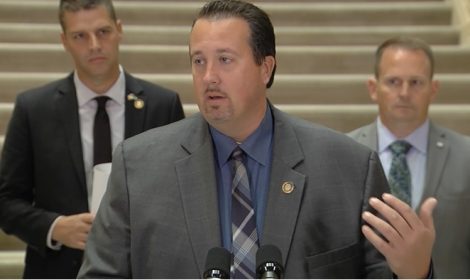
Rep. Seth Grove, R-York County, has introduced House Bill 2379 earlier this week with co-sponsorship from 15 Republicans. He proposes a requirement for Medicaid enrollees who are 18 years of age or older and physically and mentally capable of work to become employed, actively seek employment as verified by the state or attend a job training program.
"As Pennsylvania enters into another budget season the time has come to begin addressing the cost drivers within the Commonwealth's operating budget," Grove wrote in his legislative memorandum.
"One of the largest drivers of our total budget is the state's Medical Assistance program."
Medicaid enrollees who are employed or attending job training programs would have to work 20 hours a week or complete 12 job training program activities a month. Those who complete the work requirement can have their Medicaid premiums or cost sharing reduced or other incentives starting in the second year of employment.
Grove's legislation also would require able-bodied Medicaid users over the age of 18 to verify every two years, or whenever the state requests it, the recipient's family income or compliance with work requirements to determine Medicaid eligibility.
"In order to address the costs associated with Medicaid while still providing care for Pennsylvanians in need, I plan to introduce legislation instituting work and community engagement policies which historically have had bipartisan support," Grove wrote. "This idea draws from President Clinton's successful Welfare to Work program through and up to the current administration which recently put out guidelines promoting work and community engagement. The intention, is to further incentivize current enrollees who are able to work or serve our community to find employment, job training, or volunteer opportunities. Under these reforms not only will we help individuals and communities but also reduce Medicaid costs."
The work requirement wouldn't apply to full-time high school students, if the Medicaid enrollee is receiving temporary or permanent long-term disability benefits, is 20 years of age or younger or age 65 or over, is pregnant, receives Supplemental Security Income, lives in a mental health institution or correctional institution, or is experiencing a crisis, serious medical condition or temporary condition that prevents the person from seeking employment -- including domestic violence survivors or those receiving treatment for substance abuse.
Medicaid recipients who don't comply could lose access to their Medicaid benefits for between three and nine months.
"Promoting work and community engagement policies have not only been successful in the past, but have been successfully implemented by other states over the past few years," Grove wrote. "A good example comes from Maine's changes to their food stamp program as work requirements not only reduced program costs, but it increased the number of people employed. Even those remaining on the program were required less public assistance than they had needed prior to the reforms due to higher levels of employment. The net result was approximately $30-$40 million in savings for taxpayers."
In 2018, federal regulators approved a proposal by former Republican Gov. Paul LePage to require certain Medicaid recipients to work or volunteer. The federal Centers for Medicare and Medicaid Services approved his proposal to require able-bodied adults to be working, training for a new career or volunteering.
Welfare reform was a cornerstone of LePage's administration, which imposed work requirements for food stamps and cut thousands of childless adults from MaineCare.
"We can help people by supporting and encouraging them to stand on their own -- allowing them to take charge of their financial independence," LePage said in a statement. "This approval is a big step forward for our state as it provides us the opportunity to continue expanding our available workforce and allows us to focus our resources on those individuals who need it most."
LePage said Maine would explore ways to help Medicaid enrollees prepare for and find jobs.
The National Association of Medicaid Directors, a nonpartisan group representing state officials, said in a statement there's no consensus on whether work requirements are the right approach.
"This is a very complex issue that will require thoughtful and nuanced approaches," said the group.
Trump's new direction can be reversed by a future administration. Although waivers can have lasting impact they don't amount to a permanent change in the program. They're considered "demonstration programs" to test ideas. The administration says the impact will be closely evaluated.
-- The Associated Press contributed to this report