Discussion of Spring Creek history must include Jackson
From Spring Creek To The Supreme Court
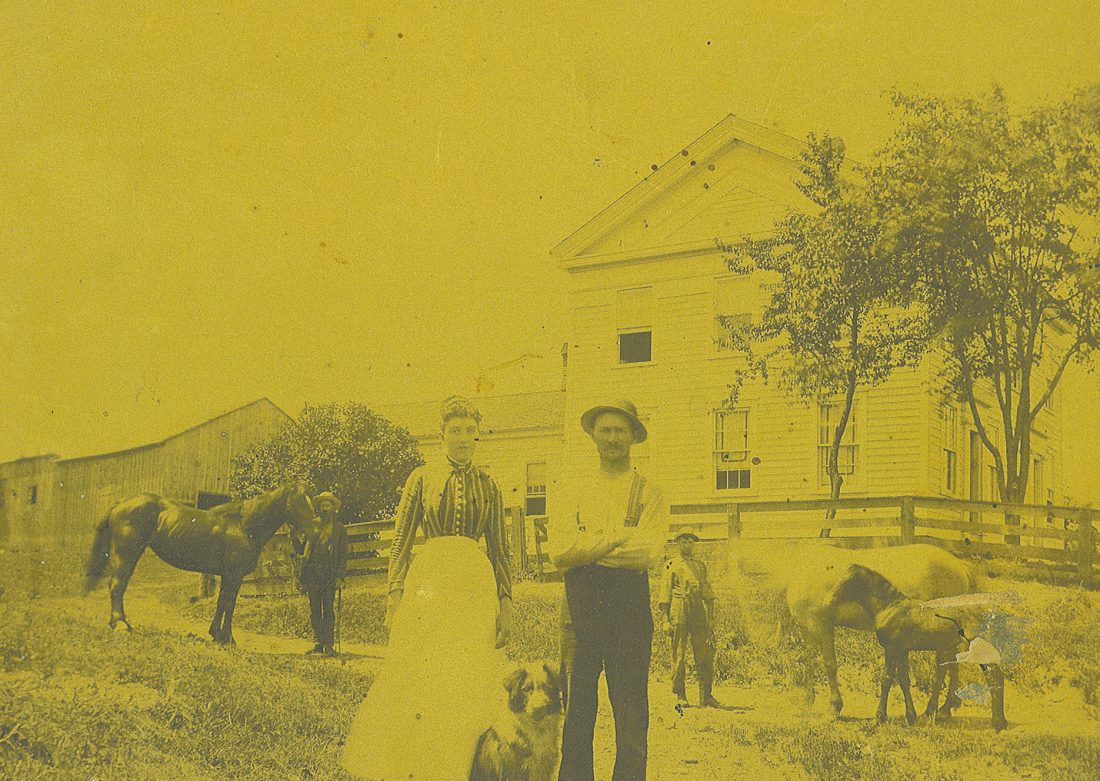
Robert Jackson’s parents - William and Angelina - outside their Spring Creek homestead off of Hyer Road in Spring Creek.
-
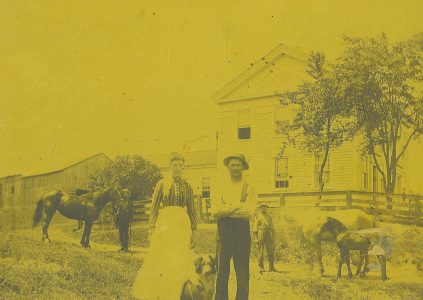
- Robert Jackson’s parents – William and Angelina – outside their Spring Creek homestead off of Hyer Road in Spring Creek.
-
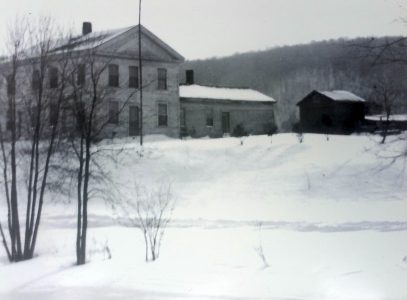
- A winter view of the Jackson homestead.
Elijah Jackson was one of the first settlers in the township, arriving here in November 1797, according to Schenck’s History of Warren County. Elijah was born in Connecticut in 1772 and came to this area via Ontario County, NY, then Marietta, Oh. and what is now Union City. He and his wife, Mary, helped populate the town on their own – they had 13 children together.
Schenck reports that the family is “distantly related” to former president Andrew Jackson.
Their youngest son, Robert R., was born in 1829 and Schenck reports he was living in Farmington Twp. when that was written in the 1880s.
He also married a woman named Mary and they had a son – William Eldred Jackson, born in 1862. He married Angelina Houghwot.
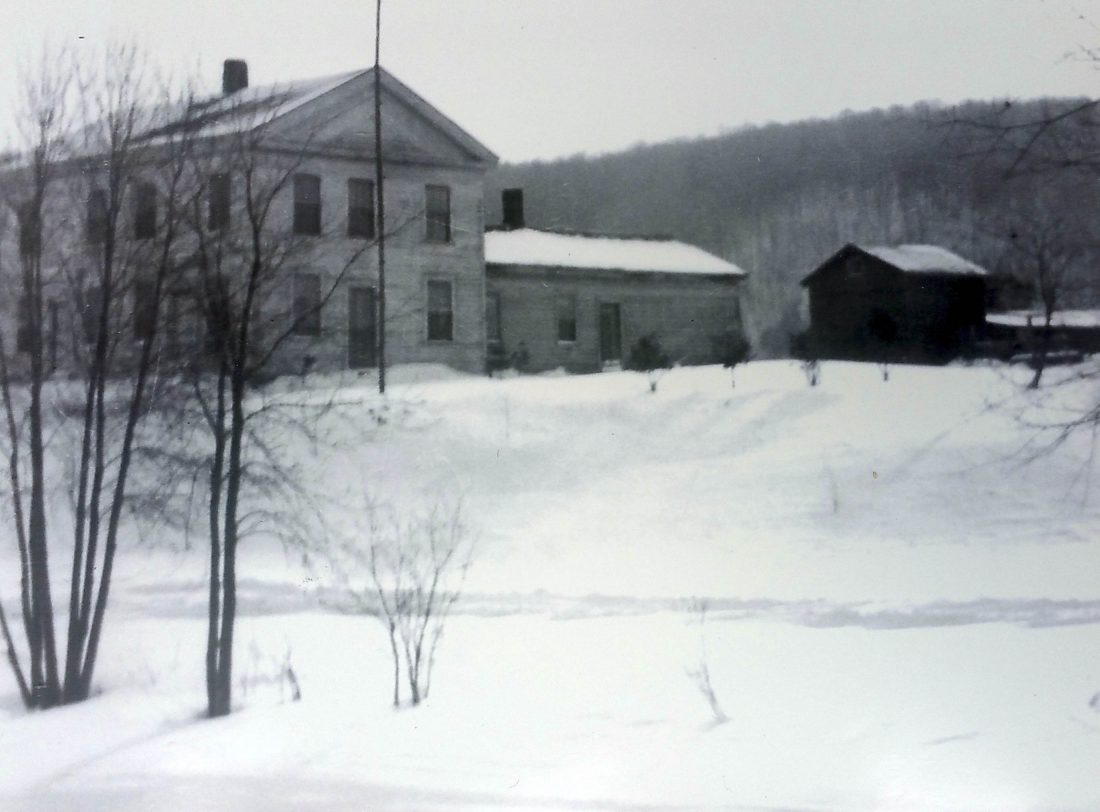
A winter view of the Jackson homestead.
They had three children, including Robert, born in 1892. The family moved to Frewsburg, New York in 1897.
Young Bob didn’t go to college, instead obtaining an apprenticeship with a Jamestown law firm before going to law school in Albany, though he was denied a law degree because he was under the age of 21.
He returned to Jamestown, apprenticed for another year, and then passed the New York bar exam, serving in private practice until the 1930s.
Jackson became solicitor general in 1938, Attorney General in 1941 and then an associate justice on the U.S. Supreme Court until his death in 1954, during which time he took leave from the court to serve as the chief prosecutor for the US in the Nuremberg trial, which prosecuted Nazi war criminals.
The family moved when Jackson was just five years old but the area remained a special place for him and his family.
Jackson’s biographer, John Barrett said at a site visit that Jackson’s father, Will, first leased the property after the family moved to Frewsburg and eventually sold it to someone who ultimately lost it during the Great Depression.
But Jackson came back to the area many times while an adult. Call it an escape from Washington.
The most interesting tidbit I recall from those trips is found in interviews with citizens published in a Jackson Center YouTube video who recalled one of Jackson’s many trips as an adult back to the family homestead.
At the time, the main telephone in Spring Creek was at the local store.
Jackson received a call from President Roosevelt… and had to be fetched from fishing to take the call.
“That was a big thing in Spring Creek,” one woman said.
An elderly man who was just a boy at the time said that they were asked to move to the other end of the building for Jackson to have a bit of privacy to take the call.
I doubt that would meet the modern definition of a “secure line.”
There’s so, so much I could write about Jackson but I thought it best to incorporate a recent webinar the Robert H. Jackson Center held to commemorate the closing statement that Jackson made at Nuremberg 75 years ago.
The Center brought in Bryan Garner, a lawyer, grammarian, and lexicographer, who broke down the speech Jackson gave in July 1946. He also discussed Jackson more broadly.
It’s not a secret that Jackson is widely regarded as one of the Supreme Court’s most famous writers.
Garner explained that, once on the court, Jackson was “soon recognized as the preeminent writer on the Supreme Court.
“Today’s justices idolize him.”
Garner said there was “something in his background” that “gave him a flare for elegance.” He suggested that Jackson’s lack of law school education might have been to his benefit in this area. “Jackson was largely self-taught,” he said, and was steeped in Shakespeare and the King James Version of the Bible.
He said this speech in particular makes it clear that Jackson “absorbed cadences” and “paid attention to prose… mixing plain talk with elevated speech”
Garner cited the “down to earth language of his youth” and said it’s clear that “Jackson had simply imbibed these figures of speech.
“He was a practiced writer (and) learned the power of action verbs.”
Garner is also an attorney and he said the “most impressive aspect of the closing speech is the lawyering, methodically.” He said Jackson “methodically lays out the evidence as only a first rate lawyer could do; but unlike other first rate lawyers, Jackson had the stylistic flair” of several other notable statesmen, including Jefferson and Churchill.
“(You) have to admire Jackson’s plane talk in exposing deceptive language.”
Local News
Russell UMC to host Good Friday stations

Rubio’s and Vance’s differing postures on war highlight challenges ahead of 2028 election
Jerry Seinfeld, Bert Kreischer, Seth Meyers to headline Comedy Festival

Hogs on Dogs relishing its calling in Warren
Showers, toilet flushing optional as residents tackle high water bills