
Bill proposes state end COVID benefits programs
Trending
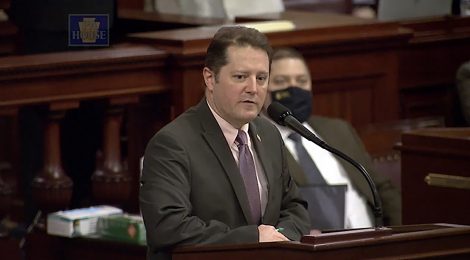
Rep. Jim Cox, R-Berks/Lancaster, wants Pennsylvania to be the latest state to stop participating in federal pandemic unemployment programs.
On Thursday, Cox introduced House Bill 508 to phase out the state's participation in the federal Pandemic Unemployment Compensation, Pandemic Unemployment Assistance and Pandemic Emergency Unemployment Compensation programs.
If his legislation is passed by the state Legislature and signed by Gov. Tom Wolf, Cox proposes giving notice one after the bill becomes law that the state will end end participation in the Federal Pandemic Unemployment Compensation program that gives an additional $300 a week to those on unemployment. Three weeks after the bill becomes law, the state would give notice to end participation in the Pandemic Unemployment Assistance that provides unemployment benefits for individuals who are not eligible for traditional state unemployment compensation. Then, five weeks after the bill becomes law, the state would give notice to end participation in the Pandemic Emergency Unemployment Compensation program, which extends unemployment benefits.
"Between borrowed federal stimulus payments with no strings attached and enhanced unemployment benefits that pay people not to work, federal policy has been encouraging unemployment claimants to stay home," Cox wrote in his legislative memorandum. "It may have made some sense to send that message for a few months at the beginning of the pandemic, but a lot has changed since last spring. As more and more Pennsylvanians are vaccinated or have developed natural immunity to COVID-19, there are far fewer restrictions on economic activity, and it is high time to get Pennsylvanians back to work. The message now should be: Go find a job!"
Cox doesn't just want to end the state's participation in the federal unemployment benefits programs. House Bill 508 also creates a Back-To-Work Bonus Program which provides former unemployment claimants with a $300 bonus for four consecutive weeks of work.
Those who remain employed with the same employer for eight consecutive weeks would receive another $300 bonus. The bonuses would be paid for out of the $154 million the state received in COVID relief money from the federal government.
To prioritize returning to work faster, priority will be given to those who discontinued their unemployment benefits earlier, are working at least 35 hours a week and have been employed for eight consecutive weeks and are applying for the second bonus.
"I understand that this legislation alone will not resolve Pennsylvania's workforce crisis. However, shifting policy incentives away from unemployment and toward work is a step we can take right now to start sending the message: Go find a job," Cox wrote.
According to Forbes, 21 states -- all with Republican governors -- are set to stop participating in the supplemental unemployment programs. Mississippi, Iowa, Missouri and Alaska plan to end the extra benefits by June 12, followed by Indiana, Alabama, West Virginia, Idaho, North Dakota and Wyoming on June 19. Other states ending payments include Texas, Ohio, Georgia, Utah, Oklahoma, Arkansas, South Dakota, Montana, South Carolinla, ,Tennessee and Arizona. Montana and Oklahoma also plan a $1,200 bonus for state residents who return to work.
During a recent news conference, Federal Reserve Chairman Jerome Powell said he expects the hiring problems to end in the coming months, though he would not lay blame at the feet of the additional federal unemployment benefits. Powell said schools not being fully reopened is likely part of the problem because some people who want to return to the workforce can't while they are taking care of children.
"I do also think that unemployment insurance benefits will run out in September," he said, according to Foxbusiness.com. "So to the extent that's a factor - which is not clear - it will not be a factor fairly soon."