
Still no swimming at Chapman, but … wading?
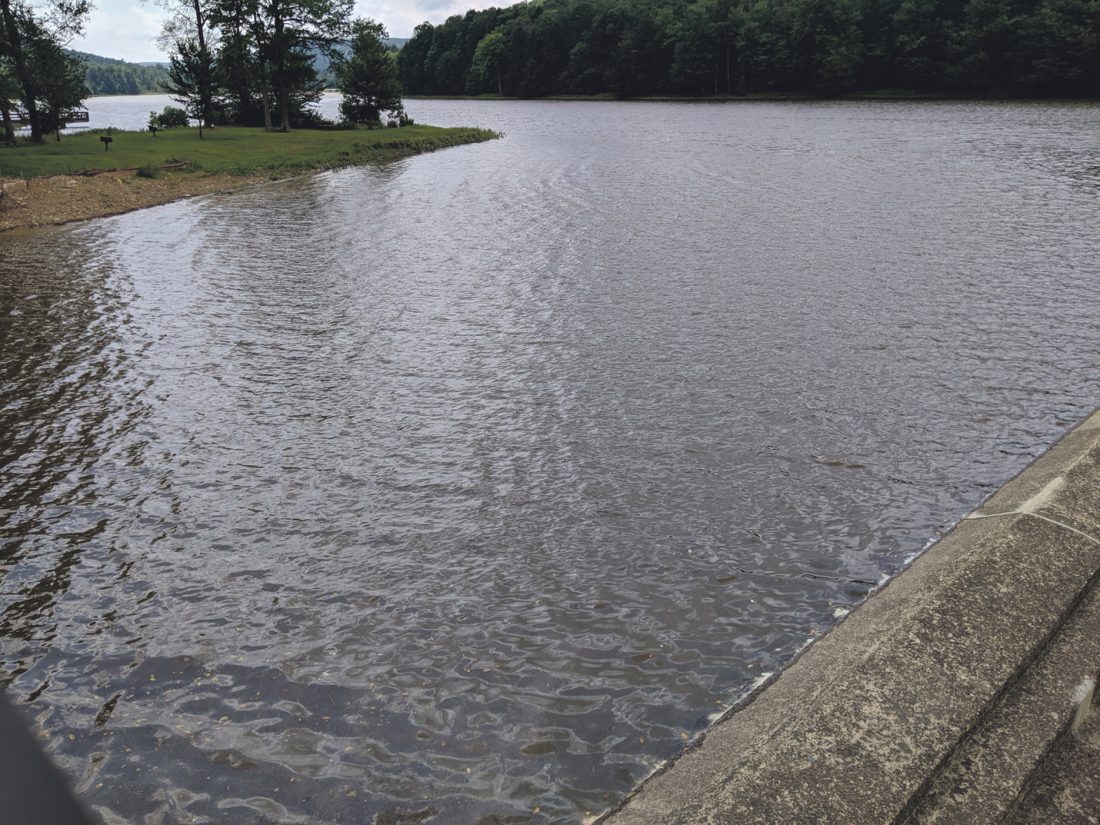
Times Observer photo by Lorri Drumm Chapman Lake opened for boating on Saturday. Swimming and fishing are still prohibited but wading is permitted. Wading is defined as entry into water no deeper than the knees.
Restrictions on boating and wading at Chapman Lake were lifted this weekend. As visitors get back to enjoying the water, park officials want to clarify the definition of “wading.”
Chapman Lake reopened to boating on Saturday. Boating was the first water activity approved since the lake closed for a dam rehabilitation project that began in September 2017.
The park is still awaiting permission from Pennsylvania Fish and Boat Commission to resume fishing (catch and release, except for trout), as well as permission from the Department of Health (DOH) to open the swimming area, according to Park Manager Tyson Martin.
Swimming is not permitted until acceptable E.Coli bacteria samples are received and the DOH issues permission to open the beach.
The Pennsylvania Department of Conservation and Natural Resources, Bureau of State Parks, Open Swim Beach Manual states, “Wading shall be allowed at all state park waterways and impoundments, including swimming area(s). Where adverse conditions exist, this activity may be limited or prohibited based on sound, reasonable judgment. Wading is defined as an entry in water no deeper than the knees.”
While the swimming beach is closed, many visitors may wish to cool off in the lake by wading, Martin said. This is an acceptable and permitted activity whether the beach is closed or not, albeit for poor water quality. Permissible depth is relative to the individual doing the wading. A child will not be permitted to wade as deep as their parents are permitted.
Only “wading” will be permitted as defined above for the health and safety of visitors. The DOH has said the very young, elderly, or those with compromised immune systems are especially susceptible to naturally occurring bacteria found in lakes and streams, Martin said. “We suspect a combination of the high Canada Geese population in the lake this summer and the lake bed disturbances of the last 23 months have both contributed to high bacteria test results,” he said. “We will continue to test the water weekly with hopes the lake will stabilize and bacteria levels will drop before summer is over.”
For more details, comments, or complaints, contact Martin directly at tysmartin@pa.gov, or (814) 723-0250.
Local News
Young’s uniform ‘intimidated’ owner of property
Court records filed in Warren County Common Pleas Court have brought attention to a property dispute involving ...

Setting an agenda
Lawsuit alleges unprovoked attack at Steelers-Bengals game
A Cincinnati Bengals fan who pleaded guilty to assaulting a Steelers supporter now faces a civil lawsuit alleging ...
Leadership Warren County graduates Class of 2026
Leadership Warren County celebrated the graduation of its Class of 2026 during a ceremony held Wednesday, June 3, ...
K of C helps with memorial
Elk Township open house set for Saturday
Elk Township Historical Society will host its second Open House of 2026, on Saturday from 1 to 4 p.m. The ...