‘A great ending’
Lander native involved in space suit development for NASA during 1960s as part of decades-long career
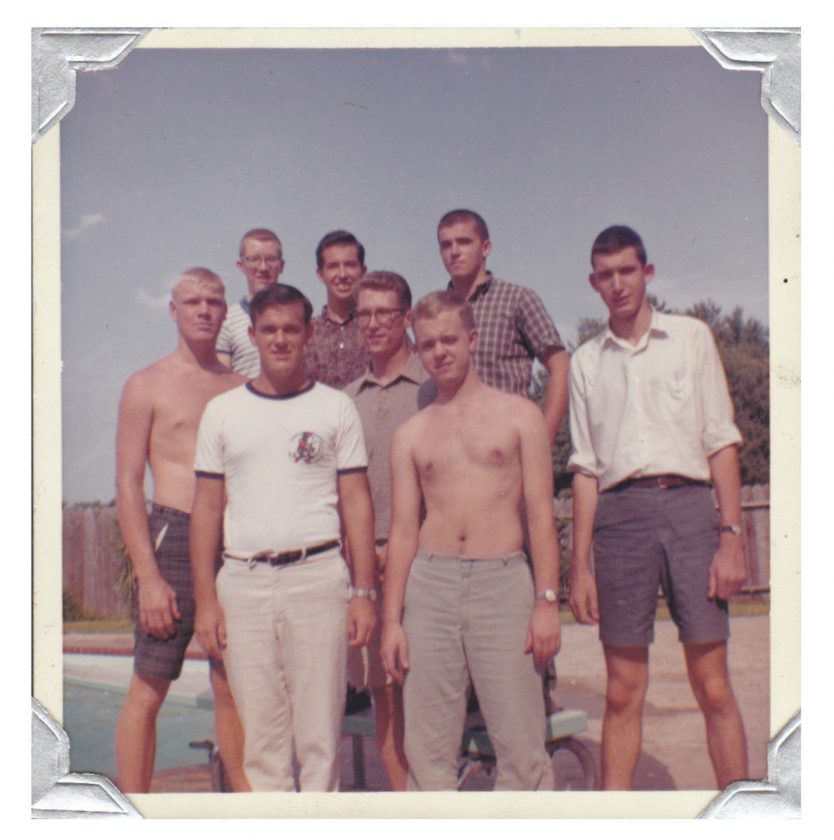
NASA photo The 1962 cooperative eduation program included Frank Burgett, front row, at right, a Lander native.
It’s nearly 1,500 miles from Lander to Houston, Texas.
That’s how far Frank Burgett went from home for a job at the NASA Manned Spacecraft Center in 1962.
But in the ensuing over 40 years, the work that Burgett was involved in – from the Mercury program to the Space Station — would take men to the moon and back and millions upon millions of miles around the earth.
Burgett’s career started at the Manned Spaceflight Center in 1962 as part of NASA’s cooperative education program making “the princely sum of $1.63 an hour,” he recalled.
After earning a bachelor’s degree in electrical engineering in 1965 from Cleveland State University, he worked with NASA until 2003 on all of the agency’s most public initiatives – Mercury, Gemini, Apollo, Apollo-Soyuz, Skylab, the Space Shuttle, the space station as well as advanced programs.
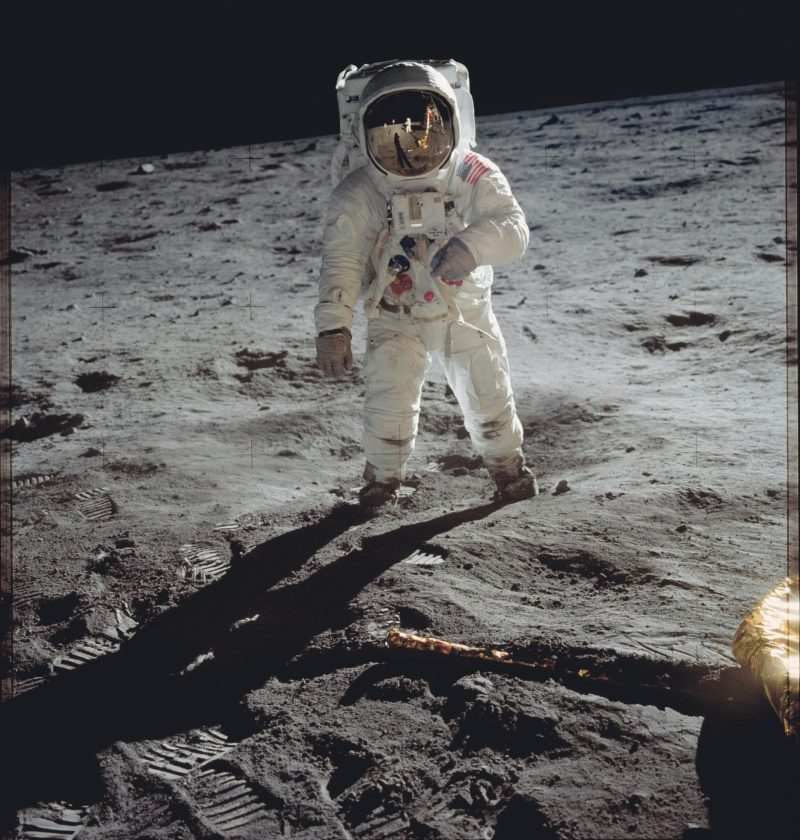
Armstrong, visible in the reflection on Aldrin’s visor, takes a picture of Aldrin during the extra-vehicular activity (EVA) on the lunar surface.
Burgett said his initial work was “in the areas of life support system/spacesuit testing, spacesuit materials development and development of spacecraft life support instrumentation.”
Layman’s terms?
He said he “developed and tested non-metallic materials (e.g space suit insulation and visor materials) for use on the Apollo spacesuit and in the spacecraft cabin including a candidate abrasion-resistant outer layer for the Apollo suits, gloves, and boots.
He recalled working as a spacesuit test subject “wearing Gus Grissom’s Mercury spacesuit since the suit technicians said both subjects had large butts.”
For NASA in the 1960s, it goes without saying that the moon was the goal.
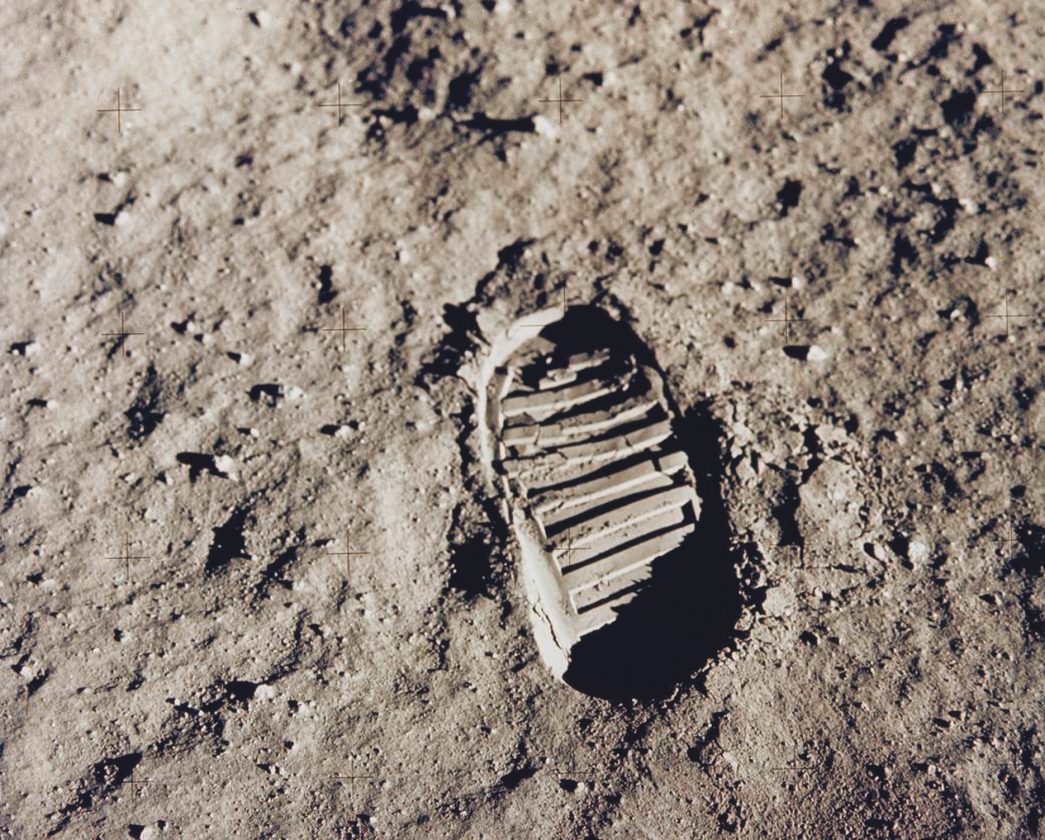
NASA photo This is an image of Buzz Aldrin’s bootprint from the Apollo 11 mission. Neil Armstrong and Buzz Aldrin walked on the Moon on July 20, 1969.
And Burgett felt it.
“Landing on the moon was a constant and extremely motivating goal for myself and others,” he said. “Almost without exception people both inside and outside of the NASA sphere did their very best to help.”
After the catastrophic Apollo 1 fire, Burgett said he “developed flammability testing techniques to assess materials flammability in the oxygen-enriched space suit and spacecraft cabin environments.
“During the development of more flame resistant space suit and non-metallic materials I served as the NASA technical representative coordinating the work performed by the contractors.”
From there?
“I then worked as a design engineer designing and developing controls and data measurement systems for hazardous human-rated testing complexes where we tested Apollo spacesuits
-
- NASA photo The 1962 cooperative eduation program included Frank Burgett, front row, at right, a Lander native.
-
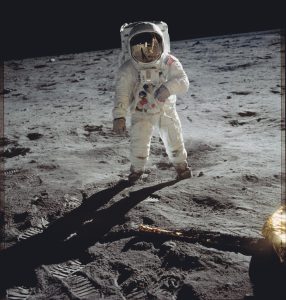
- Armstrong, visible in the reflection on Aldrin’s visor, takes a picture of Aldrin during the extra-vehicular activity (EVA) on the lunar surface.
-
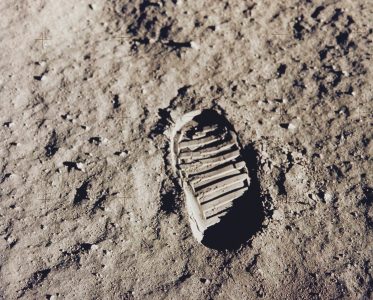
- NASA photo This is an image of Buzz Aldrin’s bootprint from the Apollo 11 mission. Neil Armstrong and Buzz Aldrin walked on the Moon on July 20, 1969.
“The night of the Apollo 11 lunar landing we were at home nervously watching the event on TV,” he recalled, “hoping the equipment would perform well and the mission would be successful.”
“There was pride but mostly relief that our equipment performed well.”
“It was a very stressful night with a great ending,” he added. “Thanks to supportive parents, a farmer’s work ethic and the help of many people, I was fortunate to have been part of the adventure.”
During Apollo 13 – the mission that suffered an oxygen tank explosion on the way to the moon and was immortalized in the 1995 film of the same name – Burgett and the testing organization of which he was a part “provided the flight crew with operating instructions for their improvised life support system in the Lunar Module during their return to earth.”
Burgett said he moved from engineering to management positions and “had responsibility for development and operation of ground-based aerospace testing complexes, including deep space environment simulation” later in his career.
“I recently was asked what I miss the most,” Burgett said. “It is the excitement of motivated, focused people with a common goal… Scientists to office clerks and members of the public – all went the extra steps needed for success. It was through everyone that the lunar landing was successful.”
And therein lies part of the allure – and importance – of human space exploration.
“Human space exploration is important,” Burgett said, “to inspire young people to improve their skills and knowledge, develop new technology, provide a sense of national pride and further our understanding of the world.”
Local News

Warren County receives Trail Town recognition
Warren’s Tellmann made mark in Milwaukee
Judge denies motion to dismiss charges against Sugar Grove man
A judge has ruled against a motion to dismiss the charges filed against a Sugar Grove man accused of ...
Jamestown native works on NASA’s Artemis II, receives special invite to launch
Warren to host new U.S. Forest Service regional headquarters amid national overhaul