Sub-zero
Getting prepared for frigid conditions
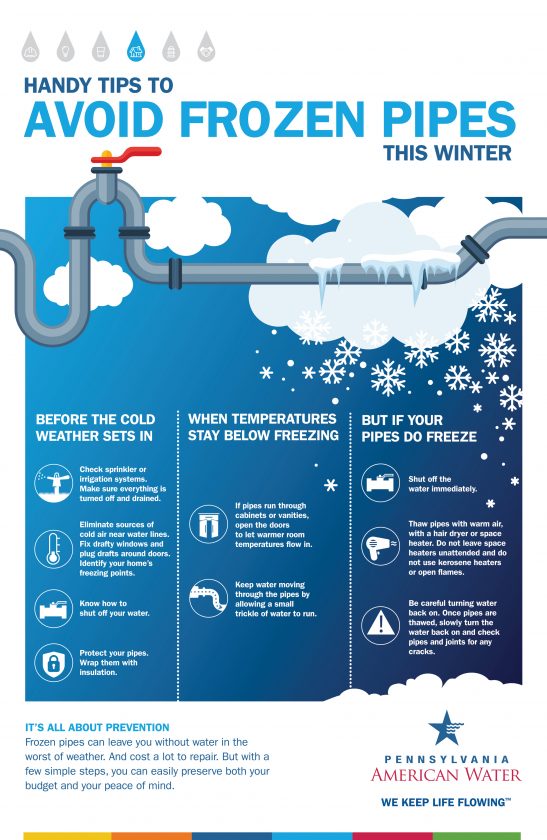
AP Photo Tips for preventing pipes from freezing inside the home.
BY LORRI DRUMM
ldrumm@timesobserver.com
It’s time to batten down the hatches, bundle up and, if possible, stay indoors at least for a few days.
Tha National Weather Service in State College has issued a hazardous weather outlook for much of northwest and central Pennsylvania through Friday, including Warren County.
An arctic air mass will usher in dangerous and potentially record-breaking temperatures starting tonight. Single digit and sub-zero temperatures with accompanying frigid wind chills will persist from tonight through Friday, according to NWS Meteorologist John Banghoff.
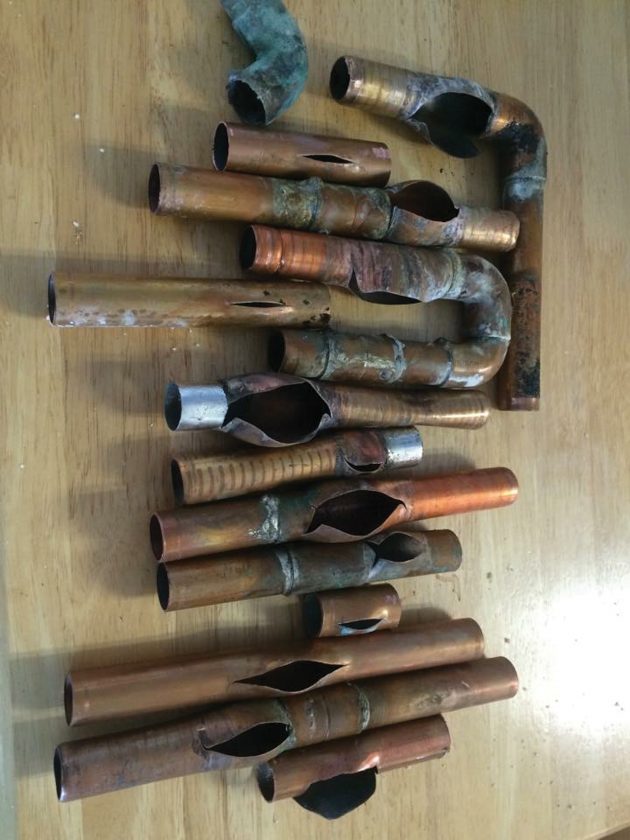
Facebook photo Turning the thermostats down in your home can result in burst pipes, like these. Take precautions by maintaining safe temperatures and insulating.
Back to back cold fronts will slice through the eastern two-thirds of the country to deliver one of the coldest arctic air blasts in recent memory, according to Banghoff.
The record for the lowest high on Jan. 30 may be shattered this week, Banghoff said. Wednesday’s predicted high is -1 degrees. The current record high is 8 degrees set on Jan. 30, 1934.
The record low for the same date is -34 degrees. “Let’s not even try to break that record,” Banghoff said.
Thursday may also see a record low high set. The predicted high for Thursday is 4 degrees. That current record stands at 6 degrees set on Jan. 31, 1900.
NWS advises those in areas included in the frigid air mass to limit time outdoors or avoid exposure if possible and be aware of how to prevent frostbite and hypothermia.
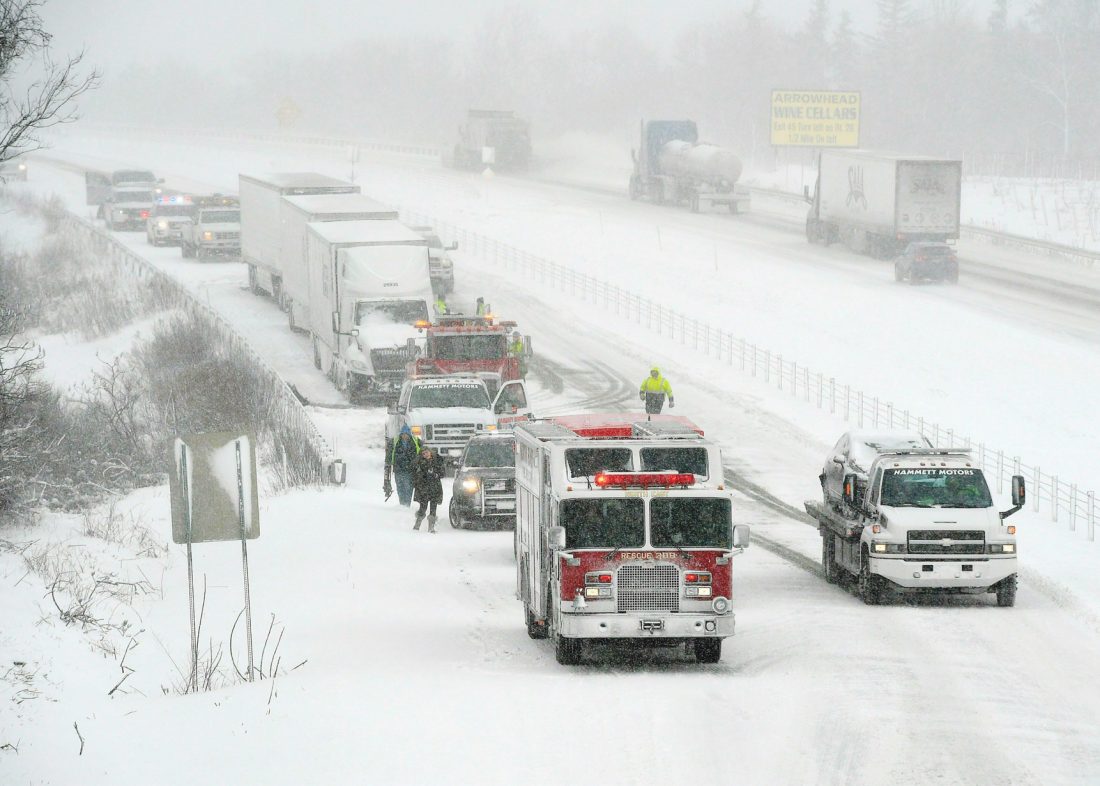
AP Photo Parts of Interstate 90 in North East Township, Pa., were shut down for almost two hours on Friday, Jan. 25, 2019. The Pennsylvania Department of Transportation (PennDOT) is advising motorists to closely monitor weather forecasts and conditions as a storm system is anticipated to impact most of the state, with many areas expected to see precipitation during the Tuesday rush hours.
People exposed to extreme cold are susceptible to frostbite in a matter of minutes. Areas most prone to frostbite are uncovered skin and the extremities, such as hands and feet.
Frostbite can happen in minutes, especially on the extremities such as fingers, toes, nose and ears but can affect any area of exposed skin. If you suspect frostbite, immediately move inside to a heated location and begin warming the affected areas using warm water or body heat. Do not use hot water or radiant heat such as a fireplace since affected areas can be easily burned. Seek medical attention for severe frostbite.
To avoid frostbite, stay inside during severe cold, especially when the windchill is -50 degrees or below. If you must go out, try to cover every part of your body: ears, nose, toes and fingers, etc. Mittens are better than gloves. Keep your skin dry. Stay out of the wind when possible. Drink plenty of fluids since hydration increases the blood’s volume, which helps prevent frostbite. Avoid caffeine, alcohol and cigarette. Caffeine constricts blood vessels, preventing warming of your extremities. Alcohol reduces shivering, which helps keep you warm. Cigarettes shut off the blood flow to your hands.
Hypothermia is another threat during extreme cold. Hypothermia occurs when the body loses heat faster than it can produce.
When your body temperature sinks below 96 degrees, you have hypothermia, a serious health hazard that occurs when body temperature is lowered too much. If this happens, get medical attention immediately.
If your temperature is 96 degrees or less, you feel cold and sluggish, or are having trouble thinking clearly, see your doctor immediately or go to the nearest emergency room.
If you are trying to help someone who may have hypothermia, first call an ambulance. Then lie close to the person and cover both of you with thick blankets.
In addition to protecting yourself during frigid spells, it’s also recommended you take steps to protect your home.
With extremely cold weather in the forecast, Pennsylvania American Water reminds customers to take necessary measures to prevent frozen household pipes. Protect your home by wrapping exposed pipes with insulation and eliminate sources of cold air near any waterlines.
Although it might seem to make sense to turn your thermostat down during the day when no one is at home, many professionals recommend maintaining the temperature as if you were. A sudden drop in outdoor temps can result in indoor freezing if your house is not thoroughly heated. Also, it adds more strain on your heating system when it takes longer to recover.
Allowing a small trickle of water to run overnight can keep pipes from freezing. The cost of the water is minimal compared to repairing the damage from bursting pipes.
Know the location of your main water shut-off valve. If a pipe freezes or bursts, shut the water off immediately. Do not attempt to thaw frozen pipes unless the water is shut off.
To thaw pipes, apply heat from a hair dryer, space heater, or hot water. Do not use a torch or open flame.
For more tips on preventing frozen pipes, visit pennsylvaniaamwater.com, Click on Water Information, and Wise Water Use.
-
- AP Photo Tips for preventing pipes from freezing inside the home.
-
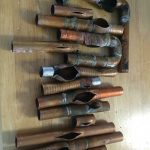
- Facebook photo Turning the thermostats down in your home can result in burst pipes, like these. Take precautions by maintaining safe temperatures and insulating.
-
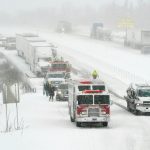
- AP Photo Parts of Interstate 90 in North East Township, Pa., were shut down for almost two hours on Friday, Jan. 25, 2019. The Pennsylvania Department of Transportation (PennDOT) is advising motorists to closely monitor weather forecasts and conditions as a storm system is anticipated to impact most of the state, with many areas expected to see precipitation during the Tuesday rush hours.
Local News
Improvements to begin at Point Park
The City Parks, Recreation and Landscape Commission met for their monthly meeting on Tuesday morning. City ...

‘Impressive’ results
Pennsylvania jobless rate remains 4.2%
The Pennsylvania Department of Labor & Industry released its preliminary employment situation report for March. ...

Visitors Bureau promotes summer events
Paving project to start on Route 62
A $2.5 million resurfacing project that will give motorists a smoother ride on more than 4 miles of Route 62 in ...