Jeff Eggleston finds out what it’s like to walk in their shoes
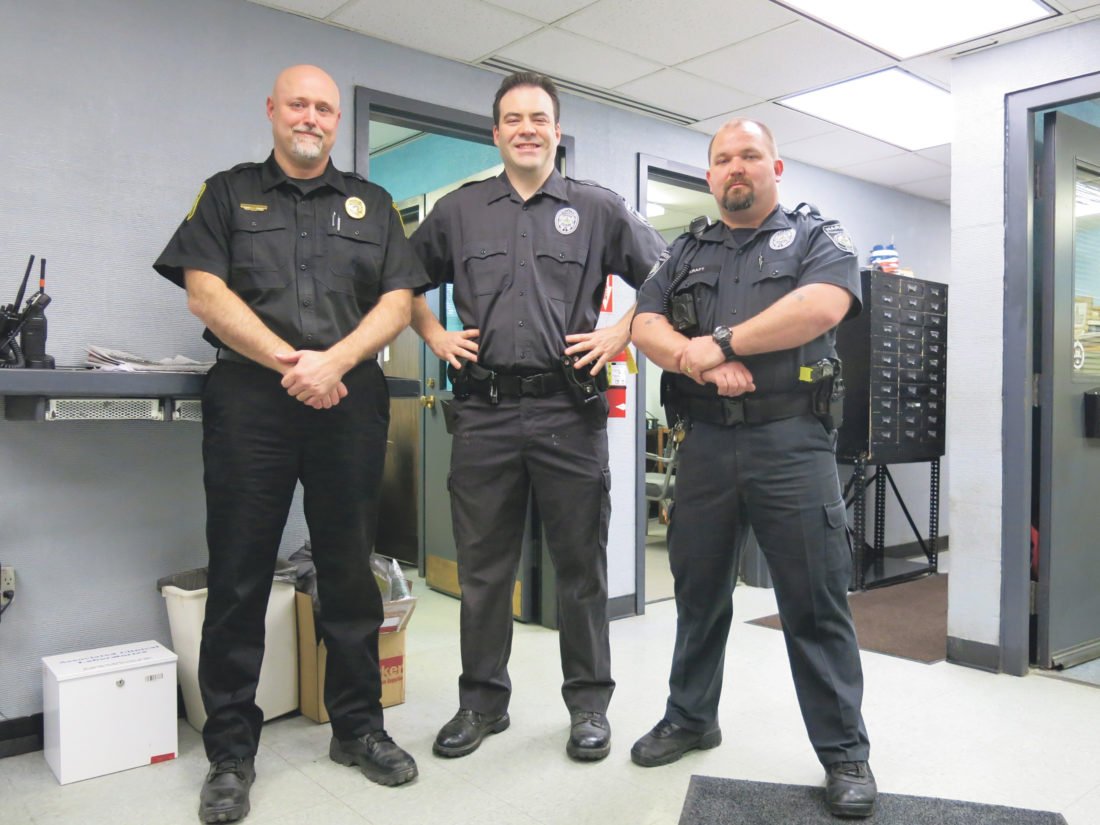
Times Observer photo by Stacey Gross - Warren County Jail Warden Jon Collins, Warren County Commissioner Jeff Eggleston, and Corrections Officer Ben Kraft.
What happens after a person is sentenced to incarceration in Warren County?
Once the judge hands down a sentence of incarceration, all anyone in the gallery sees is the person escorted through the door behind the dais and it’s understood that they’re going to serve whatever time they’ve been sentenced to serve. But where do they go, and what does the process look like? Who’s responsible for the inmate and what does the inmate see once they leave the courtroom.
Warren County Commissioner Jeff Eggleston wanted to know just that, which is why he suited up in the same uniform worn by corrections officers in the Warren County Jail on Friday afternoon to shadow the COs that keep the jail running.
Immediately after being sentenced to incarceration during sentence court, a deputy takes the new inmate – or “new commitment” in CO lingo – to an area called the bullpen where they’ll be patted down and placed in a holding cell. The same thing happens to new commitments coming in off the street, with their entry point to the jail being the only difference.
“They have to be patted down for contraband or anything that can stick officers,” said Corrections Officer Ben Kraft. New commitments are given an opportunity to disclose anything they have on them that would be considered contraband inside the jail before being taken into the booking. The reason for that, Kraft said, is that once inside the jail, if an inmate is found to have contraband on him or her the possible consequence could be a mandatory minimum two-year state prison sentence.
What can be considered contraband? Pretty much anything changed from its original purpose, Kraft explained to a new commitment during booking. “If you have an apple on your tray and give the apple to another inmate, that’s considered contraband. If you rip your sock, that’s contraband.” Anything that’s been intentionally altered by an inmate such that it could serve a purpose other than its original, intended purpose, said Kraft, is contraband.
It sounds a bit harsh at first. But, said Kraft, each of the many rules he recites to the new commitment during the booking process – rules clearly written on a sheet but easily recited from memory for Kraft – are for one good and simple reason: safety. Safety of inmates and of correctional officers is the reason for everything at the jail, Kraft said.
Kraft is in an unfortunately not-so-unique position to comment on safety. Having been a CO since 2003, Kraft was taken down by an inmate during an assault while he was on duty in 2010 and said that the PTSD that resulted, while managed now, permanently changed his life. Asked whether it changed the way he sees the world, himself, or the way he conducts himself in the world, Kraft answered that the experience changed all three for him.
Even as he demonstrated the process of booking in a new commitment and showed Eggleston through the facility from top to bottom.
The booking process involves getting a person from the street or the bull pen into the intake cell block, which is a block where new commitments spend two days while COs get to know who they are, what they’re like, and assess what needs they have and where they’ll be best – most safely – housed while incarcerated.
New commitments are asked a series of questions including brief psychosocial histories, demographic information like height and weight, address, and emergency contacts, and whether they have or have ever had any communicable diseases that staff needs to be aware of, like HIV or Hepatitis. They’re assessed for food allergies, asked whether they’re on any medications, and their primary care physicians, mental health clinicians if any, and insurance are all logged.
Many times, said Kraft, the information – which is logged in an electronic Jail Monitoring System (JMS) database – is already there. If it’s already there, said Kraft, it’s because the new commitment has been booked into the jail before. Inmates are issued PIN numbers, inmate numbers they’ll use to make phone calls and order from the jail’s commissary while incarcerated.
“You’ll be able to order hygiene, food and clothing items from the commissary,” Kraft told the new commitment during booking.
New commitments are then asked to disrobe and are further checked for contraband, and are instructed to apply a de-lousing solution to “anyplace they have hair,” said Kraft, and give the solution five or so minutes to work before showering and changing into a prison-issued jumpsuit.
“I tell everyone,” said Kraft, “we’re not saying you have lice, but we can’t have anything coming into this facility,” he said. With over 100 people in such a small space, an outbreak of lice could run rampant through the building, involving inmates and COs alike, before it was discovered and dealt with.
Inmates are asked to sign property sheets, among various other intake paperwork, which list everything they’ve had to leave at booking and the number of the property box it’s been placed in. Property boxes, said Kraft, are kept in the basement until an inmate is ready to be released, Kraft said.
The whole one phone call thing?
Totally true. Well, basically.
Each new commitment is given the opportunity to make one phone call from booking or, if attempts by new commitments to reach someone with their one phone call are unsuccessful – if the call is unanswered or goes to voicemail – the inmate will continue to be given opportunities throughout their 72 hour intake block stay to continue to try and complete that call.
From the intake block, inmates may be taken to any number of places. If they’re work release eligible, Kraft said, there’s a block just for those inmates. Women have their own, single block, which according to Kraft has been getting consistently more cramped over the years. When he started, said Kraft, there were around three women incarcerated at the jail. Now there are enough that extra space has been utilized in what used to be the day room and library.
There are isolation cells on each of the two housing floors of the jail, and detox cells for those coming in off the street who are coming down off of a substance or sobering up. Those, said Warden Jon Collins, are some of the hardest inmates to deal with. Not so much because they pose a security problem or are even all that demanding, although they can be, but because, Collins said, the cycle of addiction that largely influences the recidivism issue is a hard one to watch.
Both Kraft and Collins spoke at great length with Eggleston about what might be feasible ways to weed out the group of inmates at the jail who not only can improve their lives, but at least for some small period of time, can be motivated to do so. Because so many of the inmates at the jail are battling either mental health or drug and alcohol addictions – often both, a situation called dual diagnosis – that first day or two after being released from jail is the most critical period, and the most predictive of future success in the community. Those people have a choice to make, either to fall back into the same easy patterns with the same people who’ve often either supported or enabled their addictions, or to do the hard work to make mental health appointments, find employment, and stay clean. That choice can be daunting without the right supports in place.
And success in the community, or the potential for it, is a large part of the sentencing process. The goal isn’t just to lock people up for breaking the law. Warren County’s success with the treatment court initiative has been one major step toward taking people who need more rehabilitative than punitive consequences for crimes and helping keep them accountable enough to begin the overwhelming task of recovery But people who recidivate – who repeatedly find themselves in often the same legal trouble time and time again – are often the ones without the support systems in place when they leave the jail to stay out of it in the future.
It’s hard, both Collins and Kraft said, to watch people come back into the jail, and to watch them detox while they’re there. It’s hard, they said, because although their job is to maintain order in an often chaotic and volatile setting, they care about inmates and one another because they care about people on a human level.
And while it’s up to individuals, ultimately, to stay out of jail, Collins said that part of what makes the CO lifestyle tolerable is the rapport COs have with one another. “It’s like a family here,” said Collins of the corrections officers, and other administration at the jail. “When one gets hurt,” he said, “there are calls and emails from everyone, checking on them.”
“We have each others’ backs,” said Kraft.
Being a CO is something, said Collins, that truly is a lifestyle, not just a job, and when interviewing new officers, their ability to be a part of that close-knit community is a huge part of what he’s looking for. “There’ve been great big guys that come in to interview and I’ve though, ‘man, I’d love to put you in a vest and send you up there,'” but who reveal during their interview that they won’t be able to support the family of COs the way another potential CO, who may not look quite the part, absolutely does.
Jail COs work 12 hour shifts, with every other weekend off. They can be attacked, have urine and feces thrown at them, and be the object of an inmate’s rage at any given moment. But because they work hands-on with inmates every day, said Kraft, COs tend to try and use humor and personal disclosure, as appropriate, to make a positive difference in inmates’ transitions back to the community. “Most of us recognize,” said Kraft, that given a different set of life circumstances any of the COs at the jail at any given time could be the inmate, and try to interact with inmates at that level.
Local News
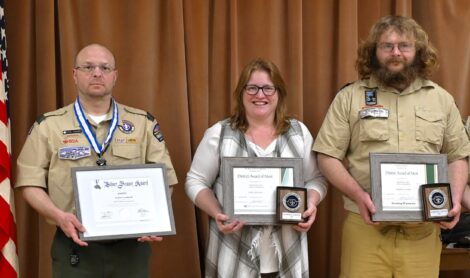
Chief Cornplanter Council holds volunteer recognition dinner
Documents reveal depths of Tidioute water crisis
More than two months after a boil water advisory was first issued for customers of the Southwest Warren County ...

‘Empowering’ example
State invests $21M to support victims of crime, prevent youth violence and delinquency
This week, members of the Pennsylvania Commission on Crime and Delinquency (PCCD) approved more than $21 million in ...
Domestic incident led to felony gun charges
A domestic incident in February led Warren police officers to get the federal Bureau of Alcohol, Tobacco and ...