
The mighty mantis makes an appearance
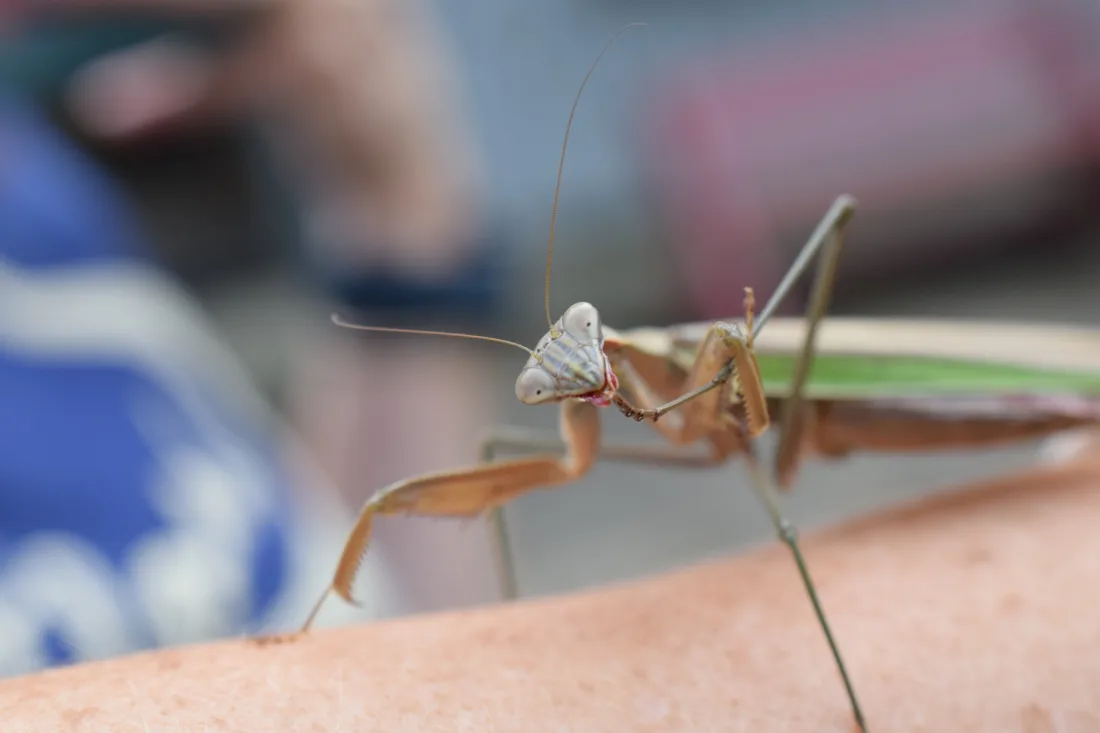
Photo by Charlotte Schmaltz A praying mantis cleverly cleaning its foot after walking from human to human.
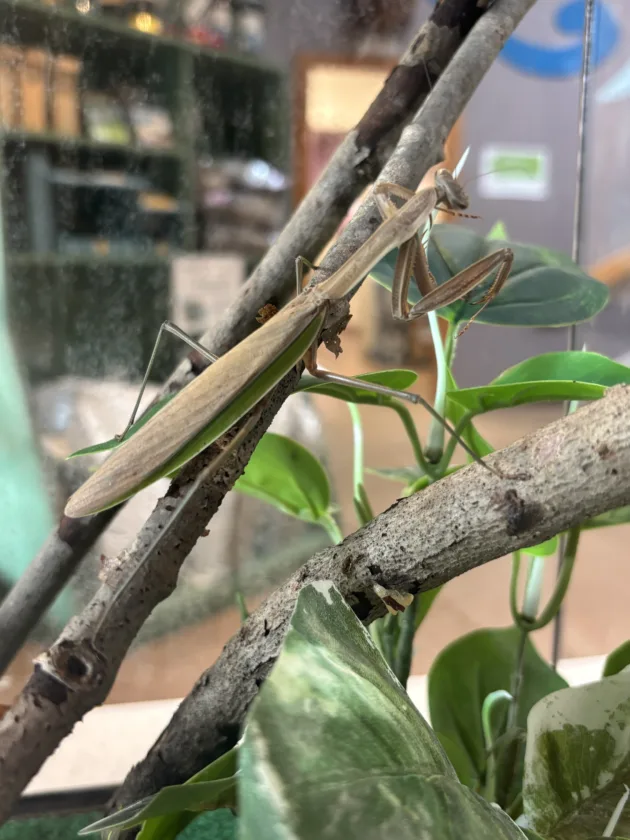
Photo by Taylor Spontaneo A close-up look of the praying mantis in its temporary display enclosure.
Photo by Charlotte Schmaltz A praying mantis cleverly cleaning its foot after walking from human to human.
Photo by Taylor Spontaneo A close-up look of the praying mantis in its temporary display enclosure.
Trending
Now that autumn is in full swing, we anticipate the sight of leaves as they travel their way from tree to ground. We all find great joy during this transitional time as each leaf gracefully floats to the grass. However, one day at the Nature Center, my peace was replaced with great curiosity when I realized one of the leaves my attention was captured by had legs.
You might be thinking, "What type of leaf has legs?" I soon found out it was not a leaf, but an insect. The praying mantis does a wonderful job of using its flight pattern in autumn to resemble the falling leaves we've come to enjoy. Its brass-composed coloring, including shades of amber and green, reflects the perfect camouflage needed during this seasonal transition.
As this was my first time seeing the mighty mantis, I was compelled to gather as many of my colleagues as I could to indulge in this unexpected discovery. Feeling it walk from hand to hand, I got a close look (and feel) of their unique adhesive legs. These small pads help support a mantis on plants while they are preparing to ambush their prey. They are creatures of much patience, waiting for a grasshopper or other meal to cross their path. When the time comes, the barbs on their two larger front legs are used to trap their prey and hold it until they are ready to feast.
There is a type of intention and intelligence in the way I observed our praying mantis as it looked around, tilting its head to take in the environment. This is one of many things I found admirable. Its docile and curious nature reflected my own feelings during that moment. The appearance of intelligence from the mantis made me think of how predators, like the praying mantis, need to have problem solving skills to catch their prey. A plan of action in advance, preparing for when things might go awry and adapting for future hunts.
With this discovery, we decided to bring it inside to an appropriate enclosure, stocked with sticks, a bowl of wet moss, and a steady supply of crickets. Our praying mantis was on display for just a few days, which led a family from Westfield to drive to the Nature Center to visit and just get a glimpse and ask questions about it.
Watching the mighty mantis sway on its legs back and forth, impersonating blades of grass blowing in the wind, waiting silently and stalking its prey, was a great opportunity to learn how these creatures successfully hunt and use patience to their advantage.
Arriving at work each morning fueled my curiosity, as the mantis was found in the same position each day. Hanging upside down on a mesh ceiling in its enclosure, front legs folded neatly parallel to its head, oddly unresponsive to my shadows and close stares at the small creature. I noticed its antennae flickering ever so often and that made me wonder what was happening. With a bit of research, I learned that our mighty mantis was in a deep sleep. To watch it rest in such comfort was a new experience for me, as in the wild, praying mantises will hang upside down from larger blades of grass, safely camouflaged from any predators such as birds.
On display next to our mantis enclosure, we included a small jar with what looked like a brown piece of paper crumpled up in a ball. This 'brown ball' was more than what it appeared to be. Inside used to be praying mantis eggs, with the brown exterior being the casing. In the fall, female mantises lay a casing called an ootheca, which can include up to 400 eggs inside of it. Over the winter they become hard and protective as these eggs grow, and in the spring, these mantises hatch in their natural habitat, navigating through low lying shrubs and leafy blades of grass.
In autumn, watch each falling leaf. Perhaps you will find one with legs. Walk slowly and intentionally in any outdoor space, for you never know what surprises will come your way. What was first thought of as a leaf, rippled into a great discovery for me and many visitors of the Nature Center.
Audubon Community Nature Center builds and nurtures connections between people and nature. ACNC is located just east of Route 62 between Warren and Jamestown. The trails are open from dawn to dusk and birds of prey can be viewed anytime the trails are open. The Nature Center is open from 10 a.m. until 4:30 p.m. daily except Sunday when it opens at 1 p.m. More information can be found online at auduboncnc.org or by calling (716) 569-2345.