
Animals, too, celebrate the fall harvest
Trending
Gardeners, your hard work is over. After spending months with hands in the soil, tools shifting weeds, and wondering when the next rain is going to come, the fruits (and vegetables) of your labor are now ready to be harvested. The harvest is one we all celebrate in the autumn months, including animals of all sizes and species.
When we think of 'the harvest', our imagination conjures an image of plentiful autumn vegetables overflowing from a weaved cornucopia. The brown and orange hues that echo changing leaves on trees are seen in squash, corn, carrots, pumpkins, and plenty more. However, humans are not the only ones gathering goods and stocking up for the winter season.
By venturing into the forest this time of year, we all notice the cooler temperatures and amount of sunlight that begins to decrease. You will see leaves starting to turn and drop or the sounds of nuts falling in their full ripeness. In a world without clocks, these subtle signs provide clues to animals that winter is coming. Many species are all taking their first actions to prepare for the upcoming colder months.
During the early autumn weeks, mammals spend time gathering information from trees. Looking for changes in leaf color to indicate ripeness, using their sense of smell to pinpoint the earthy smell of nuts, and listening for subtle sounds as these nuts hit the ground. In this time, animals begin their own harvest. Their actions are like a human who prepares jars for canning garden goods that will be stored in a cool, dark place, for when we choose to enjoy.
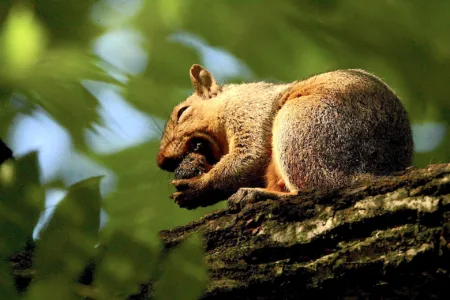
For mammals, their cool, dark place is under the dirt. You will begin to see these furry creatures scampering on the forest floor, cheeks full of nuts, until they find an appropriate spot to cache their stock for a future meal. In many instances, animals who retreat underground and come to the surface often forget where they buried their precious stash. As a result, many nuts, which have been accidentally planted by their harvester, will begin to grow as trees in the spring.
In this short-lived and incredibly productive time, many trees and animals share a symbiotic relationship, meaning they rely on one another to succeed in their environment. The large trees around us are beginning to drop their nuts in September through November. In New York, we see acorns from oak trees, walnuts, hickory nuts, and chestnuts littering the ground.
Squirrels and chipmunks aren't the only mammals who benefit from this free-for-all. White-tailed deer, whose breeding season peaks during the harvest, rely on a hearty supply of acorns to maintain body weight during this time of great activity. Bears are also enjoying their own harvest, as I've witnessed an eager black bear climb up a small hickory tree, only to pull down its branches and munch on the rich protein and fats these nuts provide.
Throughout time, we have learned behaviors from the animals that share space with us, including an end-of-summer harvest to prepare for winter's stagnancy. In modern convenience, we now have the luxury of going to the grocery store in the depths of December, whereas this was not the case for thousands of years prior. Before the invention of the refrigerator and access to storefronts, humans did most of their preparation and harvesting alongside many other species.
I encourage you to keep those old-world harvesting skills alive by gathering the last of your garden abundance, finding wild and ripe apples, purchasing or picking corn from a local farm, and supporting the small businesses who thrive from autumn's readiness to prepare.
Learning how to can and preserve those precious garden goods is a great way to instill our more-recent ancestor's methods of harvesting and preparing for winter's arrival, living in sync with the many species who are gathering with a similar mindset to ours.
While we plunge deeper into the colder months, remember to participate in the harvest. Whether it be from your own garden or from a local farm stand, we can channel our inner instincts and live alongside the land that gives us so much.
Audubon Community Nature Center builds and nurtures connections between people and nature. ACNC is located just east of Route 62 between Warren and Jamestown. The trails are open from dawn to dusk and birds of prey can be viewed anytime the trails are open. The Nature Center is open from 10 a.m. until 4:30 p.m. daily except Sunday when it opens at 1 p.m. More information can be found online at auduboncnc.org or by calling (716) 569-2345.