
Energy flows, matter cycles
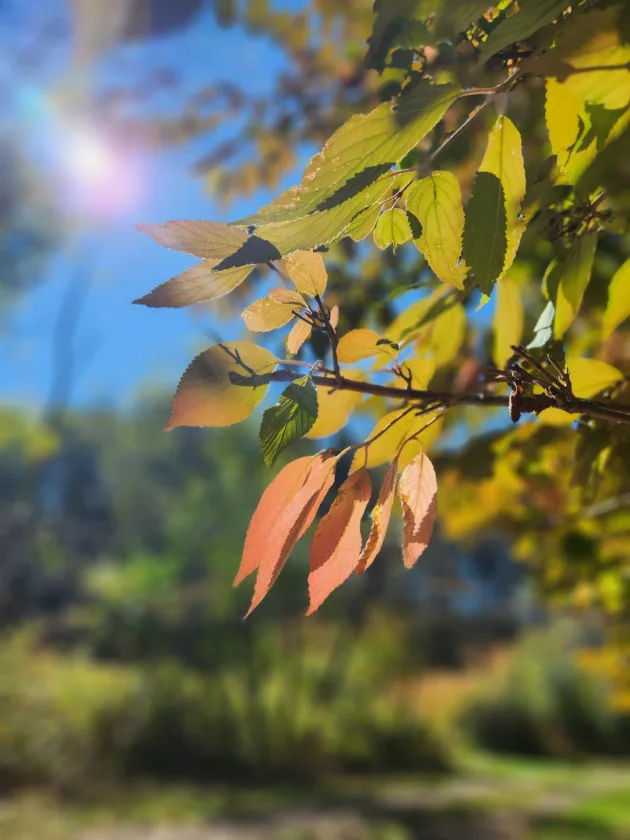
Leaves start to turn red and orange in September in response to many factors, including decreased sunlight.
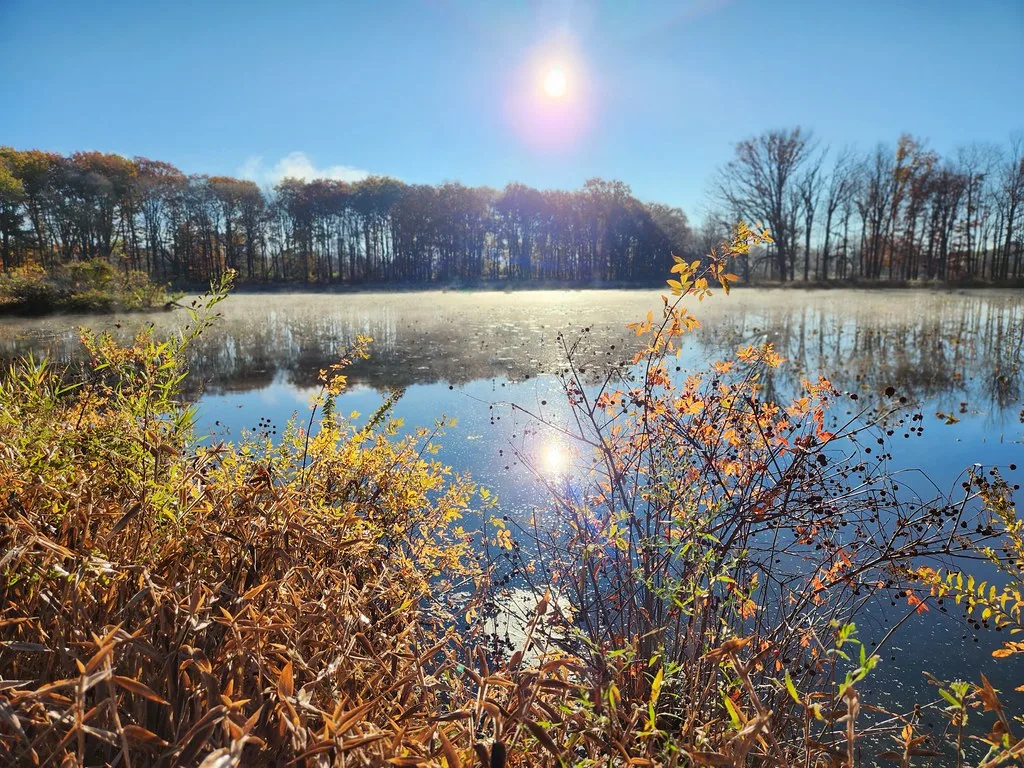
Sun is the key source of energy at the start of a food chain or web.
Leaves start to turn red and orange in September in response to many factors, including decreased sunlight.
Sun is the key source of energy at the start of a food chain or web.
Trending
As the seasons continue their transition from summer to fall, organisms are following these cues and making their own changes. Fall is a time of transition and a time of cycles. Not a new concept, but one worth looking at a little closer.
We learn this idea that things in nature are connected pretty early in school. We also soon learn that things in nature are constantly changing. Predators and prey, food chains, plants use the sun for photosynthesis, dead things decompose into elements of soil, and metamorphosis as the caterpillar becomes a butterfly. The energy flows. The matter cycles.
On a macroscopic scale, September is when animals collect food, eat more of that food, grow a thicker undercoat, or find shelter. Fungi are abundant right now, getting nutrients and energy from decaying matter. All of the dying plants and increased rain provide ideal conditions to produce a visible fruiting body, or sporocarp. Last weekend, I led a group of kids and parents on a walk at Audubon, and we found a grove of Inky caps and a cluster of puffballs, along with an assortment of red, yellow, and brown mushrooms everywhere from the forest floor to the front lawn. I look out the window and see the leaves on smaller shrubs and bushes are starting their transition from green into reds and purples. Eventually, those peak colors that are so indicative of fall will come and go, and some of those leaves will break down. Caterpillars will overwinter in fallen leaves, either in a pupal or larval stage, as they wait for next spring to come and begin the next phase of their transition, where they start eating leaves rather than sheltering in them. One thing cycles into another.
One of the most visible ways we learn about connections in nature as kids is through the food chain. When I teach about this and inevitably draw a food chain on the board, my arrows point towards the consumer, not the organism being consumed. I've found this can throw people off. I've even had classes of fifth graders raise their hand to point out that my arrows are backwards, but, in fact, this entirely depends on what you are trying to depict. Yes, the snake eats the frog, but in turn that snake is getting energy from the frog. So, my arrow shows the direction of energy flow, not predation. Energy flows up the food chain. The energy flow is the sticking point. Then, the snake eventually expels some of that frog as excrement, and the snake poop breaks down into soil. Matter is what cycles around again.
I'm not a physicist by any definition, but when you break ecological and biological processes down to a microscopic level, physics becomes unavoidable. Biophysics is an entire area of study that people dedicate their academic lives to. While ecology might focus on trophic levels and the ways organisms are interconnected, biophysics looks at those processes on a molecular level. Energy and matter end up being key concepts in both physics and ecology. Energy flows from an acorn to a squirrel to a hawk, keeping them alive and moving. Matter changes as carbon goes from a dead leaf to the soil to the roots and then back into a living tree's leaves, providing fuel for photosynthesis.
When you get into the nitty gritty, this all ventures into the wonderful and complex world of thermodynamics and how thermal energy works in a given system. Energy can be a somewhat abstract concept at first, but it's defined as the capacity to do work or make changes. In most any given habitat, the sun is the primary source of energy, and that energy goes up each trophic level, or food chain level, as an organism is consumed. However, the energy doesn't just flow; it also gets used along the way. A plant gets a certain amount of energy from the sun and only about 10% of that energy gets passed up to the next level of the food chain. The rest of the energy is used by the plant and eventually released as heat through photosynthesis. Then once those leaves fall in October, decomposers will use energy to break down leaves, creating more heat. A large enough compost pile can actually resist freezing in the winter due to the heat produced by the decomposition process.
The energy flowing through an ecosystem doesn't get a chance to cycle back around like matter does. This concept that energy flows, but matter cycles is not a full scientific law, but it is a well-studied theory. Matter is just anything that has mass and takes up space. One of those important laws states that matter can be neither created nor destroyed, just rearranged. The mass and matter of a decomposing leaf breaks down into reusable minerals and molecules. But the energy from the process is just released as unusable heat that will slowly dissipate into the atmosphere.
Life on earth requires the sun because it requires the energy produced by the sun. As we venture onwards towards fall, the northern hemisphere starts finding itself a little short in the sunlight department. Plants and animals have to adapt to the decreased energy levels available. Leaves will stop producing chlorophyll, halt their photosynthesis, and survive off stored sugars. Evergreen trees will decrease their energy production in their needles. Seeds, berries, and flowers are grown in the warmer months when there is more energy available. This impact flows up to animals who now have fewer food sources. Fall is a great time to look at the cycles of plants and animals, but it's also a time when things have their last energetic hurrah before settling down into a slower pace.
Audubon Community Nature Center builds and nurtures connections between people and nature. ACNC is located just east of Route 62 between Warren and Jamestown. The trails are open from dawn to dusk and birds of prey can be viewed anytime the trails are open. The Nature Center is open from 10 a.m. until 4:30 p.m. daily except Sunday when it opens at 1 p.m. More information can be found online at auduboncnc.org or by calling (716) 569-2345.