
Trending
It's the height of summer and among the beautiful sunny summer days are the ones with an almost oppressive heat and humidity. Though some may love the hot and humid days, I sometimes feel like I'm melting, much like a popsicle. During a heat wave I can get brief respite by going inside and enjoying the wonderful invention that is air conditioning. But this recently sparked a thought--what do animals do when the heat climbs up? As it turns out, our wild neighbors have several different strategies to combat the heat.
First of all, many animals have built-in cooling systems. These are the biological adaptations that remove heat from the body. Humans have a somewhat unique way of cooling off, which is our ability to sweat. As the sweat on your skin evaporates it takes heat with it, creating a cooling effect. This is noticeably less effective in high humidity, as the humid air makes it harder for sweat to evaporate, but on dry days it works exceptionally well at keeping your core temperature cool. This way of cooling down is shared by only a handful of other animals, including horses and a few other primates. Most animals don't have the number of sweat glands required for it to work, which is why many animals instead cool down via panting.
Panting uses the same method of evaporative cooling that sweating does but it is concentrated near the mouth of the animal. Often, panting brings to mind the image of a dog with its mouth open, tongue hanging out, but dogs aren't the only animals that pant. It's not exclusive to mammals either, as birds can also pant to stay cool, or do something called gular fluttering, which is vibrating the patch of skin at the base of their throat. Birds will also stay cool by holding their wings out from their body, which has the added benefit of helping kill any parasites that might be hitching a ride.
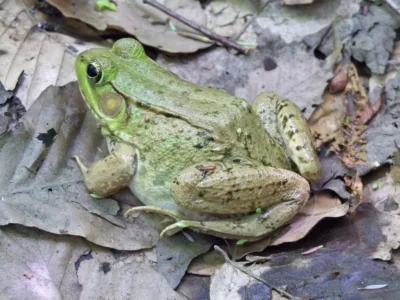
In addition to biological methods of cooling, animals can change certain aspects of their behavior and how they interact with their environment to aid in thermoregulation. People do this by going inside to a space with fans or air conditioning when the heat gets to be too much, but that is not the only strategy. For example, animals like squirrels or rabbits might choose to hang out in shady areas, where they are protected from the sun, instead of areas out in the open where the sun bakes. Another place where animals might choose to hang out is the cool and damp underside of a log, or under a layer of dead leaves in the forest. This is a favorite spot for many amphibians like salamanders and toads, as well as many invertebrates.
Several animal species are also crepuscular, being most active at dawn and dusk, and avoiding the midday heat entirely. Some familiar species, like Red Foxes and White-tailed Deer are crepuscular. Others may be nocturnal and sleep through the day, for example most bats and owls.
Another way animals stay cool is by taking a bath. Swimming or wading in the water isn't just for people, and while they might not be able to take a trip to the beach, animals will still bathe in ponds and puddles, using water to keep themselves cool. This is easy to see if you have a bird bath, because many of our feathered friends will take the opportunity to dunk themselves in water to cool down and stay clean. Watching their antics is also highly entertaining, and the sight of a soaked bird is quite amusing. Other animals may choose to instead simply wade through water or just sit by the side and stay well hydrated. Some animals may prefer to wallow in mud, like pigs. It's less common in the animals that live around here, but mud can also act as a sort of natural sunblock.
One of the weirdest ways animals stay cool is a technique used by vultures. Turkey Vultures will poop and pee on their own legs in a process known as urohidrosis. This process cools the bird in a process very similar to humans and our sweat. In fact, the term urohidrosis comes from the Greek uro- meaning urine, and hidrosis, an Ancient Greek medical term which means sweating.
On the other hand, some animals choose to embrace the heat. Even animals that have ways to stay cool might enjoy the heat by sunning themselves. Whether it's a bird stretching its wings or a turtle on a log, the sun can also feel nice.
Reptiles and other cold-blooded creatures benefit from the heat, basking in the sun to raise their internal body temperature and metabolism, which lets them stay more active in the summer. If you visit a pond in the summertime keep an eye out for any logs, as they are a favorite basking spot of many turtles and snakes. Whether you love the heat or prefer to avoid it, animals in nature have their own ways of staving off the summer heat and staying comfortable.
Audubon Community Nature Center builds and nurtures connections between people and nature. ACNC is located just east of Route 62 between Warren and Jamestown. The trails are open from dawn to dusk and birds of prey can be viewed anytime the trails are open. The Nature Center is open from 10 a.m. until 4:30 p.m. daily except Sunday when it opens at 1 p.m. More information can be found online at auduboncnc.org or by calling (716) 569-2345.