
Something’s brewing in muggy conditions
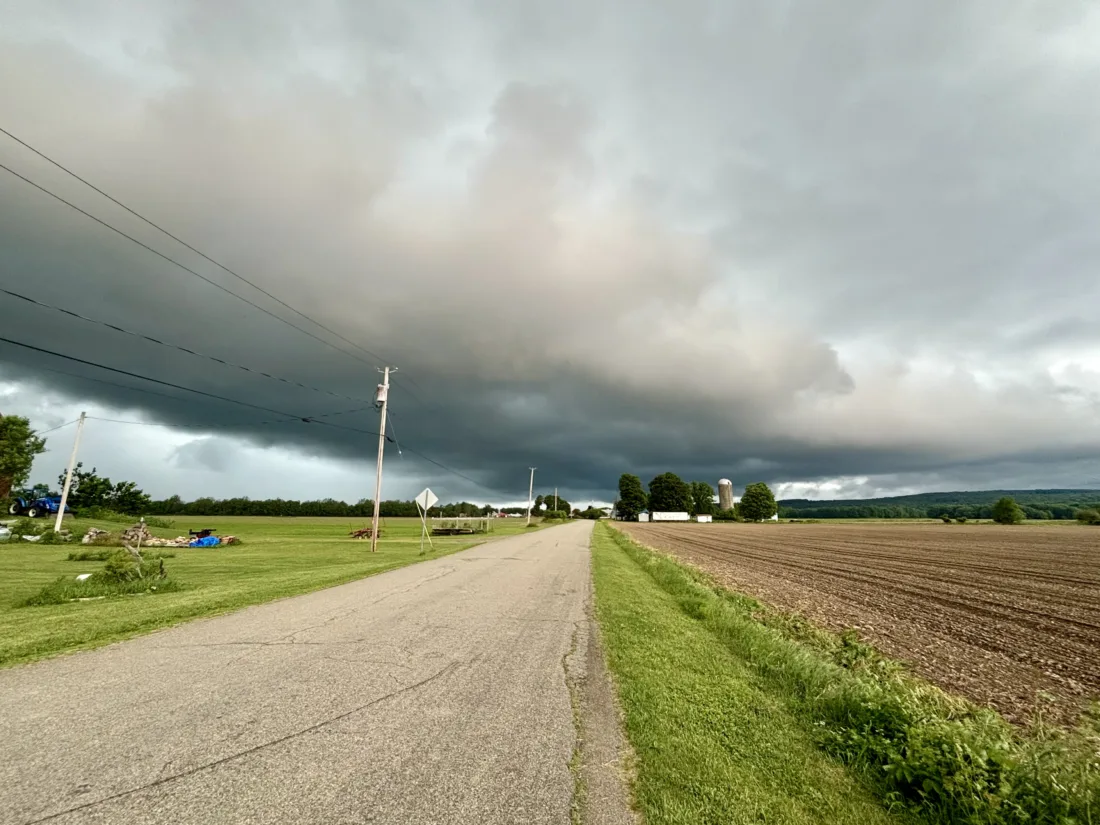
Photo by Taylor Spontaneo Shelf clouds are a visual indicator that something’s brewing in the sky.
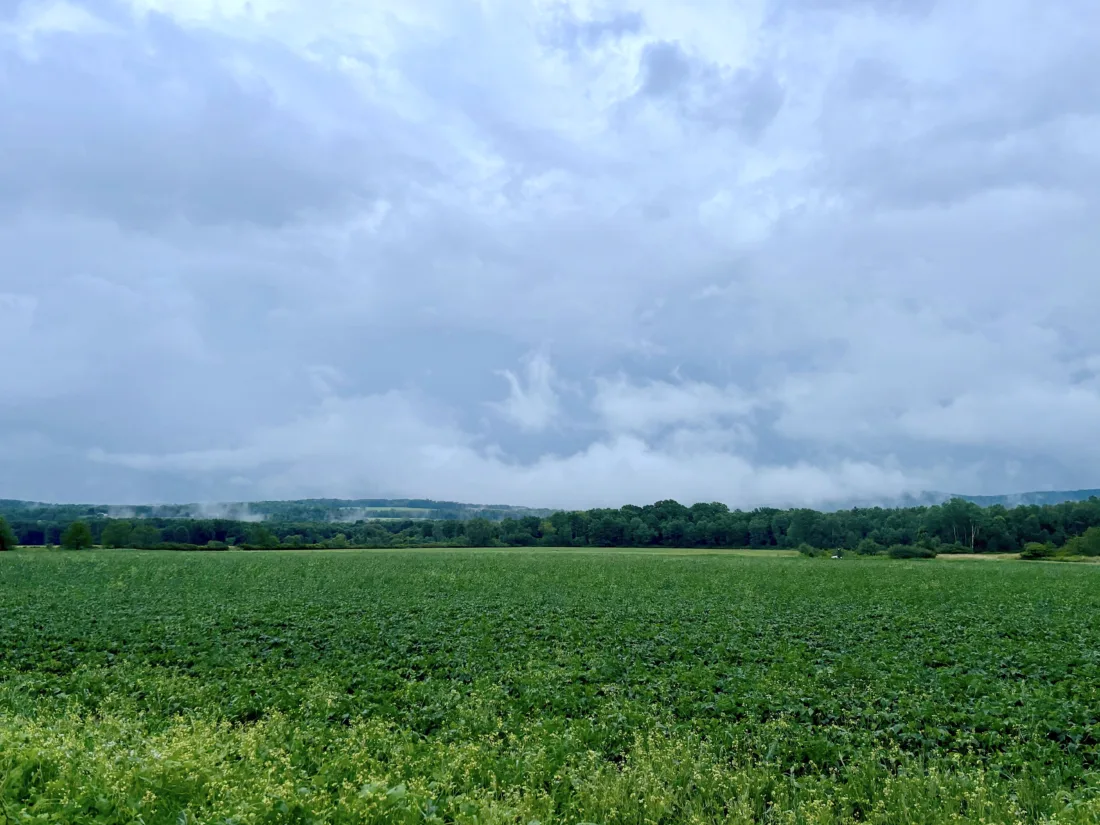
Photo by Taylor Spontaneo Fog is common after a storm that has carried moisture and cool air into the area.
Photo by Taylor Spontaneo Shelf clouds are a visual indicator that something’s brewing in the sky.
Photo by Taylor Spontaneo Fog is common after a storm that has carried moisture and cool air into the area.
Trending
Humidity tells us two things: One, you will be sticky. Two, there is water in the air, which signals rain. We all have a sigh of relief when humidity dissipates, a cool breeze comes in, and much-needed rain comes our way. Some of us hold our breath when we realize the rain we wished for sometimes comes with gusting winds and hail. In the sky, a tall, dark cloud approaches, wind becomes stagnant, and warm sunshine disappears. Many call this the 'calm before the storm,' and we know something's brewing.
Summer storms are one of many natural phenomena I look forward to. A good rain shower not only gives my garden watering without my efforts, but it also gives me a pleasant soundtrack to listen to as thunder rolls by and a cool breeze blows my way. I know many who describe listening to a storm as 'naturally ambient,' yet I still feel energized when I see those clouds approaching, making me wonder what will come from the skies above.
There are three things needed to create the perfect storm; warm air that rises upward, interacting with the cool air that rests higher in the atmosphere, and the right angle of wind to push humidity up and up. This instability is what creates the towering clouds we all recognize as a shelf-cloud, the looming wall of darkness carrying a storm. In meteorology, these systems are called 'cells,' and if a cell is particularly strong, they are appropriately named 'super-cells.'
We all appreciate the colder winds before storms approach in the heat of summer. It may feel nice for a moment, but it signals that rain is about to come down. Water does a wonderful job of keeping cooler air down by the surface, which is why you feel a chilly breeze if you are near a lake or oceanfront on a nice day. During a storm, rain pushes warm air upward, replacing it with cooler air that can make temperatures drop as much as 10 degrees in a matter of minutes. If you're curious as to how severe a storm may be, watch your thermometer. Temperature is telling.
While a storm is developing, the circulating air quickly becomes unstable. Warm air from lower altitudes rises and clashes with colder air that is higher in the atmosphere. At heights up to 60,000 feet, rain drops freeze quickly at different sizes and these frozen droplets collide with each other inside the cloud, rubbing against one another until a physical burst of energy is released in the form of an electrical field. These interactions between frozen crystals create lightning we see during a storm. Massive explosions of light and heat happen so quickly, in the fraction of a second. The energy released has nowhere to go except in the form of sound. That shockwave of sound follows the flash of light, since light travels faster than sound. You have all heard this shockwave during a storm--thunder.
Everyone has experienced some form of hail in one way or another, some small and interesting, others quite large and a cause for worry. Those ice pellets heard hitting rooftops have travelled a long way to bounce off any surface. Weather occurs at extremely high altitudes, tens of thousands of feet in the air. At these heights, the air circulating is well-below freezing, which makes a good environment for rain drops to form into ice crystals. Ranging from smaller than a pea to as large as a baseball, hail is known for its destruction to cars, houses, and the heads of unfortunate folks stuck outside. If your weather station or smartphone app warns of large hail, seek shelter for yourself. If you have a garage, parking your car inside would prevent any dents or damage to windshields.
Rarely do we get a tornado that reaches the ground in our area. If conditions are right, there are signs to look out for. A super-cell's energy will be transformed, meaning any wind or rain will stop for a moment as it cycles upward to form a funnel. If you find the outdoors suddenly become eerily quiet and notice a greenish hue in the sky, seek shelter immediately. Get as many walls in between you and the outside. This will add extra protection when winds pick up. If you are driving and get caught in the wrath of a strong storm or tornado, pull over immediately. Many will try to stop underneath an overpass, thinking this will protect your vehicle from hail or wind damage, but items of debris will be sucked in this vacuum of air and winds become intense in this narrow band.
If you sense a storm is particularly strong, seeing flickering lights and hearing high winds, you will want to prepare for a power outage. Most power outages in Western New York are due to trees falling on power lines, pulling cables apart so electricity cannot travel through. Most times, power outages last a few minutes to a few hours while crew members work on fixing the fallen wires. In the meantime, it's vital to have a kit to help you navigate around a dark home. Refrigerators and freezers should stay closed to trap cold air inside, keeping perishables safe. Flashlights, bottles of water, canned goods, candles, a hand-powered radio to receive any weather updates, and a first aid kit for any injuries. Having these tools nearby can make a power outage situation more manageable.
At Audubon, a tool we recently purchased is a weather station that can be viewed at our front desk. The station's sensor is placed on our roof for real-time data collection, which includes rainfall amounts, windspeed and direction, and humidity, among many other things which are displayed on a screen indoors. If you are curious about conditions in the skies above us while visiting the Nature Center, visit our front desk and explore the weather information we have on display or visit the website at auduboncnc.org and click the drop down menu under 'Plan Your Visit'.
The sky is a place where things are always moving and shifting. Dark clouds tell us to prepare for a confrontation with the intensity of nature first-hand. There is something incredible about witnessing the power behind a mixture of clouds, water, and wind, that combine to create the storms we see. If you know something is brewing in the sky, make sure your home is prepared, and be sure to enjoy the show from a safe place.
Audubon Community Nature Center builds and nurtures connections between people and nature. ACNC is located just east of Route 62 between Warren and Jamestown. The trails are open from dawn to dusk and birds of prey can be viewed anytime the trails are open. The Nature Center is open from 10 a.m. until 4:30 p.m. daily except Sunday when it opens at 1 p.m. More information can be found online at auduboncnc.org or by calling (716) 569-2345.