
Caterpillars begin to grab attention
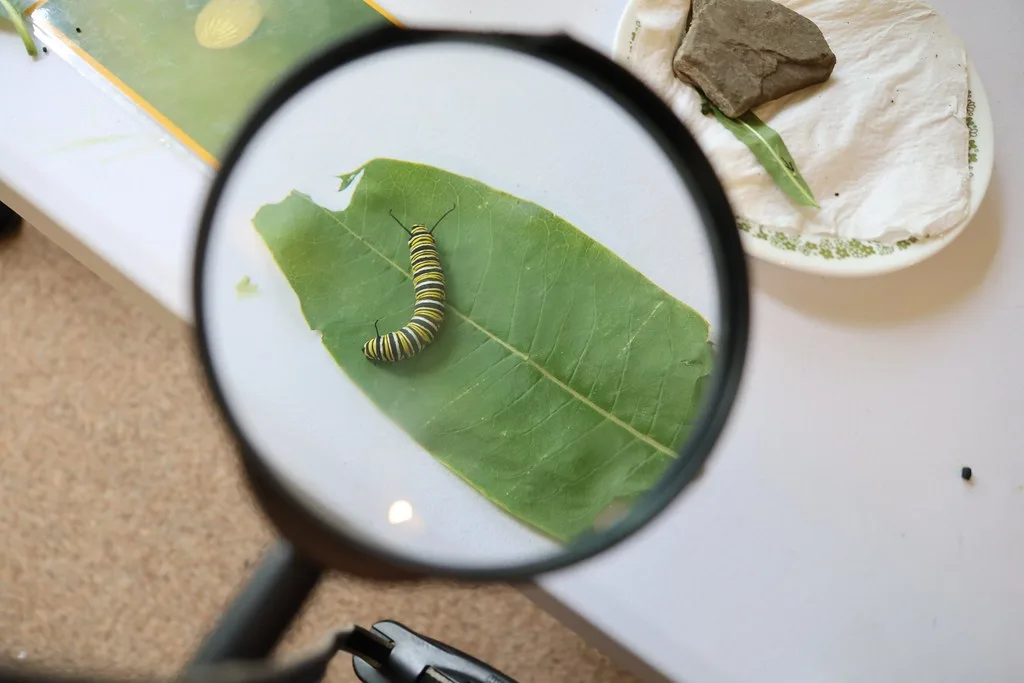
Observing Monarch caterpillars through a lens.
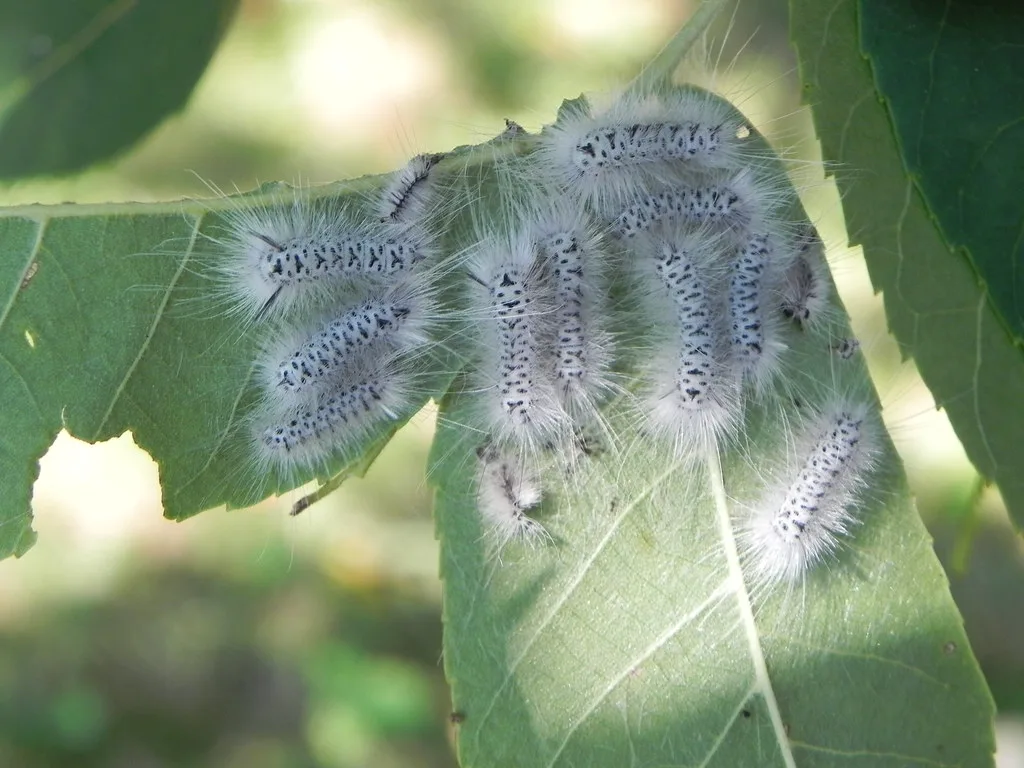
Hickory Tussock Moth Caterpillars looking for food on the underside of a leaf.
Observing Monarch caterpillars through a lens.
Hickory Tussock Moth Caterpillars looking for food on the underside of a leaf.
Trending
Often, the way observation works is that you start to notice more of something once you are aware of it. Perhaps someone points out an interesting bird, or maybe you find an unusual plant. Once it piques your interest, then you are more likely to set out with the intention to find more. This was demonstrably true in the last week of Audubon's Summer Day Camp as many campers focused on one of our smaller wildlife sightings.
Audubon Community Nature Center wraps up their last week of summer camp in mid-August. As usual, this year campers played out in the woods, learned and made discoveries about local plants and animals, and went outside to find some of those wildlife species.
Early on in the summer, you are more likely to see geese, bird nests, and early summer flowers like dandelions, daisies, and irises. Snakes and toads are out all summer, but temperature and rainfall can impact when you find most of them. At Audubon, our toad and frog sightings increased in late July and early August and campers of all ages were noticing them hopping around the forests.
However, in that last week of camp, the focus shifted to the myriad of caterpillars. While caterpillars can be spotted from spring through fall, one particular species acted as a springboard to launch a more thorough search for them in those last two weeks of camp. Currently in Audubon's forest, there is a thriving population of Hickory Tussock Moth caterpillars. These are white and black fuzzy caterpillars that start small, but get up to an inch or more in length. They are frequently on the move, climbing ever higher, and since they are white, they tend to stand out in the forest, making them easier for our eyes to spot. With so many around, they quickly became a fascination for our summer camp kids.
Hickory Tussock Moths will hatch in the summer, and like any other caterpillar, their number one job is to eat. They eat leaves from a number of trees and in years when the population rises, they can do a number on some treetops. Despite this, they don't tend to do any lasting damage on a healthy forest, and the trees successfully rebound the following year when this caterpillar population decreases. This natural cycle of population boom and bust is typical for many plants and animals.
Typically, you can count on a fuzzy caterpillar turning into a moth rather than a butterfly. These hairs give them somewhat of a bad reputation though, since touching them sometimes leads to skin irritation. Those long hairs are barbed and can get stuck in your skin, which is what causes the rash and itchiness. Many people will either handle them without any issue or have a very minor reaction, but for a few people there is the possibility of a stronger reaction. So just monitor any young children around them and maybe pick them up with a leaf just in case.
Campers spent their last week finding and occasionally collecting different types of caterpillars. The bulk of them were Hickory Tussock Moths, but there were a number of others as well. And don't worry, they were all safely collected and released back into the wild! Except one Monarch caterpillar that promptly stuck itself to the top of the container and formed its J-shape to start pupating within minutes after it was collected on the last day of camp. That one is currently in a chrysalis and will be released when it emerges in the next week or two.
Rather than pupating and transitioning to their adult stage this summer like a Monarch butterfly, Hickory Tussock Moths will stay in a cocoon throughout the winter and emerge as a small yellowish-brown and white spotted moth. The campers also found Milkweed Tussock Moth caterpillars, a black and orange fuzzy caterpillar that uses milkweed as a host plant. This one also overwinters in its cocoon. The last caterpillar of camp was a swallowtail caterpillar. Since it is mid-August, the butterfly may still emerge late in the summer, or if it thinks it's too late for that, the butterfly will remain in its cocoon under the cover of fallen leaves and wait until next spring.
Caterpillars are a great animal to focus your powers of observation. They are small enough that they require some dedicated outdoor time, but they are large enough to hold without squishing if the handler is gentle. They come in a variety of colors and a surprising amount of body shapes. They are also an animal that is constantly changing, so you can observe multiples of the same species and still find differences in the different ages and life cycle stages. August is a great time to look for caterpillars, especially moths. Just make sure you handle with care and put them back in their habitat when you are done.
Audubon Community Nature Center builds and nurtures connections between people and nature. ACNC is located just east of Route 62 between Warren and Jamestown. The trails are open from dawn to dusk and birds of prey can be viewed anytime the trails are open. The Nature Center is open from 10 a.m. until 4:30 p.m. daily except Sunday when it opens at 1 p.m. More information can be found online at auduboncnc.org or by calling (716) 569-2345.