
Sumac trees are late bloomers
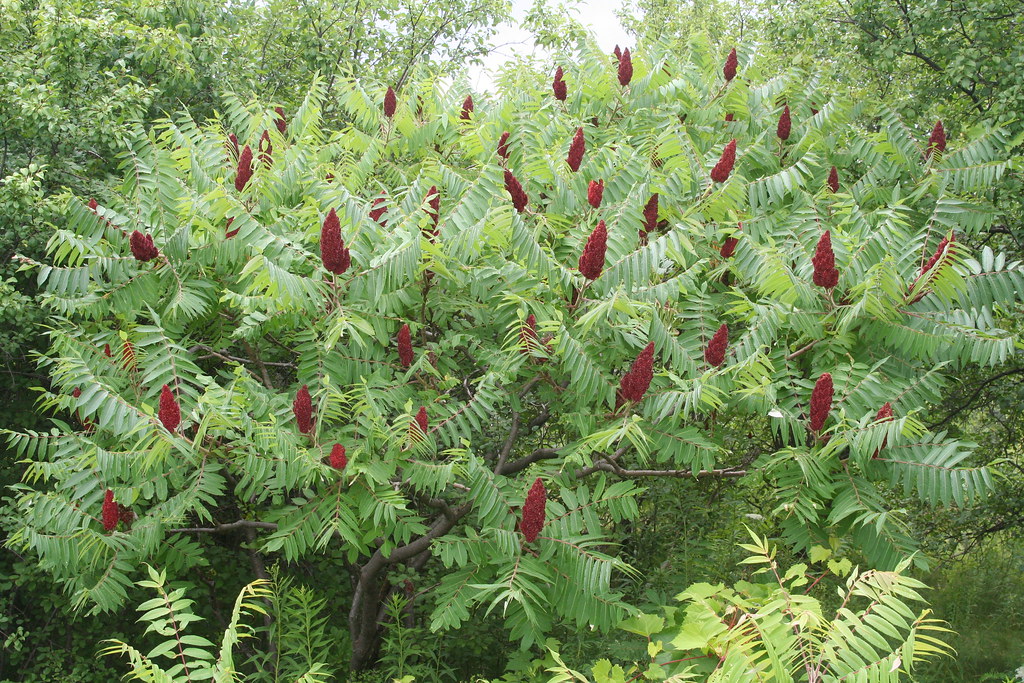
Photo by Ron Schott Sumac trees grow large pinnate leaves each summer.
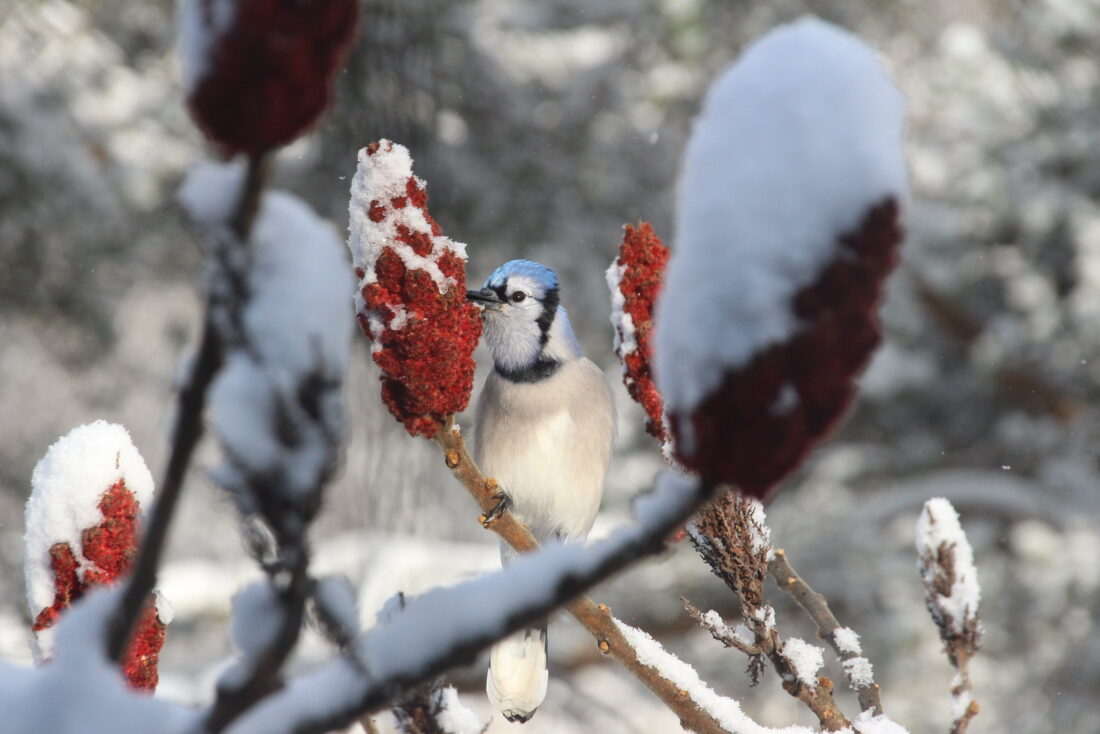
Many birds, including Blue Jays, feed on Staghorn Sumac berries in late winter.
Photo by Ron Schott Sumac trees grow large pinnate leaves each summer.
Many birds, including Blue Jays, feed on Staghorn Sumac berries in late winter.
Trending
Over the course of spring, different tree species produce buds and leaves on a staggered schedule. This variation has benefits for not only the trees, but also the animals and forest as a whole system. One of the last trees to leaf out each spring is the sumac. There are several tree species known by the common name of sumac, but I'm specifically referring to those in the Rhus genus, as opposed to poison sumac or others in the sumac or cashew family.
Sumac trees can be anywhere from a few feet to a couple stories tall and they produce red, fuzzy berries each year. You are just as likely to see them in the wild as you are intentionally planted in someone's yard. The most common and familiar of those is probably Staghorn Sumac. There are a few sumac species native to western NY, with the other most common species likely being Smooth Sumac. The difference is evident from their names. Staghorn Sumac has velvety bark, like the velvet found on newly grown deer antlers, while Smooth Sumac has smooth bark without any velvet. Both are a notably beneficial plant for wildlife, humans, and its native habitat.
They are also both remarkably unfussy trees. They live in yards, along roadsides, on the edges of forests, and in abandoned grasslands. It accepts bright sun and partial shade, has little qualms about the health of the soil it is planted in, and survives the road salt and other runoff that lands on its roadside roots with aplomb.
Sumac trees provide a year-round natural television of sorts. They are striking on their own, in addition to playing host to a cornucopia of wildlife. The education office of Audubon is on the second floor of the Nature Center and it is eye level with the upper branches of a long-standing Staghorn Sumac. It also happens to live in the same area of Audubon's bird feeders in the backyard. The birds and squirrels use this as a place to hide, survey the area, eat their collected seeds and insects, and use the berries as a food source throughout the fall and winter. Some birds, like Blue Jays and Northern Cardinals, are there all year, but as migration seasons progress, the cast changes and grows. Red-winged Blackbirds return early, followed by robins, grackles, and bluebirds. Look closer and you might find caterpillars and other insects tucked safely in the berries or along the branches as well.
Birds and squirrels aren't the only ones who benefit from the sumac tree. Staghorn Sumac berries are also edible to humans. In some areas of the world, sumac is a fairly common spice and flavor used in cooking. One of the simplest options is to make a tea from the berries, by steeping the berries either in cold water for 15 – 30 minutes or putting them in boiling water for a few minutes, and then straining them out after. The sumac berries have a citrus flavor already, but if you want it even more like lemonade, feel free to add some lemon juice and sweetener!
These berries are a type of drupe, with a small hard center and a fleshy outer layer. They start forming in the summer and can stick around all winter. Oddly, spring is when the trees are probably least exciting. While other plants have blooming flowers and those bright spring green leaves coming out, sumac trees have brown, dried up berries. In mid-May, these trees are just starting to grow buds and small leaves, while other trees have full-grown leaves. Over the coming months, these will turn into large, almost tropical-looking leaves.
In the fall, these leaves will turn a vibrant swirl of reds and oranges. If you are driving down the road and surrounded by a patch of small trees with long, brightly colored leaves, there is a good chance you have found sumac trees. This is often when most people notice them, and it's also when animals start running out of other food and they start the cycle again of eating sumac berries to sustain themselves over a long winter.
The sumac tree is a late bloomer in the spring, and that's okay. Dandelions, cuckoo flowers, and serviceberry tree flowers are for early spring while goldenrods and Joe Pye Weed are for late summer. The staggering of flowers, berries, and leaves create a cycle of food and shelter that many animals rely on. It also certainly doesn't hurt that it also keeps things visually interesting for the humans meandering around the forest, fields, and urban parks as well.
Audubon Community Nature Center builds and nurtures connections between people and nature. ACNC is located just east of Route 62 between Warren and Jamestown. The trails are open from dawn to dusk and birds of prey can be viewed anytime the trails are open. The Nature Center is open from 10 a.m. until 4:30 p.m. daily except Sunday when it opens at 1 p.m. More information can be found online at auduboncnc.org or by calling (716) 569-2345.