
The sounds of spring
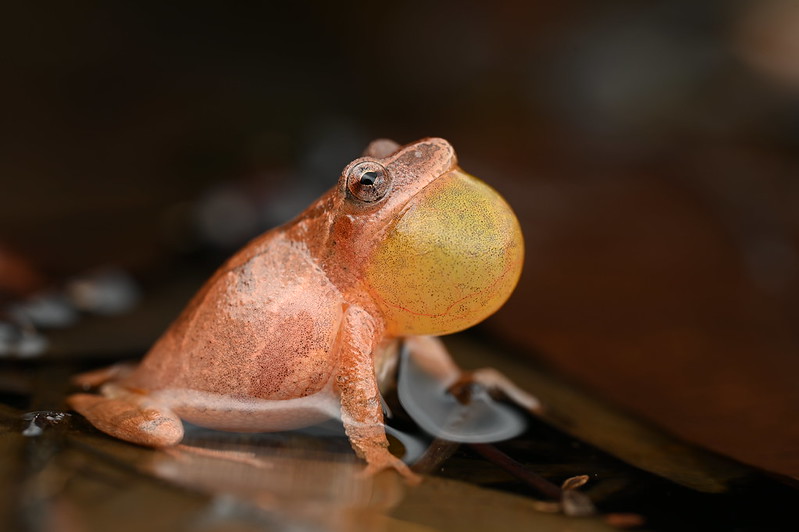
Photo by Benjamin Genter Spring Peepers usually start calling in March when the temperatures rise.
The arrival of March brings both people and nature out of their winter hiding spots. When the planet revolves and rotates just enough to change the angle of the sun, bringing warmer and sunnier days, the transformation it brings out in all living things feels immediately noticeable. Even if you don’t track the tiny, individual changes, they come together and impact the scene as a whole.
Last week, it was warm enough for me to at least crack the window open for an hour or two, and as I went about my afternoon I was also reminded how the incoming spring is a great opportunity to awaken our other senses. Winter, while not completely silent, is usually quieter and leans more towards stillness than movement. With my windows open, I am once again reminded that there are other living things out there. I hear it in the children playing outside, people walking around, and even in the sudden sounds of motorcycle engines idling in the driveway next door. In winter, sitting in my living room with my windows closed, I sometimes forget about all of that life around me.
Spring is a season associated with new life, and for good reason. In early March, plants, animals, and the natural world are just starting to increase their activity, and it will only continue as the seasons turn over into spring proper. Migrating animals are moving back, and others are emerging in search of food, mates, and nesting spots. Plants are finally getting the sun, warmth, and water they need to start budding and sprouting. And all of this commotion has the potential to be noisy.
The continual building and layering of sounds at this time of year can feel jarring after a winter of quiet and stillness. For me though, noticing the change in sounds of forest, fields, and towns quickly becomes the best part of my March days. Some of the noisiest and most notable changes in the soundscape come from the birds. There are plenty of birds around in the winter, and a Blue Jay call is a constant winter companion, but with the steady return of spring migrants and the increased pressure for birds to find a mate and a place to nest, the bird songs and calls multiply seemingly exponentially.
Every time I open my window or go for a walk in nature, I hear this cacophony of birds, and I am reminded of a book written by Rachel Carson. Silent Spring documented the stories and evidence of how a particular long-lasting pesticide called DDT was harming animal populations, especially birds and their eggs. Her title was meant to evoke the image of a world with far fewer birds and how quiet it would be. Despite having a master’s degree and experience both professionally and personally as a naturalist, Silent Spring was originally dismissed both because it was written by a woman and because large pesticides companies were attempting to protect their bottom line. Eventually though, through her contributions and other grassroots movements, DDT was banned in 1972.
So for me, listening to the shrill Red-Winged Blackbirds in addition to more melodic American Robins and House Wrens is a privilege and not one to be taken for granted. Bird sounds are a soundtrack to spring and I invite you to take a moment or two this spring to spend some intentional time listening to a few of those songs.
Of course, birds aren’t the only things making noise out there. Animals are moving around more, so the sounds of deer crashing through the brush as they run away or squirrels and chipmunks scampering along the forest floor and chattering in the trees will continue to be more prevalent.
Soon frogs and toads will start taking over the nighttime portion of the spring soundtrack. Spring Peepers usually make an appearance by the end of March and their loud chorus of peeps can be heard in wetlands across western New York. American Toads are not far behind. Their high-pitch trills happen after sunset to avoid being an easy target for predators.
It will be a while before the spring sonatas give way to summer and then the insects and invertebrates will add an entirely new section to nature’s orchestra. The changing soundscape of nature is just as seasonal as the temperature, weather patterns, and animal sightings. Spring reminds me that I do, in fact, live within a greater community than just me, my cat, and the houseplants. Opening my window, going for a walk in a park, or trekking through the woods is evidence that there are a lot of lives being lived out there, both human and otherwise.
Audubon Community Nature Center builds and nurtures connections between people and nature. ACNC is located just east of Route 62 between Warren and Jamestown. The trails are open from dawn to dusk and birds of prey can be viewed anytime the trails are open. The Nature Center is open from 10 a.m. until 4:30 p.m. daily except Sunday when it opens at 1 p.m. More information can be found online at auduboncnc.org or by calling (716) 569-2345.
Community
The sounds of spring
Hospice receives February donations
Hospice of Warren County received contributions during the month of February 2026. They include: In memory of: ...
Briefs
WHS Class of 1959 to gather The WHS Class of 1959 will meet for lunch on Thursday at noon at the Warren Eagles ...
Youngsville Life: Churches schedule Lenten services, lunches
Editor’s Note: Please email community news to Colette Nelson at Colettenel.ypl@gmail.com by Wednesday of each ...

Editor to speak at Sunshine Week event on March 11
Briefs
Friday Bridge results Winners in the Conewango Club Friday Bridge on Feb. 20 were Susan Swab, first, Peggy Morgan.