
Spotlighting the women of nature
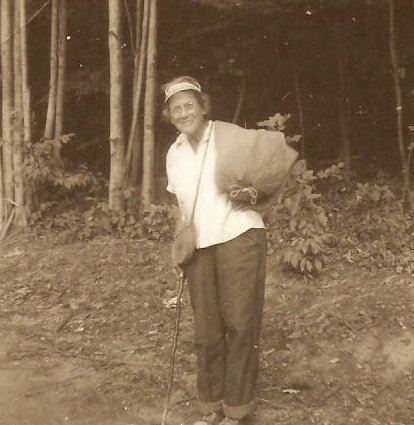
Emma Gatewood, the first female through-hiker of the Appalachian Trail.
-
- Emma Gatewood, the first female through-hiker of the Appalachian Trail.
-
- Florence Merriam Bailey sought to understand birds and their behavior through observation, rather than shooting and collecting specimens.
Of these areas, some of our most familiar women in nature have been in the field of conservation. From Rachel Carson and her takedown of DDT to Jane Goodall and her protection and study of chimpanzees, women are recognized for their achievements. However, some women have been left out of the limelight.
Two ladies in particular deserve some extra attention: Harriet Hemenway and Minna B. Hall. The names of these women may not be well known, but their impact certainly is. In 1896 they founded an organization that would eventually become the National Audubon Society. While they used the name of a man, John James Audubon, for their society, the choice to use this name was mostly a marketing decision.
Harriet and Minna were concerned with the large amounts of feathers, or in some cases whole dead birds, used in women’s fashion at the time. They founded their society to address these concerns and work towards the conservation of birds. Using the name of a well-known ornithologist, even though he had died nearly 50 years prior, was a way to attract people to the organization and publicize their mission. Their small, local organization quickly caught on and Audubon societies began popping up country-wide. In 1940, these were incorporated into the national society we know today. Since its founding, National Audubon Society has helped spearhead efforts which led to the Migratory Bird Treaty Act and protection of millions of acres of bird habitat. While the organization bears the name of a man, the foundations of the society, and the conservation that has come from it, falls squarely on the shoulders of women.
Women also worked hard to carve a place for themselves in the historically male-dominated world of scientific study. While John James Audubon’s achievements in ornithology are well known, less known but still equally important in the field are the achievements of Florence Merriam Bailey. Florence was a student at Smith College and at the time she enrolled in the school, there were no biology courses offered; however, this did not stop Florence from writing her senior thesis on evolution.
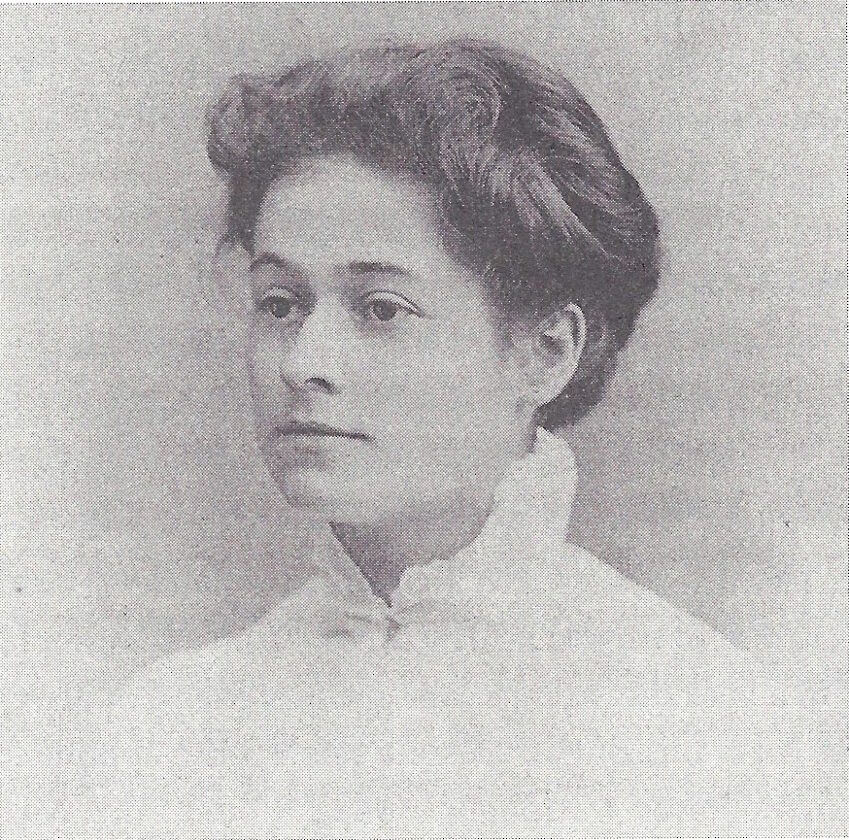
Florence Merriam Bailey sought to understand birds and their behavior through observation, rather than shooting and collecting specimens.
Florence took a strong interest in birds, and departing from previous standards in the field, emphasized observation over collection. While many ornithologists of the day and prior focused their research on shooting and studying the carcasses of birds, Florence saw the benefits of simply observing them in their habitats. She became interested in the newly formed Audubon Society, but instead of simply telling people to stop using feathers, she believed it was more beneficial to take people into nature and show them the birds, believing in the power this connection to nature provides.
Through her papers and books, including Birds through an Opera-Glass (binoculars were yet to be popularized), Florence emphasized the importance of observing and learning from all aspects of a bird, including physical characteristics, but also movements, songs, nesting behaviors, and feeding habits-information that the shoot-and-study methods popular at the time were not able to provide. Bridging conservation and scientific study, Florence’s achievements make myself, a woman birder and Smith College graduate, inordinately proud.
While conservation and scientific study are undeniably crucial, that does not diminish the importance of simply enjoying time in the outdoors. It is not necessary to be a scientist, or to have a conservation drive, to play an important role in the environment. Simply enjoying what it has to offer is a powerful thing.
Like conservation and science, time in the outdoors has also historically been dominated by men, with women expected to take a more domestic role. Fishing, hunting, hiking, and camping have often been thought of as “manly” past-times. Turning this assumption on its head was Emma “Grandma” Gatewood, who in the year 1955 and at the age of 67, told her children she was “going for a walk” and became the first female solo through hiker of the Appalachian Trail, after she walked over 2,000 miles from Georgia to Maine. Emma would put modern day minimalist hikers to shame, wearing Keds on her feet and carrying nothing but a canvas bag over one shoulder with a set of extra clothes, some food, and a shower curtain to protect her from rain. Emma completed this hike twice, repeating the feat in 1957. After her hikes of the Appalachian Trail, she went on to hike the 2,000-mile-long Oregon Trail in 1959 at the age of 71, in honor of the pioneer women who walked alongside covered wagons a century before.
While they may not always be well known, women have had a strong impact on the outdoors and our relationship with nature. As the number of women enrolling in biology programs now outnumbers that of men, women’s impact on the field is sure to grow into the future.
Audubon Community Nature Center builds and nurtures connections between people and nature. ACNC is located just east of Route 62 between Warren and Jamestown. The trails are open from dawn to dusk and birds of prey can be viewed anytime the trails are open. The Nature Center is open from 10 a.m. until 4:30 p.m. daily except Sunday when it opens at 1 p.m. More information can be found online at auduboncnc.org or by calling (716) 569-2345.
Community
Spotlighting the women of nature
Briefs
Eisenhower Class of 1973 to meet The Eisenhower High School Class of 19'73 will have breakfast at The Bucket Cafe ...
Philomel Club seeks scholarship applications
The Philomel Club of Warren is accepting applications for its annual scholarships for students in fourth grade and ...
RTPI to open exhibit March 29
Take a look at the night sky
Youngsville Life: Irvine church to host auction Sunday
Editor’s Note: Please email community news to Colette Nelson at Colettenel.ypl@gmail.com by Wednesday of each ...