Staying warm in the winter
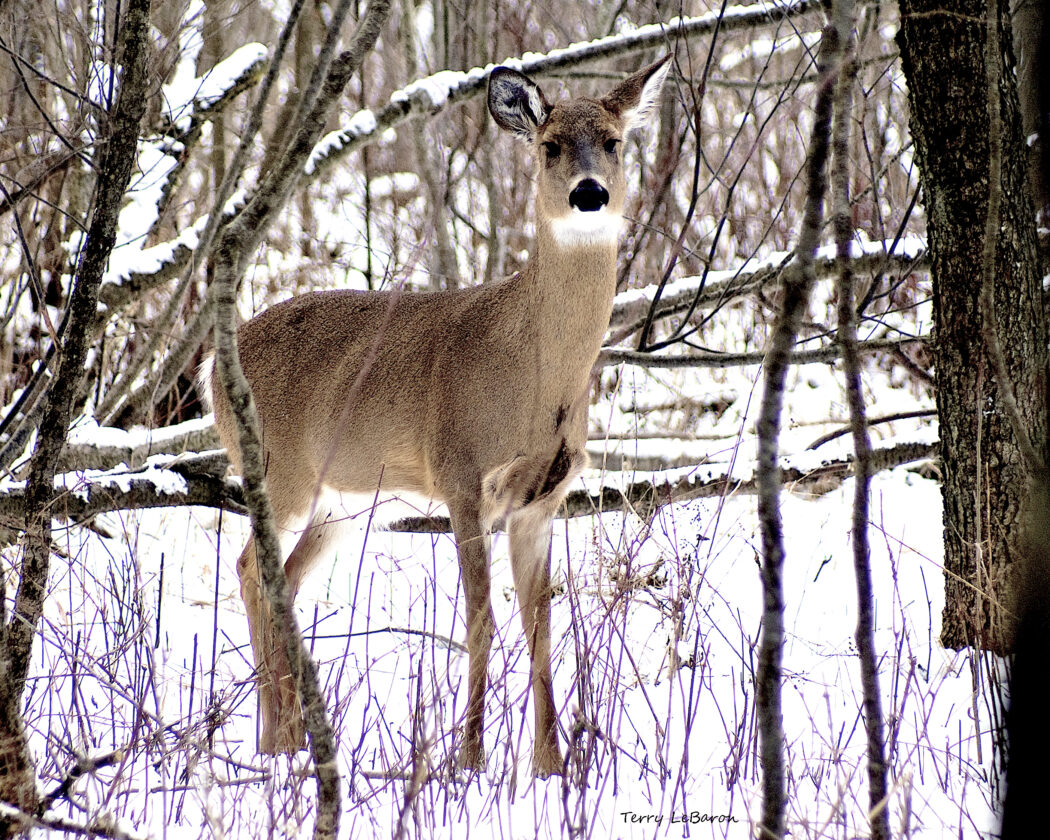
Photo by Terry LeBaron White-tailed Deer grow thicker fur coats in the winter.
It is firmly winter right now, and we can all feel it. The temperature is chilly, sometimes dipping into the negatives, with cold winds and plenty of snow. Living in western New York, you get used to dealing with winter, whether it’s shoveling snow or bundling up to go outside and run errands. As humans, there are plenty of ways in which we stay comfortable during the winter months. Some methods are environmental, like staying inside and heating a house, whether through electricity or a wood-burning stove. Other methods to help stay warm are things like curling up with a blanket and a cup of tea or hot cocoa. As I sit here typing this, I am wearing a hoodie over a long-sleeved shirt, using extra layers to stay toasty.
And of course, when it’s time to venture outside, we all know that means it’s time for even more layers. Bundling up with a good winter coat, warm socks, a hat, and scarf are all essential things we do to keep warm and reduce the chill while outside.
But what about local wildlife? Unlike many of us, they don’t have the luxury of being able to enter a warm building or grab a blanket when they get cold, so how do they stay warm?
Well, most animals active during the winter have some sort of covering that helps them conserve body heat. Just like we wear coats to retain heat, so do mammals with their built-in fur coats. Mammals have bodies covered in fur, oftentimes in multiple layers. The layer closest to the skin is soft and warm, trapping heat close to the body, while the outermost layer helps keep the animal safe and dry. Some mammals also grow thicker coats during the winter for extra warmth. However, mammals aren’t the only active animal outside right now. Similar to a fur coat, birds are covered in feathers that help keep them warm and dry. The down feathers close to the body are perfect for trapping heat and staying warm. Humans have used this to our advantage by making and wearing down coats; those puffy jackets contain pockets of down and they are great at keeping you warm. The outer feathers, preened with oil, repel water and moisture, letting it slide off without soaking in.
Birds keep their feet from getting frostbite in a few ways. Some birds, such as most owls and the Rough-legged Hawk, have feathers that go all the way down their legs. Most birds, however, have bare legs. Bird feet are primarily tendons and bone and covered in scales, which aren’t as susceptible to frostbite as muscle and skin. In addition, birds have a counter-exchange heat system in their feet and legs, where arteries carrying warm blood from the body run along the veins with cold blood returning from the feet. This system allows them to conserve heat by transferring warmth to the returning blood, when that heat would be otherwise lost in the feet. This is why birds like ducks and geese can stay in frozen ponds without worry.
Covering the body with fur or feathers isn’t the only way that animals withstand the winter cold–the environment can also help animals keep warm. Although snow is cold on the surface, it is paradoxically an excellent insulator. This means that animals who bury under the snow can use it to stay warm. This area between the snow and ground, called the subnivean zone, can stay as warm as 32 degrees Fahrenheit, even in the depths of winter. Many small animals will retreat into these tunnels to avoid the chilling temperatures and wind.
Other animals hibernate through the winter, digging burrows or dens to keep their bodies safe and protected from the elements while they wait for the winter to pass. It’s easy to call hibernation simply sleeping but it’s more than just that. While hibernating, an animal’s vital signs go down significantly, only breathing a few times per minute and heart rate slowing to a fraction of its normal level. For example, when in hibernation, Groundhogs will breathe about once per minute, with a heart pumping only 4 times per minute. While hibernating, an animal uses very little energy, almost in stasis. This technique is a great way to wait out the coldest weather.
In preparation for winter, there are animals that enter a state called hyperphagia, or extreme hunger, eating everything they can get their paws on. Bears are a prime example, becoming voracious in the fall. This gorging behavior helps animals build up a thick layer of fat, which they can burn over the winter to stay warm. Other animals change their diet; for example many songbirds change their diet from foods like berries to more fat-filled foods like seeds. This extra fat helps them burn more calories, keeping them warm. Bees will spend the year storing up honey, which they eat over the winter while crowding together in the hive to retain warmth.
When it comes down to it, although our methods may seem different at first glance, many animals do some of the same things we do to survive the winter. Whether it’s a thick coat or covering to retain body heat or finding ways to insulate and escape from the cold outside, we all have ways of making it through the winter, waiting in anticipation for the eventual spring.
Audubon Community Nature Center builds and nurtures connections between people and nature. ACNC is located just east of Route 62 between Warren and Jamestown. The trails are open from dawn to dusk and birds of prey can be viewed anytime the trails are open. The Nature Center is open from 10 a.m. until 4:30 p.m. daily except Sunday when it opens at 1 p.m. More information can be found online at auduboncnc.org or by calling (716) 569-2345.
Community
Youngsville Life: Shrove Tuesday pancake supper scheduled
Editor’s Note: Please email community news to Colette Nelson at Colettenel.ypl@gmail.com by Wednesday of each ...

Audubon opens 2026 Nature Photography Contest
Staying warm in the winter
Community Foundation accepting scholarship applications
The Community Foundation of Warren County is accepting online scholarship applications for the 2026-27 academic ...
Briefs
County Democrats to hold petition signing events The Warren County Democratic Party will hold petition signing ...